Ashwagandha for Male Fertility: Evidence Review and Dosing Guide


Ashwagandha for Male Fertility: The Complete Evidence Review and Dosing Guide
If you've been researching ashwagandha for male fertility, you've likely come across bold claims — everything from "doubles sperm count" to "boosts testosterone naturally." But what does the actual science say? And how does ashwagandha fit into a complete male fertility protocol?
This guide breaks down the clinical evidence, separates fact from marketing hype, explains optimal dosing, and shows you exactly how ashwagandha fits into the Conceive Plus men's fertility supplement formula.
What Is Ashwagandha and Why Does It Matter for Male Fertility?
Ashwagandha (Withania somnifera) is an adaptogenic herb used in Ayurvedic medicine for over 3,000 years. As an adaptogen, it helps the body regulate and resist physiological stress — and stress, both psychological and oxidative, is one of the primary drivers of male fertility decline.
The root of the plant contains active compounds called withanolides, which are believed to be responsible for most of its biological effects. These include anti-inflammatory, antioxidant, and hormonal modulation properties that are directly relevant to ashwagandha sperm count and overall reproductive health.
Modern male fertility struggles are well-documented. Research from the Human Reproduction journal found that sperm counts among men in Western countries dropped by more than 50% between 1973 and 2018. Lifestyle factors — chronic stress, poor sleep, processed food, sedentary behaviour, and environmental toxin exposure — are major contributors. Ashwagandha addresses several of these through distinct biological mechanisms.
Ashwagandha and Sperm Count: What the Studies Actually Show
Ready to optimise your fertility?
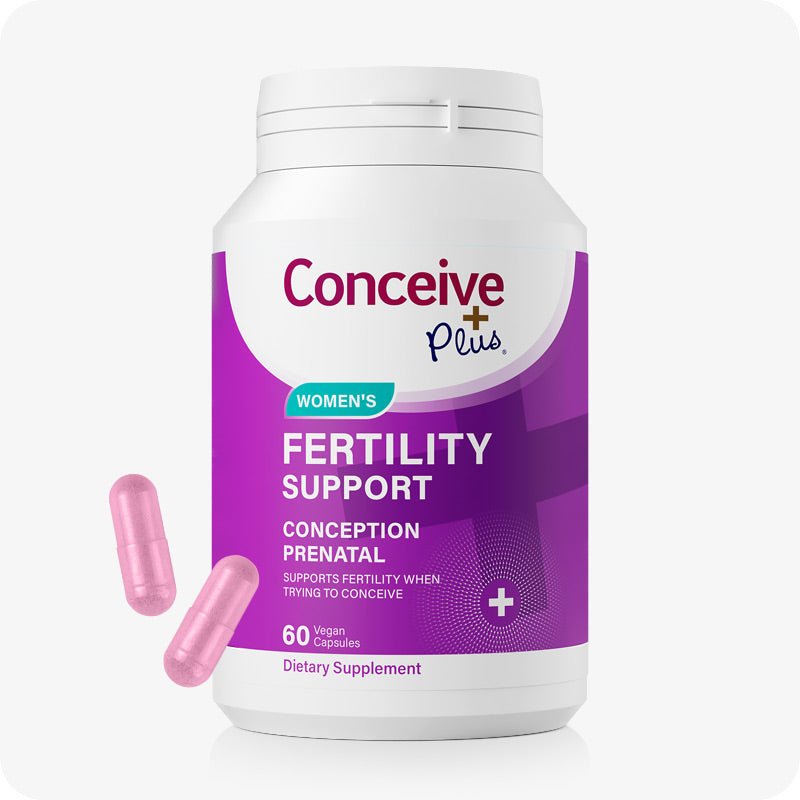
Conceive Plus offers clinically formulated fertility supplements for both men and women. Shop the Conceive Plus range →
When it comes to ashwagandha sperm count improvements, the clinical data is genuinely encouraging. Multiple randomised controlled trials have examined this relationship:
2013 IAMJ Study: 46 men with low sperm count took 675 mg of ashwagandha root extract daily for 90 days. Results showed a 167% increase in sperm count, 53% improvement in semen volume, and 57% increase in sperm motility compared to placebo. These are striking numbers.
2015 Fertility and Sterility Study: Researchers evaluated ashwagandha in 75 men with infertility. Supplementation led to significant improvements in sperm count, motility, and seminal plasma antioxidants including catalase, superoxide dismutase (SOD), and glutathione — all markers of reduced oxidative stress.
2019 Evidence-Based Complementary and Alternative Medicine Study: 180 subjects with oligospermia (low sperm count) showed meaningful improvements in sperm parameters after 90 days of ashwagandha supplementation at 675 mg/day.
Taken together, the evidence supports a real, clinically meaningful effect on ashwagandha for male fertility — particularly for men dealing with stress-related subfertility, oxidative sperm damage, or idiopathic (unexplained) low counts.
Ashwagandha Testosterone and Fertility: The Hormonal Connection
Ashwagandha testosterone fertility is another area where the research is solid. Testosterone is the primary male sex hormone and is essential for sperm production (spermatogenesis), libido, and reproductive organ function.
Chronic stress elevates cortisol, and elevated cortisol suppresses testosterone via the hypothalamic-pituitary-adrenal (HPA) axis. This is sometimes called the cortisol-testosterone seesaw — when one goes up, the other tends to go down.
Ashwagandha breaks this cycle in two ways:
- Cortisol reduction: A landmark 2012 study in the Indian Journal of Psychological Medicine found that ashwagandha supplementation (300 mg twice daily) reduced serum cortisol by 27.9% compared to placebo over 60 days.
- Direct testosterone support: Multiple studies report 10–22% increases in serum testosterone in healthy men supplementing with ashwagandha root extract over 8–12 weeks.
For men whose fertility struggles are linked to stress, poor sleep, or burnout — which describes a substantial proportion of couples trying to conceive today — this dual mechanism makes ashwagandha testosterone fertility support highly relevant.
Oxidative Stress: The Hidden Enemy of Sperm Health
Up to 40% of male infertility cases are linked to oxidative stress — an imbalance between reactive oxygen species (free radicals) and the body's antioxidant defences. Sperm cells are particularly vulnerable to oxidative damage because their membranes are rich in polyunsaturated fatty acids, which are easily peroxidised by free radicals.
This is where ashwagandha's antioxidant properties shine as a male fertility supplement ashwagandha:
- Increases seminal plasma levels of catalase, SOD, and glutathione
- Reduces lipid peroxidation in sperm membranes
- Protects sperm DNA from oxidative fragmentation
Sperm DNA fragmentation (SDF) is increasingly recognised as a major cause of failed conception and early miscarriage, even when standard semen analysis looks normal. Antioxidant therapy — including ashwagandha — directly addresses this underappreciated problem.
Ashwagandha as an Adaptogen for Fertility: The Stress Connection
The word "adaptogen" gets thrown around freely in wellness marketing, but its original clinical meaning is specific: a substance that helps the body maintain homeostasis under physical or psychological stress without causing habituation or dependence.
For couples trying to conceive, stress is both ubiquitous and profoundly underestimated as a fertility disruptor. Research from Oxford University found that women with the highest urinary cortisol levels had a 29% reduced probability of conception in any given cycle. The data for men is equally compelling — chronic psychological stress is associated with reduced sperm concentration, motility, and morphology.
Ashwagandha as an adaptogen fertility tool works by modulating the body's stress response systems, improving sleep quality, reducing anxiety, and normalising cortisol rhythms. For men in high-pressure careers or experiencing fertility-related anxiety, this can meaningfully shift the reproductive environment.
Dosing Ashwagandha for Male Fertility: What the Research Recommends
One of the most important — and frequently misunderstood — aspects of ashwagandha for male fertility is dosing. Not all ashwagandha products are equivalent, and dose matters enormously.
Evidence-based dosing ranges:
- Most clinical trials used 300–675 mg/day of standardised root extract
- KSM-66® ashwagandha (a full-spectrum, standardised extract with the most clinical backing) is typically dosed at 300 mg twice daily
- Sensoril® (another clinically validated form) is effective at 125–250 mg/day due to higher withanolide concentration
- Cheaper raw ashwagandha powder is inconsistently potent and poorly absorbed
Duration: Most studies show meaningful results after 60–90 days. This aligns with the spermatogenesis cycle — it takes approximately 72–74 days to produce new sperm, so any intervention needs at least 3 months to show full impact on semen analysis parameters.
Timing: Ashwagandha can be taken morning or evening. Some practitioners prefer evening dosing to leverage cortisol reduction for improved sleep quality. With food is preferred to minimise any GI discomfort.
Where Ashwagandha Falls Short — And Why a Complete Protocol Matters
Ashwagandha is impressive, but it's not a complete male fertility solution on its own. Here's what the research shows it does not adequately address:
- Zinc deficiency: Zinc is essential for testosterone production and sperm formation. Ashwagandha doesn't provide zinc.
- Selenium: A powerful antioxidant mineral critical for sperm motility and protection against DNA damage. Must be supplemented separately.
- CoQ10: The mitochondrial energy catalyst that powers sperm motility. Clinical doses (200–300 mg/day) are required — ashwagandha doesn't supply this.
- L-carnitine: Essential for sperm energy metabolism and motility. Not found in ashwagandha.
- Folate: Important for sperm DNA integrity. Ashwagandha has no folate content.
This is why Conceive Plus Men's Fertility Support was formulated as a comprehensive protocol rather than a single-ingredient supplement. It includes ashwagandha alongside the full spectrum of clinically validated nutrients for male reproductive health.
The Conceive Plus Men's Protocol: Ashwagandha + Complete Fertility Support
Conceive Plus Men's Fertility Support combines KSM-66® ashwagandha with the complete male fertility nutrient stack — zinc, selenium, CoQ10, L-carnitine, lycopene, vitamin C, vitamin E, and methylated B vitamins — in clinically relevant doses.
This matters because male fertility is multifactorial. Supplementing ashwagandha alone while remaining deficient in zinc or selenium is like addressing one engine problem while ignoring three others. The Conceive Plus formula is designed so every ingredient works synergistically, addressing the full biological picture of sperm health.
Unlike many "male fertility supplements" that include token doses of ingredients just to appear on the label, Conceive Plus uses dosages that match or exceed the amounts shown effective in clinical trials. That's a critical distinction when you're trying to move the needle on actual sperm parameters.
Explore the full range at conceiveplus.com/collections/fertility-supplements.
Who Should Consider Ashwagandha for Male Fertility?
Based on the clinical evidence, ashwagandha supplementation is most beneficial for men who:
- Have documented low sperm count or motility (oligospermia or asthenospermia)
- Experience chronic high stress, poor sleep, or elevated cortisol
- Have been told they have high oxidative stress markers in semen analysis
- Are in professional or life roles with significant psychological pressure
- Have borderline testosterone levels or symptoms of low T (fatigue, low libido, reduced muscle mass)
- Are preparing for IVF or IUI and want to optimise sperm quality before egg retrieval/insemination
Men with normal semen analysis who are under significant stress may also benefit, as stress can impair functional fertility parameters that aren't captured in standard analysis.
Safety, Side Effects, and Contraindications
Ashwagandha has a strong safety record at clinical doses. The most common side effects are mild and GI-related (nausea, loose stools) and usually resolve with food co-administration or dose reduction.
Important contraindications:
- Autoimmune conditions (rheumatoid arthritis, lupus, Hashimoto's) — ashwagandha can stimulate immune function
- Thyroid medications — ashwagandha may affect thyroid hormone levels
- Sedative medications — additive CNS effects are possible
- Iron disorders — ashwagandha may increase iron absorption
Always consult your physician or reproductive endocrinologist before starting any supplement regimen, particularly if you have underlying health conditions or take medications.
FAQ: Ashwagandha for Male Fertility
Q: How long does ashwagandha take to improve sperm count?
A: Most clinical studies show significant improvements after 60–90 days. Given the 72–74 day spermatogenesis cycle, allow at least 3 months before re-testing semen parameters.
Q: Can ashwagandha increase sperm count if I have azoospermia?
A: Azoospermia (zero sperm count) is a complex condition requiring specialist evaluation. Ashwagandha is not indicated as a standalone treatment and would not be expected to produce sperm where none exist. Always work with a urologist or reproductive specialist.
Q: Does ashwagandha affect testosterone permanently?
A: No. Ashwagandha's testosterone-supporting effects are maintained with continued supplementation but are not permanent once you stop taking it. It works within the body's natural regulatory systems, not by overriding them.
Q: What is the best form of ashwagandha for male fertility?
A: Standardised extracts like KSM-66® and Sensoril® have the most robust clinical data. Raw powder is less consistent in potency and bioavailability.
Q: Can I take ashwagandha with other male fertility supplements?
A: Yes — it is commonly combined with zinc, selenium, CoQ10, and L-carnitine. The Conceive Plus men's formula includes ashwagandha alongside all of these in a single daily dose.
Q: Is ashwagandha safe to take long-term?
A: Studies up to 12 months have not raised safety concerns. Periodic breaks (e.g., 3 months on, 1 month off) are sometimes recommended as a precautionary measure, though this is practitioner preference rather than evidence-based necessity.
Q: Can ashwagandha help with male infertility caused by varicocele?
A: Varicocele causes elevated testicular temperature and oxidative stress — both of which ashwagandha can partially address. However, surgical or interventional treatment of the varicocele itself is typically the primary approach, with supplements as adjunct support.
Q: Does ashwagandha help with sperm morphology as well as count and motility?
A: Some studies report morphology improvements, but the evidence is stronger for count and motility. The antioxidant properties that protect sperm DNA would theoretically support normal morphology over time.
Q: What dose of ashwagandha is used in Conceive Plus?
A: Conceive Plus uses a clinically relevant dose of KSM-66® ashwagandha standardised extract, consistent with the doses used in published fertility trials. See the product page for full label details.
Q: Is ashwagandha better than maca for male fertility?
A: They have different mechanisms. Ashwagandha primarily works via cortisol reduction and antioxidant activity. Maca works partly through HPG axis support. The clinical evidence base for ashwagandha in fertility is more robust. Many protocols include both; Conceive Plus focuses on the ingredients with the strongest fertility-specific evidence.
Conclusion: Ashwagandha Is a Valuable Tool — But Not the Whole Toolkit
The evidence for ashwagandha for male fertility is real, clinically meaningful, and growing. It improves sperm count, motility, and seminal antioxidant status through well-understood mechanisms. Its ability to reduce cortisol, support testosterone, and fight oxidative stress makes it particularly valuable in the modern fertility landscape, where stress and environmental factors are pervasive.
But fertility is complex. Ashwagandha addresses important mechanisms — it doesn't address all of them. That's why the most effective approach is a complete male fertility protocol that includes ashwagandha alongside zinc, selenium, CoQ10, L-carnitine, and folate.
Conceive Plus Men's Fertility Support delivers exactly that — a complete, clinically informed formula that gives your sperm every advantage. Whether you're just starting your TTC journey or preparing for assisted reproduction, optimising sperm health is one of the highest-impact steps you can take.
Start your male fertility protocol today: conceiveplus.com/collections/fertility-supplements.
Ready to optimise your fertility?
Conceive Plus offers clinically formulated fertility supplements for both men and women. Shop the Conceive Plus range →