When to Use Fertility Lubricant in Your Cycle for Best Results


When to Use Fertility Lubricant in Your Cycle for Best Results
If you're trying to conceive, you've probably already thought carefully about your diet, supplements, and timing. But there's one tool that often gets overlooked — or used incorrectly — that can make a meaningful difference: fertility lubricant. Knowing when to use fertility lubricant in your menstrual cycle isn't just a matter of comfort; it's a strategic decision that can support your chances of conception every cycle.
In this guide, we break down everything you need to know about fertility lubricant timing, why the fertile window matters, and how to use lubricant like Conceive Plus to its full potential when you're trying to get pregnant.
What Is a Fertility Lubricant and Why Does It Matter?
Not all lubricants are created equal. Most over-the-counter personal lubricants — including popular brands — have been shown in research to negatively affect sperm motility and function. A study published in Fertility and Sterility found that common lubricants like K-Y Jelly and Astroglide significantly reduced sperm motility compared to a control group.
A fertility lubricant is specifically formulated to be sperm-safe. It mimics the natural properties of fertile cervical mucus: isotonic osmolality, a sperm-friendly pH (7.2–8.0), and a consistency that allows sperm to swim freely rather than being impeded.
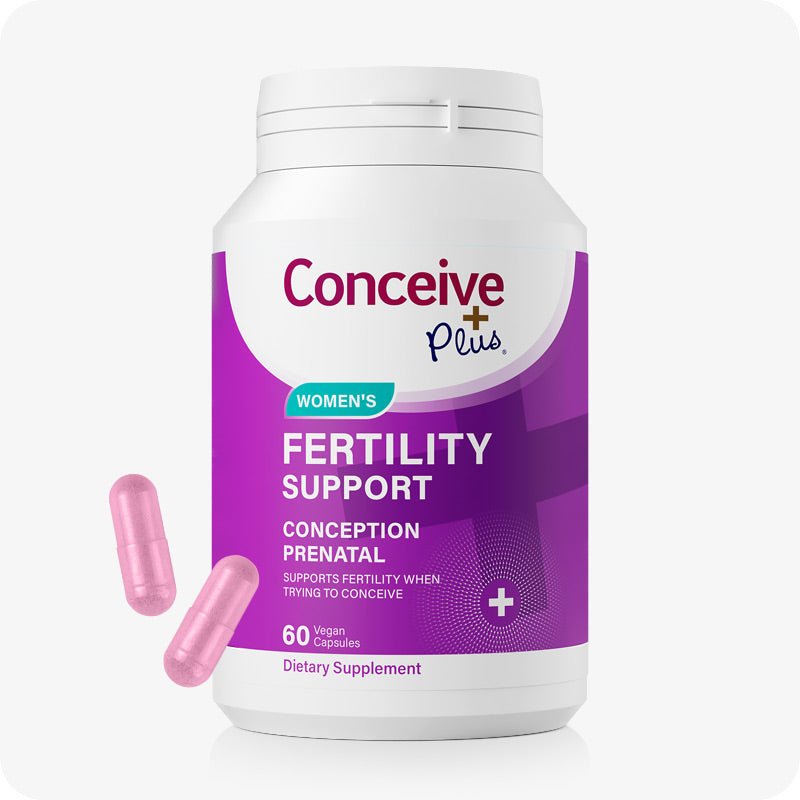
Conceive Plus is one of the few fertility lubricants that also contains calcium and magnesium ions — essential minerals that support sperm function and are naturally present in the female reproductive tract. This makes it not just a passive lubricant, but an active support tool for the conception process.
Understanding fertility lubricant timing helps you get the maximum benefit from every application.
Understanding Your Menstrual Cycle and Fertile Window
Ready to optimise your fertile window?
Conceive Plus fertility lubricants are clinically formulated with calcium and magnesium ions to support sperm function — available in single-use applicators and multi-use tubes.
Shop Fertility Lubricants →The female menstrual cycle typically lasts 28–32 days, though significant variation is normal. The cycle is divided into phases:
- Menstruation (Days 1–5): The uterine lining sheds
- Follicular Phase (Days 1–13): Follicles develop in the ovaries; estrogen rises
- Ovulation (around Day 14 in a 28-day cycle): The dominant follicle releases an egg
- Luteal Phase (Days 15–28): Progesterone dominates; if no fertilisation, the cycle repeats
The fertile window is typically the 5–6 days leading up to and including ovulation. Sperm can survive in the female reproductive tract for up to 5 days, while an egg only survives for 12–24 hours after release. This means the best time for conception is in the days just before ovulation — not necessarily the day of.
Research from the New England Journal of Medicine found that 90% of pregnancies from a given cycle resulted from intercourse within the 6-day window ending on the day of ovulation. This is your prime fertility window — and it's when fertility lubricant use matters most.
When to Use Fertility Lubricant: The Optimal Timing
The answer is straightforward: use fertility lubricant during your fertile window — the 5–6 days leading up to and including ovulation. This is when you're most likely to conceive, and therefore when lubricant use has the greatest potential impact.
Pinpointing Your Fertile Window
To use fertility lubricant ovulation timing correctly, you first need to identify when you ovulate. Common methods include:
- Basal Body Temperature (BBT) charting: A slight temperature rise (0.2–0.5°C) occurs after ovulation — retrospective but helps identify patterns
- Ovulation Predictor Kits (OPKs): Detect the LH surge that precedes ovulation by 24–36 hours — the most reliable real-time method
- Cervical Mucus Monitoring: Around ovulation, discharge becomes clear, stretchy, and egg-white-like — the ideal environment for sperm
- Cycle Tracking Apps: Predict fertile windows based on historical cycle data; accuracy improves with more data points
For most women trying to conceive, combining OPK testing with cervical mucus observation gives the clearest picture of the fertile window.
Day-by-Day Fertility Lubricant Timing Guide
Here's how using lubricant TTC timing works in practice within a 28-day cycle (adjust based on your own cycle length):
- Days 1–9: Pre-fertile phase — lubricant use is optional (comfort only, but still use a sperm-safe formula)
- Days 10–12: Begin OPK testing; start using fertility lubricant at every intercourse
- Days 12–15 (LH surge detected): Most fertile period — use Conceive Plus consistently at every attempt
- Days 15–17 (post-ovulation): Egg may still be viable 12–24 hours post-ovulation — continue use
- Days 18–28: Luteal phase — lubricant use for comfort is fine, but the conception window has passed
The key insight: when to use fertility lubricant is primarily during the 5–6 days surrounding your confirmed or predicted ovulation date.
How to Use Conceive Plus for Best Results
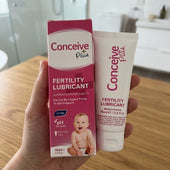
Conceive Plus comes in two main formats: a multi-use tube and pre-filled single-use applicators. Both are designed to support conception, but the applicators offer an additional advantage — they can deliver lubricant directly into the vaginal canal, closer to the cervix, where sperm needs to travel.
Applicator Method (Recommended for TTC)
- Insert the applicator intravaginally 10–15 minutes before intercourse
- Deposit the contents of the applicator and remove
- The lubricant will coat the vaginal walls, creating a sperm-friendly environment
- Proceed with intercourse as normal
Tube Method
- Apply a small amount (approximately 2–3ml) to the vaginal opening or penis before intercourse
- Re-apply as needed during intercourse
- Use consistently throughout your fertile window
A crucial point about conceive plus when to use: timing within the day also matters. Applying the applicator format shortly before intercourse (rather than immediately before) allows the lubricant to distribute evenly and warm to body temperature, mimicking the natural environment more closely.
Conceive Plus vs Pre-Seed: Which Lubricant Works Best for TTC?
When comparing Conceive Plus to Pre-Seed — the two most popular fertility lubricants on the market — the differences come down to formulation details that matter for conception.
pH range: Conceive Plus maintains a pH of 7.2, closely matching fertile cervical mucus. Pre-Seed operates at a slightly higher pH of 7.2–7.4. Both are within sperm-safe ranges, but Conceive Plus's consistency is more tightly matched to natural cervical mucus composition.
Ion support: Conceive Plus uniquely contains calcium and magnesium ions — minerals that are essential for sperm capacitation (the process that allows sperm to penetrate the egg). Pre-Seed does not include these ions.
FDA clearance: Both products have FDA clearance as medical devices, meaning both have undergone testing for safety and efficacy in the context of fertility.
Clinical use: Conceive Plus is used in fertility clinics as a safe medium during procedures like IUI (intrauterine insemination), where sperm safety is non-negotiable.
Format options: Conceive Plus offers both tubes and single-use applicators, giving couples flexibility in how they use the product throughout their cycle.
For couples who want a fertility lubricant that goes beyond passive sperm safety and actively supports the biological environment for conception, Conceive Plus delivers an evidence-informed formulation that Pre-Seed simply doesn't match.
Common Mistakes in Fertility Lubricant Timing
Even couples who use the right product sometimes miss out on its full benefits because of timing or usage errors. Here are the most common mistakes:
1. Only Using Lubricant When Needed for Comfort
Many couples only reach for lubricant when discomfort arises. But if you wait until dryness is noticeable during intercourse, you've already disrupted the natural lubrication environment. The best approach is to use fertility lubricant proactively during your fertile window, whether or not you feel you need it.
2. Skipping Days in the Fertile Window
Some couples try to "save up" sperm by spacing out intercourse. Research, however, suggests that for most couples, having intercourse every 1–2 days during the fertile window maximises conception chances. Skipping days doesn't improve sperm quality unless there's a diagnosed male fertility issue — and it reduces the number of opportunities for fertilisation.
3. Using the Wrong Lubricant Outside the Fertile Window
If you use a regular lubricant during your non-fertile days and then switch to a fertility lubricant only during your window, residual effects may not be an issue — but there's no reason to take the risk. Using Conceive Plus consistently is the safest approach.
4. Not Confirming Ovulation
Basing your fertile window on calendar calculation alone can lead to mistimed intercourse. Ovulation can shift by several days based on stress, illness, travel, or hormonal changes. OPK testing adds precision that calendar-only methods lack.
5. Applying Lubricant Immediately Before Intercourse (Tube Method)
If using the tube format, applying immediately before intercourse can dilute or displace the lubricant before it's had a chance to distribute. A brief wait of 2–5 minutes allows the lubricant to settle into the vaginal environment.
What the Research Says About Fertility Lubricants and Conception Rates
Clinical research on fertility lubricants supports the case for sperm-safe formulas. Key studies include:
- A 2014 study in Fertility and Sterility compared sperm motility in eight different lubricants. Only mineral oil and hydroxyethylcellulose-based lubricants (the base of most fertility lubricants including Conceive Plus) showed no significant reduction in motility.
- A 2012 study by Mowat et al. found that standard lubricants reduced sperm motility by 60–100% compared to unstimulated controls.
- A prospective study of 1,200 couples by Steiner et al. (2012) found that lubricant use was common among TTC couples but most weren't aware of the impact of conventional lubricants on sperm. The study underscored the need for couples to switch to sperm-safe alternatives.
While no lubricant can guarantee conception, the evidence clearly supports that using a sperm-safe formula during your fertile window is far better than using conventional lubricants — or using none at all when dryness is a factor.
Fertility Lubricant Timing for Special Circumstances
After a Positive OPK
When your OPK shows a positive (LH surge), ovulation is approximately 24–36 hours away. This is the ideal time to begin or intensify fertility lubricant use — plan intercourse for the next 2 days, applying Conceive Plus each time.
During IUI Cycles
If you're undergoing IUI (intrauterine insemination), your clinic will handle the sperm preparation and placement. However, for the natural intercourse timing around your IUI procedure (often recommended to try the night before or after), Conceive Plus is one of the few lubricants cleared for use in fertility clinic settings and safe to use alongside IUI preparation.
When Cervical Mucus is Scant
Some women produce limited fertile-quality cervical mucus due to factors like clomiphene (Clomid) use, age, or hormonal imbalances. In these cases, fertility lubricant becomes even more important — it supplements the missing natural cervical fluid that sperm rely on for motility and survival.
For Couples with Male Factor Infertility
If there are concerns about sperm count or motility, using a fertility lubricant that contains supportive minerals (like the calcium and magnesium ions in Conceive Plus) offers an additional layer of support beyond simple sperm safety.
Frequently Asked Questions About Fertility Lubricant Timing
Q: Can I use Conceive Plus every day of my cycle?
A: Yes. Conceive Plus is safe for daily use. While it's most impactful during your fertile window, using it consistently poses no risk and ensures you're always using a sperm-safe formula.
Q: How many days before ovulation should I start using fertility lubricant?
A: Ideally, start 5–6 days before predicted ovulation — this covers the full fertile window when sperm deposited during intercourse could potentially survive to fertilise the egg.
Q: Does fertility lubricant increase my chances of getting pregnant?
A: Fertility lubricant doesn't directly increase fertility, but it removes a potential barrier — sperm-harming lubricants — and creates a supportive environment for sperm function. This is particularly important for couples who experience vaginal dryness or limited cervical mucus.
Q: Can I use Conceive Plus with condoms?
A: Conceive Plus is compatible with latex and non-latex condoms. However, if you're trying to conceive, you wouldn't typically be using condoms simultaneously unless for a specific protocol.
Q: How much lubricant should I use?
A: For the tube, approximately 2–3ml per application is sufficient. For single-use applicators, the pre-filled amount is calibrated for optimal use — one applicator per session is standard.
Q: Should I use fertility lubricant after ovulation?
A: Post-ovulation use won't harm your chances, and Conceive Plus is safe to use throughout the cycle. The egg is only viable for 12–24 hours post-ovulation, so the most impactful window is before and during ovulation.
Q: Will fertility lubricant interfere with a pregnancy test?
A: No. Fertility lubricants do not contain hCG or any substance that would interfere with pregnancy test results.
Q: Is Conceive Plus safe for use during the two-week wait?
A: Yes. If you're in the two-week wait (TWW), Conceive Plus is safe to use for comfort without any risk to a potential early pregnancy.
Q: Can fertility lubricant help if I have low cervical mucus?
A: Yes. Fertility lubricant serves as an effective supplement for women with limited fertile-quality cervical mucus, providing a pH-balanced, sperm-compatible environment that compensates for reduced natural lubrication.
Q: How long should I continue using fertility lubricant if I'm not getting pregnant?
A: Use it consistently each cycle during your fertile window. If you've been trying to conceive for 12 months (or 6 months if over 35) without success, consult a fertility specialist regardless of lubricant use.
Conclusion: Timing Is Everything
When you're trying to conceive, every element of your approach matters — and fertility lubricant timing is no exception. Using a sperm-safe lubricant like Conceive Plus during your fertile window, applied correctly and consistently, removes a common barrier to conception and creates the best possible environment for sperm to reach and fertilise the egg.
The key takeaways: start using fertility lubricant at the beginning of your fertile window (5–6 days before predicted ovulation), use OPK testing to confirm your LH surge, apply Conceive Plus every time you have intercourse during this window, and use the applicator format when possible for optimal delivery.
Conceive Plus has helped millions of couples on their TTC journey. Its clinically-informed formulation — with calcium and magnesium ions, sperm-friendly pH, and FDA clearance — makes it the first choice for couples who want to take every possible step toward conception.
Ready to optimise your fertile window? Explore the full range of Conceive Plus fertility lubricants and find the format that works best for your journey.
Ready to optimise your fertile window?
Conceive Plus fertility lubricants are clinically formulated with calcium and magnesium ions to support sperm function — available in single-use applicators and multi-use tubes.
Shop Fertility Lubricants →