De complete gids voor mannelijke vruchtbaarheid: spermakwaliteit, testen en supplementen voor 2026


Wanneer stellen aan hun reis naar het ouderschap beginnen, richten gesprekken over vruchtbaarheid zich vaak vooral op vrouwen. Toch draagt mannelijke factor onvruchtbaarheid bij aan ongeveer de helft van alle conceptieproblemen, volgens de Wereldgezondheidsorganisatie. Het begrijpen van mannelijke vruchtbaarheid — wat het beïnvloedt, hoe je het test en hoe je het optimaliseert — is essentieel voor elk stel dat hoopt zwanger te worden. Deze uitgebreide gids behandelt alles wat je moet weten over sperma gezondheid, zaadanalyse, de factoren die mannelijke vruchtbaarheid beïnvloeden en op bewijs gebaseerde strategieën om je kansen op conceptie in 2026 te verbeteren.
Of je nu net bent begonnen met proberen zwanger te worden of al een tijd bezig bent, deze gids geeft je actuele, wetenschappelijk onderbouwde informatie. Van het ontcijferen van een zaadanalyserapport tot het begrijpen welke supplementen daadwerkelijk werken, we nemen je mee door het volledige beeld van mannelijke voortplantingsgezondheid zodat je deze reis met vertrouwen en helderheid kunt benaderen.
Begrip van mannelijke vruchtbaarheid: de wetenschap achter sperma gezondheid
Mannelijke vruchtbaarheid hangt grotendeels af van de kwaliteit en kwantiteit van het geproduceerde sperma. Elke dag produceert een gezond mannelijk lichaam ongeveer 1.500 spermacellen per hartslag — dat is ongeveer 50 miljoen tot 150 miljoen spermacellen per milliliter zaadvloeistof. Toch zijn niet al deze spermacellen gelijk, en het begrijpen van de belangrijkste parameters die in een zaadanalyse worden gemeten, vormt de basis van de beoordeling van mannelijke vruchtbaarheid.
De gezondheid van sperma wordt beoordeeld op verschillende aspecten: aantal (hoeveel sperma aanwezig is), motiliteit (hoe goed ze bewegen), morfologie (de vorm en structuur van het sperma) en volume (de totale hoeveelheid zaadvloeistof). Volgens de referentiewaarden van de Wereldgezondheidsorganisatie uit 2021 omvat een normale zaadanalyse een concentratie van minstens 16 miljoen spermacellen per milliliter, met ten minste 42% die progressieve motiliteit vertonen en minstens 4% met normale morfologie.
Het proces van spermaproductie, spermatogenese genoemd, duurt ongeveer 72 tot 74 dagen. Dit is een cruciale informatie omdat het betekent dat veranderingen in je levensstijl die je vandaag doorvoert, pas na ongeveer drie maanden volledig effect zullen laten zien. Het betekent ook dat blootstelling aan omgevingsfactoren — hitte, gifstoffen, ziekte — de kwaliteit van het sperma maanden na het voorval kan beïnvloeden. Het begrijpen van deze tijdlijn helpt stellen om hun pogingen tot conceptie realistisch te plannen en geduld te bewaren met het proces.
Hormonen spelen een centrale rol in de mannelijke vruchtbaarheid. Testosteron, luteïniserend hormoon (LH) en follikelstimulerend hormoon (FSH) werken samen om de spermaproductie te reguleren. Verstoring van deze hormonale as — door stress, medische aandoeningen of hormoonverstorende stoffen — kan leiden tot verminderde spermaproductie. Onderzoek gepubliceerd in het tijdschrift Human Reproduction Update toont aan dat het aantal zaadcellen bij westerse mannen in de afgelopen vier decennia met meer dan 50% is gedaald, wat het belang onderstreept van het begrijpen en beschermen van de mannelijke voortplantingsgezondheid.
Belangrijke factoren die de mannelijke vruchtbaarheid beïnvloeden
Tal van factoren beïnvloeden de mannelijke vruchtbaarheid, variërend van genetische aanleg tot dagelijkse leefstijlkeuzes. Het begrijpen van deze factoren is de eerste stap om ze effectief aan te pakken.
Leeftijd: Hoewel mannen hun vruchtbaarheid veel langer behouden dan vrouwen, neemt de kwaliteit van sperma af met de leeftijd. Onderzoek toont aan dat de fragmentatie van sperma-DNA toeneemt met de leeftijd, en mannen boven de 45 kunnen een langere tijd tot conceptie ervaren vergeleken met jongere mannen. Mutaties in sperma-DNA komen ook vaker voor, wat de kwaliteit van het embryo en de zwangerschapsuitkomsten kan beïnvloeden.
Warmteblootstelling: De testikels bevinden zich buiten het lichaam met een reden — spermaproductie vereist een temperatuur van ongeveer 2°C onder de kerntemperatuur van het lichaam. Langdurige blootstelling aan warmte van bubbelbaden, sauna’s, laptops op schoot of zelfs strakke onderkleding kan de spermaproductie tijdelijk verminderen. Studies suggereren dat het dragen van lossere onderkleding en het vermijden van overmatige warmtebronnen de zaadparameters binnen drie maanden kan verbeteren.
Varicocele: Een varicocele is een verwijding van de aderen in de balzak, vergelijkbaar met spataderen. Het is de meest voorkomende behandelbare oorzaak van mannelijke onvruchtbaarheid, gevonden bij ongeveer 15% van alle mannen en bij 35% van mannen met primaire onvruchtbaarheid. Varicoceles verhogen de temperatuur in de balzak en verminderen de spermaproductie. Chirurgische correctie blijkt de zaadparameters en zwangerschapskansen bij getroffen koppels te verbeteren.
Roken en alcohol: Zowel tabak als overmatig alcoholgebruik verminderen de kwaliteit van sperma aanzienlijk. Roken wordt geassocieerd met een verminderd aantal zaadcellen, verminderde beweeglijkheid en meer DNA-schade. Overmatig alcoholgebruik verstoort de testosteronproductie en kan leiden tot hormonale onevenwichtigheden die de vruchtbaarheid aantasten. Het verminderen of stoppen met deze gewoonten is een van de meest impactvolle veranderingen die een man kan doorvoeren voor zijn vruchtbaarheid.
Oxidatieve stress: Een teveel aan reactieve zuurstofsoorten (ROS) in de voortplantingsorganen kan het DNA en de membranen van zaadcellen beschadigen. Bronnen van oxidatieve stress zijn onder andere infectie, ontsteking, vervuiling en slechte voeding. Antioxidanten spelen een cruciale rol bij het beschermen van sperma tegen deze schade, daarom zijn voeding en supplementen zo belangrijk bij het optimaliseren van mannelijke vruchtbaarheid.
Klaar om je vruchtbaarheidsreis te ondersteunen?
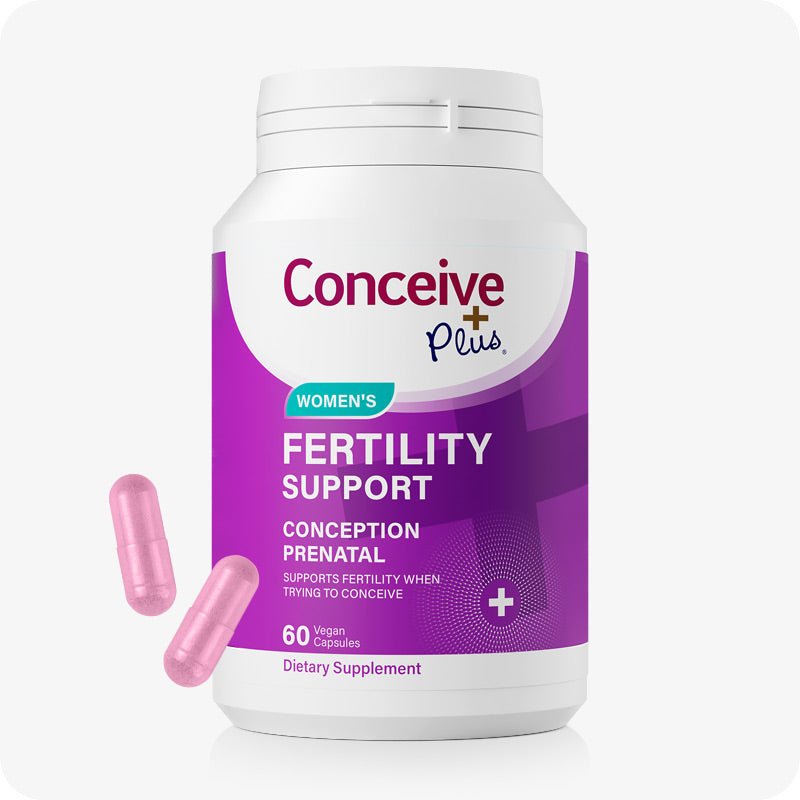
Conceive Plus Men's Fertility Support is samengesteld met klinisch bestudeerde ingrediënten zoals CoQ10, zink, selenium en L-carnitine om het aantal zaadcellen, de beweeglijkheid en de algehele mannelijke voortplantingsgezondheid te ondersteunen.
Testen van mannelijke vruchtbaarheid: wat te verwachten en hoe je je kunt voorbereiden
Een sperma-analyse is het belangrijkste diagnostische hulpmiddel voor het beoordelen van mannelijke vruchtbaarheid. Ondanks dat het een eenvoudige, niet-invasieve test is, stellen veel mannen het testen uit vanwege schaamte of misvattingen over wat het inhoudt. Begrip van het proces kan het stigma wegnemen en aanmoedigen tot proactief testen.
Hoe sperma-analyse werkt: Een monster wordt verkregen door masturbatie na 2-5 dagen seksuele onthouding. Het monster wordt binnen een uur na afname geanalyseerd op volume, pH, spermaconcentratie, totaal aantal zaadcellen, beweeglijkheid (zowel progressief als totaal), morfologie en andere parameters. Sommige klinieken testen ook op witte bloedcellen (wat kan wijzen op een infectie) en antispermantilichamen.
Wat de resultaten betekenen: Resultaten worden vergeleken met WHO-referentiewaarden. Het is belangrijk om te weten dat één afwijkend resultaat geen onvruchtbaarheid bevestigt — de kwaliteit van sperma fluctueert door recente ziekte, stress, voeding en andere factoren. De meeste artsen raden aan de test 2-3 maanden na een afwijkend resultaat te herhalen, vooral als er recent koorts of ziekte was.
Geavanceerde tests: Als een standaard sperma-analyse afwijkingen toont, kunnen aanvullende tests worden aangevraagd. Sperma-DNA-fragmentatietests beoordelen de integriteit van het genetisch materiaal in sperma — een hoge fragmentatie wordt geassocieerd met terugkerende miskramen en mislukte IVF-cycli, zelfs als de basisparameters van het sperma normaal lijken. Hormonale bloedtesten (FSH, LH, testosteron, prolactine) helpen hormonale oorzaken te identificeren. In sommige gevallen is genetisch onderzoek (karyotype, microdeletie-analyse van het Y-chromosoom) aangewezen.
Thuis testen: Er zijn nu verschillende door de FDA goedgekeurde thuisspermatests beschikbaar, waaronder apparaten die verbinding maken met smartphones voor een gedetailleerdere analyse. Hoewel deze handige voorlopige informatie bieden, vervangen ze geen uitgebreide klinische sperma-analyse en moeten ze worden gevolgd door professioneel onderzoek als er afwijkingen worden vastgesteld.
Voorbereiding op een sperma-analyse: Om de meest nauwkeurige resultaten te krijgen, vermijd ejaculatie gedurende 2-5 dagen voor de test (maar niet langer, want onthouding langer dan 5 dagen kan de beweeglijkheid verminderen). Vermijd alcohol, bubbelbaden en intense hitte gedurende minstens 3 maanden voor de test. Informeer uw zorgverlener over eventuele medicijnen, supplementen of recente ziekten.
Voeding en dieet voor optimale sperma gezondheid
De relatie tussen voeding en spermakwaliteit is goed vastgesteld in de wetenschappelijke literatuur. Het mediterrane dieet — rijk aan fruit, groenten, volle granen, magere eiwitten en gezonde vetten — wordt consequent geassocieerd met betere spermaparameters en verbeterde vruchtbaarheidsresultaten bij mannen. Daarentegen worden diëten met veel bewerkte voedingsmiddelen, transvetten en geraffineerde koolhydraten geassocieerd met een slechtere spermakwaliteit.
Belangrijke voedingsstoffen voor sperma gezondheid:
Zink is misschien wel het belangrijkste mineraal voor mannelijke vruchtbaarheid. Het is essentieel voor de productie van testosteron, de vorming van sperma en de integriteit van het sperma-DNA. De testikels bevatten enkele van de hoogste concentraties zink in het lichaam. Voedingsmiddelen rijk aan zink zijn oesters, rundvlees, pompoenpitten en bonen. Onderzoek heeft aangetoond dat zinktekort direct geassocieerd is met een verminderd sperma-aantal en verhoogde DNA-fragmentatie.
Folaat is niet alleen voor vrouwen — mannen hebben het ook nodig. Folaat (vitamine B9) is essentieel voor DNA-synthese en -herstel. Lage folaatniveaus bij mannen worden geassocieerd met een verhoogde sperma-aneuploïdie (chromosomale afwijkingen) en een verminderd sperma-aantal. Goede voedingsbronnen zijn bladgroenten, peulvruchten en verrijkte voedingsmiddelen.
Antioxidanten zoals vitamine C en E, selenium en co-enzym Q10 (CoQ10) beschermen sperma tegen oxidatieve schade. Studies hebben aangetoond dat mannen met onvruchtbaarheid vaak hogere niveaus van oxidatieve stress in hun sperma hebben. CoQ10 is bijzonder opmerkelijk — een meta-analyse gepubliceerd in het Journal of Urology toonde aan dat suppletie met CoQ10 de spermaconcentratie, beweeglijkheid en morfologie significant verbeterde.
Omega-3 vetzuren zijn belangrijk voor de vloeibaarheid en functie van het spermamembraan. Onderzoek toont aan dat mannen met een hogere inname van omega-3 een betere spermamorfologie hebben. Vette vis, walnoten en lijnzaad zijn uitstekende bronnen. DHA (docosahexaeenzuur), een specifiek omega-3 vetzuur, is bijzonder geconcentreerd in sperma en speelt een rol bij de bevruchting.
L-carnitine en acetyl-L-carnitine ondersteunen de beweeglijkheid van sperma door energie te leveren aan de mitochondriën in de spermazwansen. Meerdere klinische onderzoeken hebben verbeteringen in de beweeglijkheid van sperma aangetoond bij suppletie met L-carnitine, vooral bij mannen met asthenospermie (lage beweeglijkheid).
Op bewijs gebaseerde supplementen voor mannelijke vruchtbaarheid
Hoewel een uitgebalanceerd dieet de basis vormt van voeding voor mannelijke vruchtbaarheid, kan gerichte suppletie helpen om tekorten aan te vullen en therapeutische niveaus van belangrijke voedingsstoffen te bieden. De markt voor mannelijke vruchtbaarheidssupplementen is aanzienlijk gegroeid, maar kwaliteit en formulering zijn enorm belangrijk.
Co-enzym Q10 (CoQ10): Als zowel antioxidant als essentieel onderdeel van de cellulaire energieproductie, heeft CoQ10 consistente voordelen voor mannelijke vruchtbaarheid getoond in klinisch onderzoek. Een systematische review in de Cochrane Database vond dat CoQ10-suppletie de sperma beweeglijkheid en concentratie verbeterde vergeleken met placebo. Het mitochondriën-rijke middenstuk van sperma heeft CoQ10 nodig voor energieproductie die de sperma beweging aandrijft.
Zink en Selenium: Deze mineralen werken synergetisch om sperma te beschermen tegen oxidatieve schade en ondersteunen de testosteronproductie. Selenium is vooral belangrijk voor de vorming van selenoproteïne P, dat helpt bij het neutraliseren van reactieve zuurstofsoorten in het mannelijke voortplantingskanaal. Meerdere gerandomiseerde gecontroleerde onderzoeken hebben aangetoond dat gecombineerde zink-seleniumsuppletie de sperma beweeglijkheid verbetert en DNA-fragmentatie vermindert.
Vitamine D: Opkomend onderzoek heeft een sterke correlatie vastgesteld tussen vitamine D-status en mannelijke vruchtbaarheid. Vitamine D-receptoren zijn aanwezig in het hele mannelijke voortplantingssysteem, en vitamine D speelt een rol bij de synthese van testosteron, calciumtransport in sperma en sperma beweeglijkheid. Studies hebben aangetoond dat mannen met voldoende vitamine D-niveaus aanzienlijk betere sperma beweeglijkheid hebben vergeleken met mannen met een tekort.
Combinatie van foliumzuur en zink: Een belangrijke studie gepubliceerd in Fertility and Sterility toonde aan dat gecombineerde suppletie van foliumzuur en zink het totale aantal normale zaadcellen met 74% verhoogde bij subfertiele mannen. Deze combinatie pakt zowel DNA-synthese (via folaat) als antioxidatieve bescherming en testosteronondersteuning (via zink) aan.
Conceive Plus Men's Fertility Support bevat een zorgvuldig onderzocht mengsel van deze belangrijke voedingsstoffen — CoQ10, zink, selenium, folaat, L-carnitine en meer — speciaal geformuleerd om alle aspecten van de sperma gezondheid te ondersteunen. Bij het kiezen van een supplement, zoek naar producten die bio-beschikbare vormen van elke voedingsstof gebruiken en transparante ingrediëntenlijsten hebben met klinisch relevante doseringen.
Levensstijloptimalisatie voor mannelijke vruchtbaarheid
Naast voeding en supplementen zijn verschillende leefstijlaanpassingen wetenschappelijk bewezen om de mannelijke vruchtbaarheid te verbeteren. Deze veranderingen werken synergetisch met voedingsoptimalisatie om een omgeving te creëren die bevorderlijk is voor een gezonde spermaproductie.
Beweging: Matige regelmatige lichaamsbeweging bevordert de mannelijke vruchtbaarheid door de circulatie te verbeteren, oxidatieve stress te verminderen en gezonde testosteronniveaus te ondersteunen. Onderzoek heeft aangetoond dat mannen die regelmatig bewegen betere zaadparameters hebben dan zittende mannen. Extreme inspanning — vooral langeafstandsfietsen of intensieve duursporttraining — kan de vruchtbaarheid tijdelijk verminderen door hitte, compressie en hormonale verstoring. Streef naar 150 minuten matige aerobe activiteit per week gecombineerd met krachttraining.
Stressmanagement: Psychologische stress activeert de hypothalamus-hypofyse-bijnier (HPA) as, wat leidt tot verhoogde cortisolniveaus die de testosteronproductie en spermakwaliteit verstoren. Onderzoek heeft aangetoond dat mannen die aanzienlijke levensstress ervaren een lagere spermaconcentratie en beweeglijkheid hebben. Mindfulness-meditatie, yoga, regelmatige slaap en sociale steun zijn allemaal bewezen methoden om stress te verminderen en mannelijke voortplantingshormonen te verbeteren.
Slaap: Tijdens de slaap voert het lichaam belangrijke herstel- en regeneratiefuncties uit, waaronder de productie van testosteron (die piekt tijdens de diepe slaap). Een studie gepubliceerd in het American Journal of Epidemiology toonde aan dat mannen die minder dan 6 uur of meer dan 9 uur per nacht sliepen, significant lagere spermaconcentraties hadden dan degenen die 7-8 uur sliepen. Consistente, kwalitatieve slaap prioriteren is een eenvoudige maar krachtige interventie voor vruchtbaarheid.
Het vermijden van milieutoxines: Hormoonverstorende chemicaliën (EDC's) die voorkomen in plastics (BPA, ftalaten), pesticiden, industriële chemicaliën en verzorgingsproducten kunnen de hormonale signalering en spermaproductie verstoren. Praktische stappen zijn onder meer het kiezen van voedselopslagcontainers van glas of roestvrij staal, het selecteren van biologische producten wanneer mogelijk, en het kiezen van verzorgingsproducten zonder parabenen en synthetische geuren.
Een gezond gewicht behouden: Obesitas wordt geassocieerd met verminderde testosteronniveaus, verhoogde oestrogeenwaarden, verhoogde scrotale temperatuur en verminderde spermaproductie. Zelfs een bescheiden gewichtsverlies bij mannen met overgewicht blijkt de testosteronniveaus en zaadparameters te verbeteren. Een body mass index (BMI) buiten het normale bereik — zowel overgewicht als ondergewicht — wordt geassocieerd met verminderde spermakwaliteit.
Medische behandelingen voor mannelijke onvruchtbaarheid
Wanneer aanpassingen in levensstijl en supplementen niet voldoende zijn, kunnen medische interventies nodig zijn. Vooruitgang in de voortplantingsgeneeskunde heeft de opties voor mannen met vruchtbaarheidsproblemen aanzienlijk uitgebreid.
Varicocèle herstel: Chirurgisch herstel (varicocèlektomie) of embolisatie van varicocèles is de meest voorkomende chirurgische behandeling voor mannelijke onvruchtbaarheid. Meta-analyses tonen significante verbeteringen in spermaparameters na herstel, met een aanzienlijke toename van natuurlijke zwangerschapskansen bij stellen waarbij de vrouwelijke partner geen vruchtbaarheidsproblemen heeft.
Hormonale behandelingen: Mannen met hormonale onevenwichtigheden die leiden tot lage spermaproductie (hypogonadotroop hypogonadisme) kunnen vaak worden behandeld met gonadotrofine-injecties (FSH en LH) of clomifeencitraat, wat de eigen hormoonproductie van het lichaam stimuleert. Deze behandelingen kunnen de spermaproductie aanzienlijk verbeteren bij zorgvuldig geselecteerde patiënten.
Sperma-ophaaltechnieken: Voor mannen zonder sperma in hun ejaculaat (azoöspermie) kan sperma vaak direct uit de testis worden gehaald via procedures zoals testiculaire sperma-extractie (TESE) of microdissectie TESE (micro-TESE). Dit sperma kan vervolgens worden gebruikt bij IVF met intracytoplasmatische sperma-injectie (ICSI), waarbij de zwangerschapskansen vergelijkbaar zijn met die bij stellen waarbij de mannelijke factor minder ernstig is.
Wanneer een specialist bezoeken: Als een stel 12 maanden probeert zwanger te worden zonder succes (6 maanden als de vrouwelijke partner ouder is dan 35), moeten beide partners een vruchtbaarheidsonderzoek ondergaan. De mannelijke evaluatie begint met een sperma-analyse. Een uroloog gespecialiseerd in mannelijke onvruchtbaarheid of een reproductief endocrinoloog kan op basis van de resultaten de volgende stappen begeleiden.
Wanneer hulp zoeken en hoe verder te gaan
Mannelijke vruchtbaarheid is een complex en zeer persoonlijk onderwerp, maar het is ook een gebied waar proactieve stappen een betekenisvol verschil kunnen maken. De eerste stap is simpelweg getest worden — een sperma-analyse geeft een duidelijk beeld van je situatie en welke, indien nodig, interventies nuttig kunnen zijn. Veel mannen zijn verrast te ontdekken dat relatief eenvoudige veranderingen in dieet, levensstijl en supplementen hun spermaparameters binnen enkele maanden aanzienlijk verbeteren.
Onthoud dat de spermaproductiecyclus van 72-74 dagen betekent dat veranderingen die je vandaag doorvoert — of het nu stoppen met roken is, starten met een vruchtbaarheidssupplement, of het verbeteren van je dieet — hun volledige effect pas over ongeveer drie maanden zullen laten zien. Dit is geen reden om uit te stellen; het is juist een reden om nu te beginnen.
Vruchtbaarheidsproblemen kunnen emotioneel zwaar zijn, en het is belangrijk dat beide partners elkaar steunen tijdens het proces. Hulpmiddelen zoals vruchtbaarheidsconsulenten, steungroepen en educatief materiaal kunnen stellen helpen deze reis samen te doorstaan. Met de juiste informatie, ondersteuning en interventies bereiken veel stellen met mannelijke factor vruchtbaarheidsproblemen hun droom van ouderschap.
Ondersteuning bij elke stap van je reis
Conceive Plus Ondersteuning voor Mannen is speciaal samengesteld met een uitgebreide mix van antioxidanten, vitamines en mineralen — waaronder CoQ10, zink, selenium, L-carnitine en folaat — om de gezondheid, beweeglijkheid en het aantal spermacellen te ondersteunen. Sluit je aan bij duizenden mannen die hun vruchtbaarheidsgezondheid prioriteit hebben gegeven.
Veelgestelde vragen over mannelijke vruchtbaarheid
Hoe lang duurt het om de gezondheid van sperma te verbeteren?
Omdat sperma ongeveer 72-74 dagen nodig heeft om zich te ontwikkelen, verschijnen betekenisvolle verbeteringen in spermaparameters meestal 3 maanden na het doorvoeren van veranderingen in dieet, levensstijl of supplementen. Sommige verbeteringen — vooral in beweeglijkheid — kunnen eerder zichtbaar zijn, maar een volledige beoordeling moet worden gedaan na minstens één volledige spermaproductiecyclus.
Wat is een normaal sperma aantal?
Volgens de WHO-referentiewaarden van 2021 is een normale spermadichtheid 16 miljoen of meer per milliliter, met een totaal sperma aantal van 39 miljoen of meer per ejaculaat. Dit zijn echter referentiewaarden, geen vruchtbaarheidsgrenzen — mannen met aantallen onder deze drempels kunnen nog steeds zwanger worden, en mannen boven deze waarden kunnen toch vruchtbaarheidsproblemen ervaren.
Kan stress echt de mannelijke vruchtbaarheid beïnvloeden?
Ja, chronische stress blijkt het cortisolniveau te verhogen, wat de testosteronproductie kan onderdrukken en de kwaliteit van sperma kan aantasten. Meerdere studies hebben verbanden gevonden tussen psychologische stress en een verminderd sperma aantal, beweeglijkheid en morfologie. Stressmanagementtechnieken zoals mindfulness, lichaamsbeweging en voldoende slaap kunnen de hormonale gezondheid en vruchtbaarheid ondersteunen.
Beïnvloedt strak ondergoed echt het sperma aantal?
Onderzoek ondersteunt dat de temperatuur van de balzak invloed kan hebben op de spermaproductie. Een studie in Human Reproduction toonde aan dat mannen die loszittend ondergoed droegen een hogere spermadichtheid hadden dan mannen die strak ondergoed droegen. De effectgrootte is echter bescheiden, en alleen loszittend ondergoed dragen zal waarschijnlijk geen grote vruchtbaarheidsproblemen oplossen — maar het is een eenvoudige aanpassing.
Welke voedingsmiddelen zijn het beste voor de gezondheid van sperma?
Voedingsmiddelen die consequent geassocieerd worden met een betere zaadkwaliteit zijn onder andere walnoten (rijk aan omega-3), donkergroene bladgroenten (foliumzuur), oesters en pompoenpitten (zink), eieren en paranoten (selenium), bessen en citrusvruchten (antioxidanten) en vette vis (omega-3 DHA). Het mediterrane dieetpatroon heeft over het algemeen het sterkste wetenschappelijke bewijs voor mannelijke vruchtbaarheid.
Is mannelijke onvruchtbaarheid erfelijk?
Sommige oorzaken van mannelijke onvruchtbaarheid hebben genetische componenten. Microdeleties op het Y-chromosoom, het Klinefelter-syndroom (XXY) en andere genetische aandoeningen kunnen azoöspermie of ernstige oligospermie veroorzaken. Mutaties in het cystic fibrosis-gen kunnen leiden tot afwezigheid van de zaadleider. Veel gevallen van mannelijke onvruchtbaarheid zijn echter niet erfelijk en worden veroorzaakt door omgevings-, hormonale of structurele factoren.
Kunnen supplementen echt de zaadkwaliteit verbeteren?
Ja, meerdere gerandomiseerde gecontroleerde onderzoeken hebben aangetoond dat specifieke supplementen — vooral antioxidanten zoals CoQ10, vitamine C, vitamine E, selenium en zink, evenals L-carnitine en foliumzuur — de zaadparameters kunnen verbeteren bij mannen met suboptimale zaadkwaliteit. De resultaten zijn het meest uitgesproken bij mannen met oxidatieve stress of voedingsdeficiënties. Kwaliteit en dosering zijn erg belangrijk.
Hoe beïnvloedt roken de mannelijke vruchtbaarheid?
Roken heeft goed gedocumenteerde negatieve effecten op de mannelijke vruchtbaarheid. Schadelijke stoffen in sigaretten verminderen het aantal zaadcellen met ongeveer 13-17%, verlagen de motiliteit, verhogen het aantal afwijkende vormen en veroorzaken DNA-schade in zaadcellen. Sommige van deze effecten zijn omkeerbaar na het stoppen met roken, met verbeteringen die meestal binnen 3 maanden zichtbaar zijn. Blootstelling aan meeroken heeft ook gedocumenteerde negatieve effecten.
Wat is het verschil tussen spermaconcentratie en zaadcelmotiliteit?
Spermaconcentratie verwijst naar het aantal zaadcellen in een zaadmonster, terwijl motiliteit het percentage zaadcellen is dat beweegt en de kwaliteit van die beweging. Een man kan een normaal aantal hebben maar slechte motiliteit (asthenospermie), een laag aantal met goede motiliteit, of combinaties van beide. Beide parameters zijn belangrijk voor vruchtbaarheid, omdat zaadcellen zowel in voldoende aantal aanwezig moeten zijn als effectief moeten kunnen zwemmen om een eicel te bereiken en te bevruchten.
Wanneer moet ik een arts raadplegen over mannelijke vruchtbaarheid?
Ga naar een zorgverlener voor een evaluatie van de mannelijke vruchtbaarheid als: jij en je partner al 12 maanden proberen zwanger te worden zonder succes (6 maanden als zij ouder is dan 35); je een geschiedenis hebt van testiculaire verwonding, operatie of niet-ingedaalde testikels; je bent gediagnosticeerd met varicocele; je bekende hormonale of genetische aandoeningen hebt; of je eerder kankerbehandelingen hebt ondergaan. Wacht niet — vroege evaluatie leidt tot eerdere interventie en betere resultaten.