Sperm-Friendly Lubricant: What It Means and Why It Matters for Conception


Sperm-Friendly Lubricant: What It Means and Why It Matters for Conception
When you're trying to conceive, every detail matters — including the lubricant you choose during intimacy. Most couples don't realise that a seemingly harmless bottle of personal lubricant can dramatically reduce their chances of pregnancy each month. Understanding what a sperm friendly lubricant actually is, and why it matters, could be one of the most important fertility decisions you make.
In this comprehensive guide, we explain exactly what sets a sperm friendly lubricant apart from conventional options, the science behind sperm damage caused by regular lubricants, and how Conceive Plus is clinically formulated to support natural conception. Whether you've just started trying or have been on your fertility journey for months, this information is essential reading.
What Is a Sperm Friendly Lubricant?
A sperm friendly lubricant is a personal lubricant specifically formulated to be non-toxic to sperm cells and compatible with the natural reproductive environment. Unlike standard lubricants — even water-based ones — sperm-safe lubricants are designed to preserve sperm motility, morphology, and viability during the critical window of fertilisation.
For a lubricant to be considered truly sperm-safe, it must meet several technical criteria:
- pH compatibility: Sperm survive best in an alkaline-to-neutral pH environment (7.2–8.0). The vaginal canal at ovulation shifts toward this range to facilitate sperm transport. A sperm friendly lubricant must match this range rather than the more acidic pH (3.8–4.5) typical of the vagina outside ovulation.
- Osmolality matching: Osmolality refers to the concentration of dissolved particles in a fluid. Sperm cells are osmotically sensitive — hyper-osmolar lubricants cause sperm to shrink and die, while hypo-osmolar ones cause them to swell and rupture. A true sperm friendly lubricant maintains osmolality within the range recommended by the World Health Organisation (WHO): 260–380 mOsm/kg.
- Non-toxic ingredients: Many conventional lubricants contain glycerol, parabens, chlorhexidine, or propylene glycol — all of which are toxic to sperm at varying concentrations. A sperm friendly lubricant is free of these harmful compounds.
- Sperm motility preservation: Clinical testing should demonstrate that sperm maintain progressive motility when mixed with the lubricant — not just that the lubricant lacks obvious toxins.
Why Most Lubricants Are Harmful to Sperm
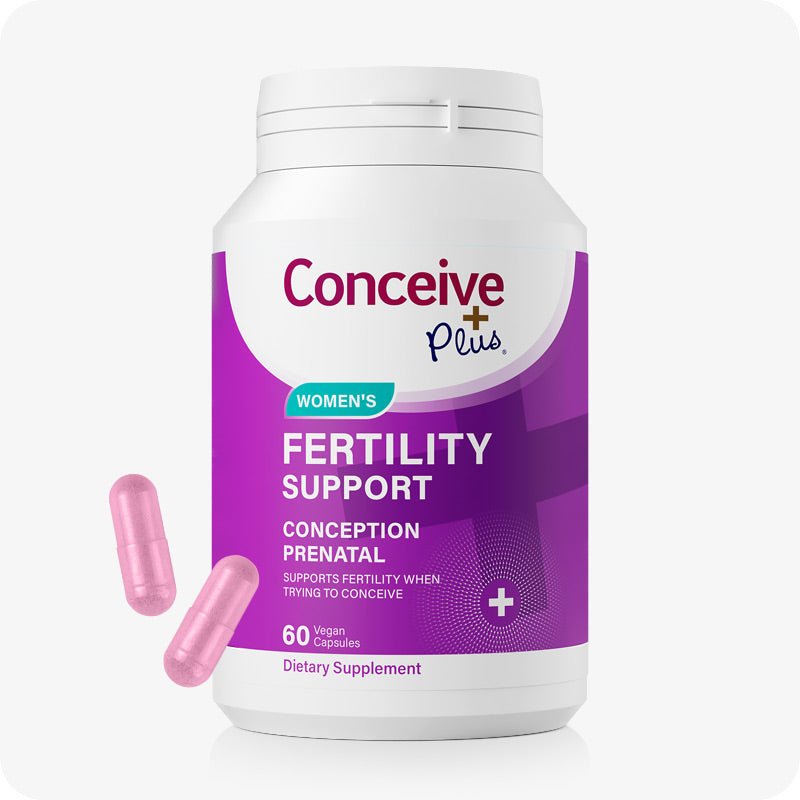
Support your fertility journey with Conceive Plus. Clinically formulated supplements and fertility lubricants trusted by thousands of couples. Shop Conceive Plus →
Research published in the Journal of Andrology and Fertility and Sterility has consistently shown that the majority of popular personal lubricants — including well-known brands marketed as "natural" or "gentle" — significantly impair sperm function. Studies have found that exposure to many standard lubricants for just 30–60 minutes reduces sperm motility by 60–100%.
The three main mechanisms of sperm damage are:
- Osmotic shock: Most lubricants are hyperosmolar (400–600+ mOsm/kg), causing sperm cells to rapidly dehydrate and lose motility or die.
- pH disruption: A lubricant with acidic pH (below 7.0) creates a hostile environment for sperm, slowing or halting progressive movement toward the egg.
- Chemical toxicity: Ingredients like propylene glycol and glycerol directly damage sperm membranes, reducing both motility and morphology scores.
The critical point: if you're using a standard lubricant during your fertile window, you may be unknowingly reducing the number of viable sperm reaching your egg each cycle. This is why choosing a genuine sperm friendly lubricant is so important.
Conceive Plus vs Pre-Seed: How Sperm-Safe Lubricants Compare
Two names dominate the sperm friendly lubricant category: Conceive Plus and Pre-Seed. Both are designed for TTC couples, but there are meaningful clinical differences.
Conceive Plus is the only fertility lubricant clinically formulated with calcium and magnesium ions — minerals that play a documented role in sperm capacitation (the maturation process sperm undergo before fertilisation). Conceive Plus matches the ionic composition of natural fertile cervical mucus more precisely than any other lubricant on the market. It is FDA-cleared, CE-marked in Europe, and widely used in fertility clinics.
Pre-Seed is also pH-balanced and isotonic, making it a solid sperm-safe option. However, it lacks the calcium/magnesium ion formulation that distinguishes Conceive Plus. For couples who want the most clinically advanced sperm friendly lubricant, Conceive Plus offers an additional layer of reproductive support.
Both products are significantly safer for sperm than any conventional lubricant, but Conceive Plus is designed to actively support the natural conception environment — not merely avoid harming it.
The Role of Cervical Mucus and Why Lubricant pH Matters
Understanding cervical mucus helps illustrate exactly why a sperm friendly lubricant needs specific biochemical properties. Around ovulation, cervical mucus transitions from thick, acidic, and impenetrable to thin, slippery, and alkaline — often described as resembling raw egg whites. This fertile-quality mucus:
- Creates channels for sperm to swim through the cervix
- Provides nourishment and protection for sperm over 3–5 days
- Filters out abnormal sperm while facilitating transport of healthy ones
- Maintains an optimal pH (7.0–8.5) for sperm survival
A quality sperm friendly lubricant like Conceive Plus is designed to mimic this fertile cervical mucus environment. Its pH is calibrated to 7.0–8.0, its osmolality falls within WHO-recommended ranges, and its ion content replicates the mineral profile of fertile-quality mucus. The result is a lubricant that works with the reproductive system rather than against it.
Signs You Need a Sperm Friendly Lubricant
Many TTC couples don't recognise when lubrication is needed or assume that natural arousal fluids are always sufficient. Here are signs that adding a quality sperm friendly lubricant to your routine makes sense:
- Vaginal dryness during fertile days: Hormonal fluctuations, stress, or medications (including antihistamines and antidepressants) can reduce natural lubrication even around ovulation.
- Discomfort during intercourse: Pain or friction during sex is not only unpleasant — it can discourage the frequency of intercourse needed for optimal conception timing.
- Postpartum or breastfeeding: Reduced oestrogen levels during these periods often cause significant vaginal dryness.
- Medical treatments: Chemotherapy, certain hormonal therapies, and fertility medications can affect natural lubrication.
- Perimenopause: Women in their late 30s or early 40s may experience reduced cervical mucus production as oestrogen levels naturally decline.
- Stress: The pressure of trying to conceive itself can reduce arousal and natural lubrication, particularly during scheduled intercourse.
In all these situations, a sperm friendly lubricant provides both comfort and reproductive compatibility. Conceive Plus is safe to use every day during your fertile window, whether or not natural lubrication is adequate.
How to Use a Sperm Friendly Lubricant Effectively
Getting the most from your sperm friendly lubricant involves more than simply applying it before intercourse. Here's how to optimise use:
- Track your fertile window first: Use ovulation predictor kits (OPKs), basal body temperature (BBT) charting, or cervical mucus monitoring to identify your 4–6 fertile days. This is when intercourse and lubricant use should be concentrated.
- Apply internally for maximum benefit: Conceive Plus comes in pre-filled applicators designed for internal use. Inserting the lubricant internally — similar to how you'd use a vaginal suppository — places it in direct contact with the cervical environment, maximising sperm protection from the moment of ejaculation.
- Use before or during intercourse: Apply 15–30 minutes before sex, or use the applicator style just before intercourse begins.
- Don't use too much: A small amount (2–3ml) is sufficient. Excessive lubricant can dilute cervical mucus and reduce its filtering function.
- Store properly: Keep your sperm friendly lubricant at room temperature and away from direct sunlight. Check expiry dates — expired lubricant may not maintain its pH or osmolality properties.
Ready to protect sperm on every fertile day? Conceive Plus fertility lubricant is clinically formulated with calcium and magnesium ions to support natural conception. Available in single-use applicators and multi-use tubes. Shop Conceive Plus Lubricants →
Clinical Evidence Supporting Sperm Friendly Lubricants
The scientific case for choosing a proper sperm friendly lubricant is well established. Key studies include:
Agarwal et al. (2008), Fertility and Sterility: Tested eight commonly used lubricants against sperm motility. At the highest concentration used clinically, 6 of 8 lubricants reduced progressive motility by more than 60% compared to controls. Only isotonic, pH-balanced formulations preserved motility comparable to sperm capacitation media.
Sandhu et al. (2014), Journal of Andrology: Demonstrated that lubricants with osmolality above 380 mOsm/kg caused measurable sperm DNA fragmentation — a factor associated with failed fertilisation and early pregnancy loss — even with brief exposure.
Conceive Plus clinical data: Studies using the Conceive Plus formulation (with Ca²⁺/Mg²⁺ ions) found sperm motility and progressive movement were maintained at levels equivalent to control media (HTF medium) used in IVF labs. No other commercially available lubricant has demonstrated equivalent sperm preservation alongside the ion-supplemented formulation.
These findings reinforce what reproductive medicine specialists increasingly recommend: if you use any lubricant while TTC, it must be a clinically validated sperm friendly lubricant.
Common Myths About Sperm Safe Lubricants
Misconceptions about fertility lubricants are widespread. Let's address the most common ones:
Myth 1: "Water-based lubricants are always safe for sperm." False. Most water-based lubricants are hyperosmolar and contain glycerol or other sperm-toxic compounds. Being water-based doesn't make a lubricant sperm-safe.
Myth 2: "Natural oils like coconut oil are sperm-safe." Partially false. While coconut oil has a relatively neutral pH and low toxicity, it is not isotonic with sperm, disrupts vaginal flora by affecting the microbiome, can predispose to yeast infections, and is not compatible with latex condoms. It has not been validated in clinical sperm motility studies comparable to certified fertility lubricants.
Myth 3: "If you don't need lubrication, you don't need a fertility lubricant." False. Even with adequate natural lubrication, using a sperm friendly lubricant like Conceive Plus adds the additional benefit of calcium/magnesium ion supplementation in the vaginal environment — potentially supporting sperm capacitation.
Myth 4: "Fertility lubricants are only for people with fertility problems." False. Any couple TTC can benefit from the sperm-protective environment created by a proper fertility lubricant, regardless of fertility status.
Choosing the Right Sperm Friendly Lubricant: A Checklist
When evaluating any lubricant marketed as sperm-safe, use this checklist:
- ✅ pH between 7.0 and 8.5
- ✅ Osmolality 260–380 mOsm/kg
- ✅ Free from glycerol, parabens, chlorhexidine, and propylene glycol
- ✅ Clinically tested sperm motility data available
- ✅ FDA-cleared or equivalent regulatory approval
- ✅ Available in internal applicator format (preferred for TTC use)
- ✅ Contains no spermicidal agents
- ✅ Independently published research supporting sperm safety
Conceive Plus meets every criterion on this checklist — and goes further with its unique calcium/magnesium ion formulation. It is trusted by fertility clinics and reproductive specialists worldwide, and recommended by OBGYNs and fertility nurses as the first-line lubricant choice for TTC couples.
Frequently Asked Questions About Sperm Friendly Lubricants
Q: Can a sperm friendly lubricant increase my chances of getting pregnant?
A: A sperm friendly lubricant doesn't directly increase fertility, but by avoiding lubricant-related sperm damage, you ensure that each cycle's attempt is not being undermined by the products you use. Couples who previously used conventional lubricants may see improved outcomes by switching to a sperm-safe option like Conceive Plus.
Q: How do I know if my current lubricant is harmful to sperm?
A: Unless the product is explicitly marketed as a fertility or sperm-safe lubricant and carries clinical pH/osmolality data, assume it is not safe for TTC use. Check the ingredients for glycerol, parabens, and propylene glycol — presence of any of these is a warning sign.
Q: Can I use Conceive Plus if I'm also taking Clomid or other fertility medications?
A: Yes. Conceive Plus is safe to use alongside fertility medications. However, some medications (including Clomid) can reduce cervical mucus quality, making a fertility lubricant even more useful during treatment cycles. Always discuss with your reproductive specialist.
Q: Is there a sperm friendly lubricant I can use with condoms?
A: Conceive Plus is not designed for use with condoms — fertility lubricants are for couples actively trying to conceive without barrier contraception. If you need a lubricant for protected sex, use a standard water-based lubricant; sperm safety is irrelevant in that context.
Q: How many times should I use a sperm friendly lubricant per cycle?
A: Use it each time you have intercourse during your fertile window (typically 4–6 days ending on ovulation day). Daily use during this period is safe and ensures consistent sperm protection.
Q: Is Conceive Plus available in single-use applicators?
A: Yes. Conceive Plus is available in both pre-filled single-use applicators (ideal for internal application before intercourse) and multi-use tubes. Many TTC couples prefer the applicators for their ease of internal use and precise dosage.
Q: Can men use Conceive Plus directly on sperm for IUI preparation?
A: No. Conceive Plus is designed for vaginal use during intercourse. For IUI preparation, fertility clinics use specific laboratory media for sperm washing and preparation. Always follow your clinic's protocols for assisted reproduction procedures.
Q: Does a sperm friendly lubricant expire?
A: Yes. Always check the expiry date on your lubricant packaging. Expired products may not maintain their calibrated pH and osmolality levels, potentially compromising their sperm-safe properties. Store in a cool, dry place and replace as directed.
Q: I have PCOS — is a fertility lubricant helpful for me?
A: Yes. Women with PCOS often have irregular cervical mucus patterns and may experience dryness at times other than their fertile window. A sperm friendly lubricant like Conceive Plus provides reliable lubrication and sperm-safe conditions regardless of your cycle regularity.
Q: Are there any side effects of using a fertility lubricant?
A: Conceive Plus is very well tolerated. A small number of users report mild sensitivity, typically due to individual ingredient sensitivities. The formula is free from parabens, glycerol, and other common irritants. If you experience persistent irritation, discontinue use and consult your healthcare provider.
Don't let your lubricant work against you. Conceive Plus is the clinically validated, ion-enhanced sperm friendly lubricant trusted by thousands of couples and fertility specialists worldwide. Get Conceive Plus Today →
The Bottom Line on Sperm Friendly Lubricants
Choosing the right lubricant when trying to conceive is a simple but meaningful optimisation. The research is clear: conventional lubricants — even those marketed as gentle or natural — can significantly harm sperm through osmotic shock, pH disruption, and chemical toxicity. A genuine sperm friendly lubricant avoids all of these harms and, in the case of Conceive Plus, actively supports the reproductive environment with clinically validated ionic formulation.
If you're TTC, make the switch to a proper sperm friendly lubricant now. It's one of the easiest, most evidence-based changes you can make to optimise every fertile window — and ensure that nothing in your routine is working against your chances of conception.
Ready to take the next step? Explore the full Conceive Plus range — from fertility supplements to sperm-friendly lubricants — designed to support every stage of your conception journey. Discover Conceive Plus →