Secondary Infertility: Why Getting Pregnant Again Can Be Harder Than You Think


What Is Secondary Infertility?
Secondary infertility is defined as the inability to conceive or carry a pregnancy to term after previously giving birth to a child. It is far more common than most people realise — affecting approximately 1 in 6 couples who are trying to have another baby. Despite its prevalence, secondary infertility is often overlooked, partly because many assume that having conceived before guarantees an easy path to conception again.
The emotional toll of secondary infertility can be profound. Couples frequently encounter a sense of confusion and even guilt — after all, they already have a child and feel they "should" be grateful. But the grief associated with secondary infertility is entirely valid, and the medical challenges deserve the same level of attention and care as primary infertility.
If you have been trying to conceive for 12 months without success (or 6 months if you are over 35), it is worth speaking to your GP or a reproductive specialist, even if you have had children before.
Common Causes of Secondary Infertility
Supporting Your Fertility Journey
Conceive Plus is formulated by fertility specialists to work with your body — not against it. Our fertility-friendly lubricant is clinically tested to match the pH and osmolality of fertile cervical mucus, ensuring sperm can survive and reach the egg.
Secondary infertility can stem from a wide range of factors, many of which may have developed or worsened since a previous pregnancy. The causes can affect either partner and are often multifactorial.
Changes in Female Fertility
- Age: Even a few years can significantly affect egg quality and ovarian reserve. A woman at 38 has a very different fertility profile than she did at 33.
- Ovulation disorders: Conditions like polycystic ovary syndrome (PCOS) can emerge or worsen over time.
- Uterine issues: Fibroids, polyps, or intrauterine adhesions (Asherman's syndrome) — sometimes caused by a previous D&C (dilation and curettage) — can interfere with implantation.
- Fallopian tube blockage: Pelvic inflammatory disease (PID) or a previous ectopic pregnancy can cause scarring.
- Endometriosis: This condition can develop or progress after a previous pregnancy.
- Thyroid disorders: Undiagnosed or undertreated hypothyroidism or hyperthyroidism significantly affects reproductive hormones.
Changes in Male Fertility
- Sperm quality decline: Sperm count, motility, and morphology can all decline with age, lifestyle factors, or new health conditions.
- Varicocele: Enlarged veins in the scrotum can develop over time and impair sperm production.
- Hormonal imbalances: Testosterone levels and other hormones fluctuate with age, stress, and weight gain.
- Infections: STIs or other infections can affect the reproductive system without obvious symptoms.
Lifestyle and Environmental Factors
Changes in body weight, chronic stress, smoking, alcohol use, or exposure to environmental toxins since the last pregnancy can all play a role. Couples are often surprised to learn that factors they consider minor — like sleep deprivation or a demanding job — can meaningfully affect reproductive outcomes.
Diagnosinging Secondary Infertility
A thorough diagnostic workup is the critical first step. This typically includes:
For Women
- Hormone panel: FSH, LH, AMH (anti-Müllerian hormone for ovarian reserve), oestrogen, progesterone, TSH, and prolactin
- Pelvic ultrasound: To assess antral follicle count, uterine anatomy, and check for cysts or fibroids
- Hysterosalpingogram (HSG): An X-ray procedure to evaluate the fallopian tubes and uterine cavity
- Endometrial biopsy: If implantation failure is suspected
For Men
- Semen analysis: Evaluates count, motility, morphology, and volume
- Hormone levels: FSH, LH, testosterone, prolactin
- Scrotal ultrasound: To detect varicocele or other structural issues
- DNA fragmentation index: Assesses sperm DNA damage, which is not captured in standard semen analysis
It is important that both partners are investigated simultaneously. Even when the female partner's results appear normal, a male factor is identified in approximately 40–50% of secondary infertility cases.
Treatment Options for Secondary Infertility
Treatment is highly individual and depends entirely on the underlying diagnosis. Options range from lifestyle modifications to advanced reproductive technologies.
Lifestyle Modifications
Before any medical intervention, addressing lifestyle factors can meaningfully improve fertility outcomes:
- Achieving a healthy body weight (BMI between 18.5 and 25)
- Reducing alcohol and eliminating smoking
- Managing chronic stress through mindfulness, therapy, or structured relaxation
- Improving sleep quality (aim for 7–9 hours per night)
- Adopting a nutrient-rich diet emphasising whole foods, leafy greens, lean proteins, and healthy fats
Medical Treatments
- Ovulation induction: Medications such as clomiphene citrate or letrozole stimulate egg production in women with ovulation disorders.
- Intrauterine insemination (IUI): Washed sperm is placed directly into the uterus around ovulation, improving the chances of fertilisation.
- Surgical intervention: Fibroids, polyps, and intrauterine adhesions can often be removed via hysteroscopy. Varicoceles in men can be surgically repaired (varicocelectomy).
- Thyroid treatment: Correcting hypothyroidism with levothyroxine significantly improves fertility outcomes.
- In vitro fertilisation (IVF): When other treatments are unsuccessful or when there is a known barrier (such as blocked fallopian tubes), IVF offers the highest success rates.
The Role of Optimised Lubrication
Many couples trying to conceive use personal lubricants without realising that most commercial products — including water-based lubricants, petroleum jelly, and saliva — are toxic to sperm. Studies show that exposure to common lubricants can reduce sperm motility by up to 60–100% within 30–60 minutes of contact.
Using a fertility-friendly lubricant formulated to match the physiological conditions of fertile cervical mucus — with compatible pH, osmolality, and a texture that supports sperm survival — ensures that the reproductive environment is optimised during intercourse.
The Emotional Dimension of Secondary Infertility
One of the most painful aspects of secondary infertility is the feeling of being "in-between" — you are not the couple who has never been pregnant, and you are not the family that has completed its journey. This liminal space can feel isolating, particularly when friends and family do not fully appreciate the depth of the struggle.
Common emotional responses include:
- Grief and loss for the sibling that does not yet exist
- Guilt for wanting more when you already have a child
- Anxiety and hyper-vigilance around ovulation and timing
- Relationship strain between partners
- Social withdrawal, especially from pregnant friends or those with large families
Counselling — ideally with a therapist who specialiizes in fertility and reproductive loss — can be invaluable. Many fertility clinics offer psychological support as part of their services. Peer support groups, both in-person and online, provide a community of people who truly understand.
When to Seek Help and What to Expect
The general guideline is to seek a fertility evaluation after:
- 12 months of trying if you are under 35
- 6 months of trying if you are 35 or older
- Immediately if there is a known condition (e.g. endometriosis, PCOS, previous ectopic pregnancy, or known male factor issues)
At your first appointment, expect a thorough medical history review of both partners, a physical examination, and blood tests. Your specialist will guide you through the appropriate diagnostic steps and discuss a tailored treatment plan.
It is worth noting that many cases of secondary infertility resolve — either through lifestyle changes, medical treatment, or simply with more time. According to the Human Fertilisation and Embryology Authority (HFEA), IVF success rates for women under 38 remain relatively strong, particularly when high-quality embryos are transferred. The outlook, while sometimes difficult, is often hopeful.
Supporting a Partner Through Secondary Infertility
Secondary infertility tests relationships. Partners often process the experience differently — one may want to talk constantly while the other prefers to quietly carry on. Both responses are valid, but they can create distance if not acknowledged.
Strategies that help couples navigate this challenge together include:
- Scheduling time to talk — and time to be "off duty" from fertility conversations
- Attending appointments together where possible, so both partners feel equally involved in decisions
- Acknowledging each other's grief without minimising it
- Setting shared goals — how many treatment cycles will you try? At what point will you explore other paths?
- Seeking couples counselling if communication breaks down
Remember that the relationship between you and your partner is the foundation of your family, whatever its size ends up being. Protecting that bond matters as much as any medical intervention.
Frequently Asked Questions About Secondary Infertility
How common is secondary infertility?
Secondary infertility affects approximately 1 in 6 couples trying to conceive a second or subsequent child. It is nearly as common as primary infertility and is increasingly recognised as a significant reproductive health issue.
Does having a previous pregnancy guarantee fertility?
No. While a previous pregnancy confirms that conception was once possible, fertility is dynamic and changes over time. Age, health conditions, and lifestyle factors can all significantly alter fertility between pregnancies.
Can my first birth have caused secondary infertility?
In some cases, yes. Complications during delivery such as infection, retained placenta, or surgical interventions (e.g. D&C after a retained placenta) can cause uterine scarring or other structural changes. It is important to disclose your full obstetric history to your fertility specialist.
How long should we try before seeking help?
The standard recommendation is 12 months if you are under 35, and 6 months if you are 35 or older. However, if you have a known fertility condition or history of pregnancy complications, seek help sooner.
Can lifestyle changes make a difference?
Yes, significantly. Achieving a healthy BMI, quitting smoking, reducing alcohol, improving sleep, and managing stress have all been shown to improve fertility outcomes. These changes support both natural conception and the success rates of assisted reproduction.
Is IVF the only option for secondary infertility?
No. IVF is one of many possible treatments. Depending on the underlying cause, options may include lifestyle changes, medication, IUI, or minor surgical procedures. A full diagnostic workup is needed to determine the most appropriate approach.
Can secondary infertility resolve on its own?
Yes, in some cases. Studies show that a significant proportion of couples who are diagnosed with unexplained secondary infertility conceive naturally within 2–3 years. However, waiting too long — particularly if age is a factor — can reduce the likelihood of success with any treatment.
What role does the male partner play in secondary infertility?
A significant one. Male factor issues account for 40–50% of secondary infertility cases. A semen analysis should be among the first steps taken, as it is non-invasive and provides critical diagnostic information.
Are there any supplements that help with secondary infertility?
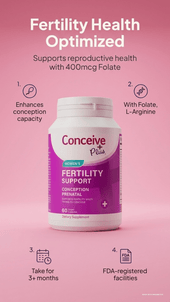
Several nutrients have robust evidence supporting their role in reproductive health. Folate (or methylfolate), CoQ10, vitamin D, zinc, selenium, and omega-3 fatty acids are among the most studied. Men may particularly benefit from antioxidant supplementation to improve sperm quality. Speak with your doctor before starting any new supplement regimen.
What is the success rate of IVF for secondary infertility?
Success rates depend on age, the specific cause of infertility, and clinic quality. In general, IVF success rates for secondary infertility are similar to those for primary infertility in the same age group. Women under 35 typically see live birth rates of 40–50% per cycle, declining with age.
Ready to Optimise Your Fertility?
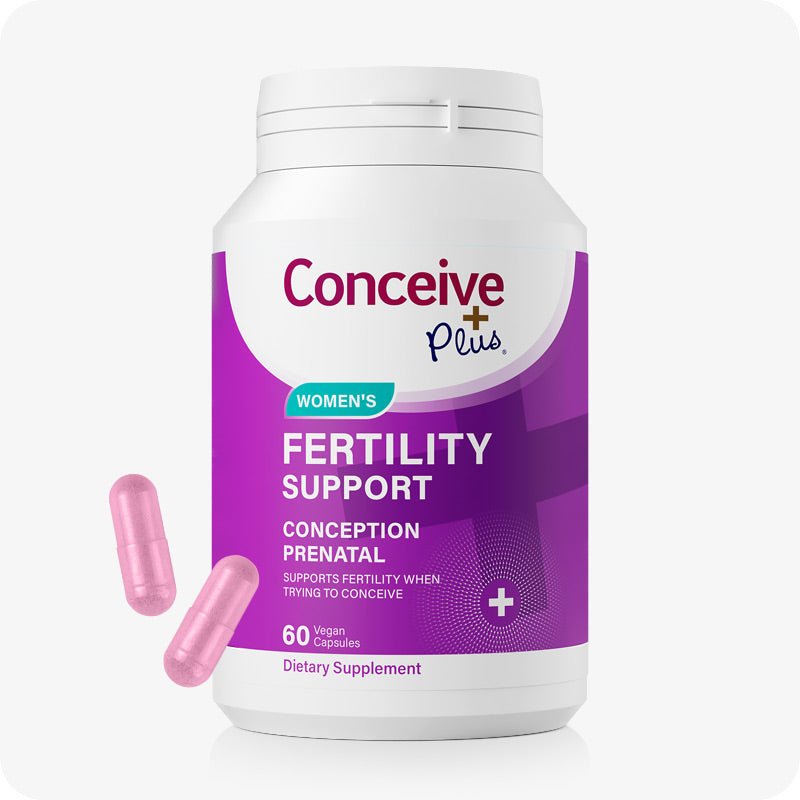
Whether you're just starting your journey or have been trying for a while, Conceive Plus products are designed by fertility experts to support every step — from optimising the conception environment to providing the nutrients your body needs.
Trusted by thousands of couples around the world. Formulated with care, backed by science.