Myo-Inositol voor PCOS Vruchtbaarheid: Een Vergelijkingsgids voor Conceptie in 2026


Het label "wondermiddel" dat vaak aan myo-inositol wordt toegekend, houdt je eigenlijk tegen om de echte waarde ervan te zien. Het is geen op zichzelf staande remedie, maar het fungeert als een essentiële "tweede boodschapper" die de kloof overbrugt tussen je insulinegezondheid en de kwaliteit van je eicellen. Het gebruik van myo-inositol voor PCOS vruchtbaarheid kan een doorbraak betekenen als je begrijpt dat het gaat om cellulaire communicatie, niet alleen een snelle oplossing voor een gemiste menstruatie.
Je bent waarschijnlijk moe van de angst die gepaard gaat met onregelmatige ovulatie en de frustratie van insuline-gerelateerde gewichtstoename die je vruchtbaarheidsdoelen lijkt te saboteren. Het is uitputtend om het gevoel te hebben dat je tijd verliest terwijl je lichaam je inspanningen negeert. Wij bieden een duidelijk supplementenplan voor 2026 dat je menstruatiecyclus herstelt en de kwaliteit van je eicellen verbetert voor hogere kans op conceptie. Je leert hoe dit door de FDA-geclassificeerde voedingssupplement zich verhoudt tot Metformine en waarom experts van de EGOI-PCOS groep nu een drie maanden durend protocol aanbevelen vóór ovariumstimulatie. We geven ook een overzicht van de huidige markt waar prijzen variëren van $12,99 tot $51,60, zodat je een formule kiest die zowel bij je budget als je biologie past.
Belangrijkste punten
- Ontgrendel de biologische verbinding tussen inositolniveaus en FSH-signaaloverdracht om onregelmatige menstruatiecycli te helpen stabiliseren.
- Vergelijk de bijwerkingen en metabole effecten van myo-inositol met traditionele opties zoals Metformine en D-chiro-inositol.
- Leer hoe het gebruik van myo-inositol voor PCOS vruchtbaarheid de micro-omgeving van de follikel optimaliseert om de kwaliteit van de eicel en de embryo-ontwikkeling te verbeteren.
- Identificeer de specifieke dagelijkse dosering van 2000mg tot 4000mg en synergetische ingrediënten zoals melatonine die je resultaten maximaliseren.
- Ontdek hoe je deze supplementen kunt integreren in een breder holistisch plan met voeding met een lage glycemische index en gerichte lichaamsbeweging.
Wat is Myo-Inositol en waarom is het essentieel voor PCOS vruchtbaarheid?
Om te begrijpen hoe je je hormonen kunt beheersen, moet je eerst op cellulair niveau kijken. Myo-inositol is een van nature voorkomend suikeralcohol dat vaak wordt gegroepeerd met B-vitamines. Als je hebt gezocht naar Wat is Myo-Inositol, vind je het in fruit, bonen en granen, maar voor vrouwen met PCOS is de voedingsinname meestal niet voldoende. Het gebruik van myo-inositol voor PCOS vruchtbaarheid pakt een fundamentele biologische kloof aan die alleen met leefstijlveranderingen mogelijk niet te overbruggen is.
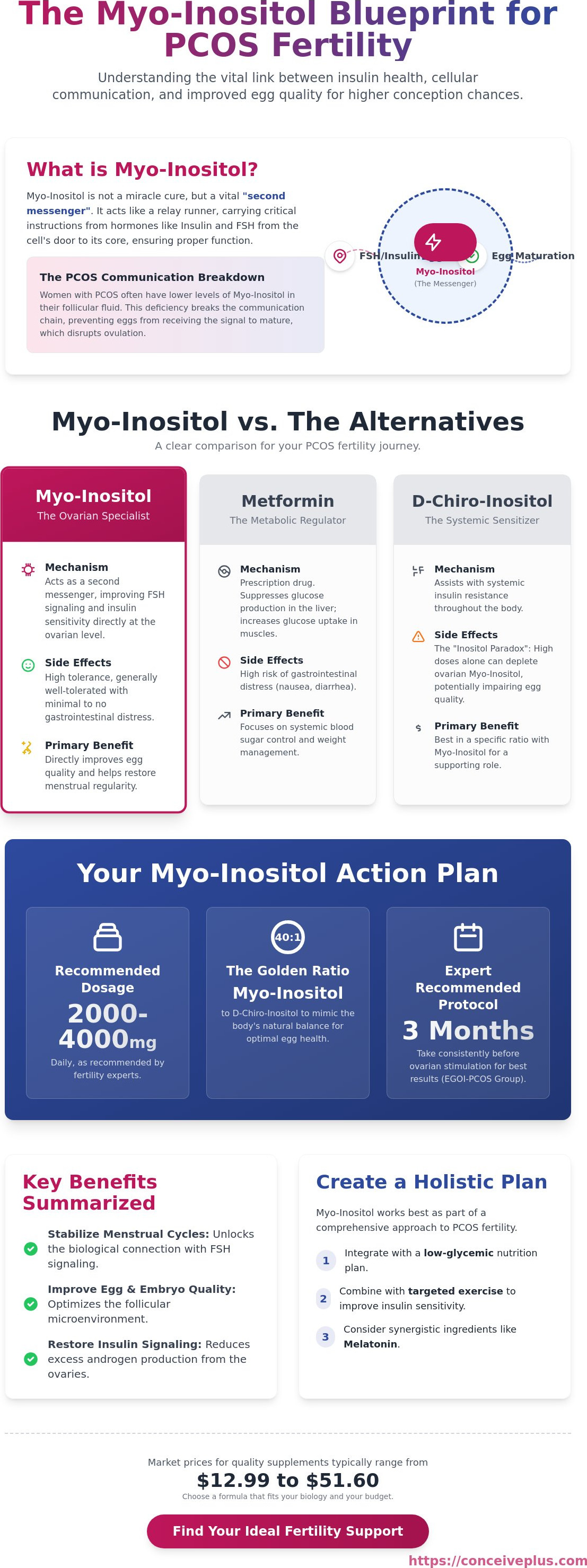
In het lichaam functioneert het als een "tweede boodschapper." Zie het als een estafetteloper. Wanneer hormonen zoals insuline of FSH bij de celdeur aankomen, gaan ze niet naar binnen. In plaats daarvan geven ze een bericht door aan myo-inositol, dat de instructies diep in de cel draagt. Onderzoek uit begin 2026 bevestigt dat vrouwen met PCOS doorgaans aanzienlijk lagere concentraties inositol in hun follikelvocht hebben. Dit tekort veroorzaakt een communicatieprobleem. Zonder voldoende inositol ontvangt de eicel nooit het signaal om te rijpen, wat leidt tot de veelvoorkomende vruchtbaarheidsproblemen die met de aandoening gepaard gaan.
De verbinding tussen insuline en vruchtbaarheid
Insulineresistentie is meer dan alleen een metabool probleem. Het is een directe vruchtbaarheidsblokkade. Wanneer je cellen insuline negeren, pompt je alvleesklier meer insuline uit om te compenseren. Deze hoge insulinespiegels geven je eierstokken het signaal om overtollig testosteron te produceren, wat het ovulatieproces als het ware bevriest en de "parelsnoer"-follikels creëert die op echo’s te zien zijn. Myo-inositol herstelt de insulinesignalering naar de eicel, vermindert de androgeenproductie en maakt de weg vrij voor een gezonde cyclus.
Myo-Inositol vs. FSH-gevoeligheid
Je eierstokken hebben Follicle Stimulating Hormone (FSH) nodig om elke maand een dominant follikel te selecteren en te laten groeien. Bij een PCOS-lichaam worden de eierstokken vaak "doof" voor dit signaal. Myo-inositol verscherpt deze gevoeligheid, waardoor je follikels reageren op de commando's van de hersenen. Dit herstel van communicatie leidt uiteindelijk tot meer voorspelbare menstruaties en een betere oocytkwaliteit. Als je momenteel moeite hebt om je vruchtbare dagen te volgen, kan het gebruik van een ovulatiecalculator je helpen te bepalen of je patronen beginnen te verschuiven zodra je met je protocol start. Het gebruik van myo-inositol voor pcos vruchtbaarheid helpt ervoor te zorgen dat wanneer je lichaam het signaal geeft om te ovuleren, je eierstokken daadwerkelijk luisteren.
Myo-Inositol vs. D-Chiro-Inositol vs. Metformine: De Ultieme Vergelijking
Kiezen tussen een recept zoals Metformine en een supplement zoals myo-inositol voelt vaak als een keuze tussen effectiviteit en comfort. Metformine werkt door de glucoseproductie in de lever te onderdrukken en de glucoseopname in de spieren te verhogen. Hoewel effectief voor de metabole gezondheid, staat het bekend om gastro-intestinale bijwerkingen zoals misselijkheid en diarree. In tegenstelling hiermee worden inositolen over het algemeen goed verdragen omdat ze werken als insuline-sensitizers in plaats van glucose-verwijderaars. Zoals gedetailleerd in de uitgebreide review The Inositols and Polycystic Ovary Syndrome, richten deze verbindingen zich op het cellulaire "second messenger"-systeem dat we eerder bespraken.
Een cruciaal onderscheid voor 2026 is de "Inositolparadox." Terwijl D-chiro-inositol helpt bij systemische insulineresistentie, behouden de eierstokken van nature een zeer hoog niveau van myo-inositol. Als je je systeem overspoelt met te veel D-chiro, kan dit de myo-inositolniveaus in het follikelvocht daadwerkelijk uitputten, wat de eicelkwaliteit kan aantasten. Daarom wordt myo-inositol voor pcos vruchtbaarheid steeds meer gezien als de belangrijkste factor voor oocyt rijping, terwijl D-chiro een secundaire, ondersteunende rol speelt.
- Metformine: Hoog risico op maag-darmklachten; primaire focus op bloedsuiker en gewichtsverlies.
- Myo-Inositol: Hoge tolerantie; verbetert direct de FSH-gevoeligheid en eicelkwaliteit.
- D-Chiro-Inositol: Het beste voor systemische insuline; mogelijk risicovol voor eieren als het alleen in hoge doses wordt ingenomen.
De 40:1 verhouding: waarom de mix ertoe doet
In gezonde voortplantingssystemen is de verhouding van Myo tot D-chiro in follikelvocht ongeveer 40:1. Het behouden van deze specifieke balans is essentieel voor de micro-omgeving van de eicel. Alleen myo-inositol innemen is vaak veiliger dan experimenteren met hoge doses D-chiro supplementen die de ovariumbalans kunnen verstoren. Controleer altijd het etiket van je supplement om te zorgen dat het deze fysiologische verhouding nabootst. Als je op zoek bent naar een gebalanceerde start, kun je gerichte vruchtbaarheidsondersteuningsopties verkennen die met deze precieze verhoudingen zijn ontworpen.
Wanneer kies je voor Inositol in plaats van Metformine
Je hoeft niet altijd het een of het ander te kiezen. Veel artsen raden in 2026 aan om een lage dosis Metformine te combineren met myo-inositol om de metabole voordelen van het medicijn te krijgen terwijl je het supplement gebruikt om de eicelkwaliteit te beschermen. Recente position statements uit 2025 van de EGOI-PCOS expertgroep benadrukken dat het gebruik van myo-inositol gedurende drie maanden vóór ovariumstimulatie de benodigde dosis FSH daadwerkelijk kan verlagen. Als je primaire doel echter is om de ovulatie te herstellen zonder de "Metformine mist", is starten met een dagelijkse dosis van 2000mg tot 4000mg myo-inositol een veelvoorkomende eerste stap. Myo-inositol wordt vaak geprefereerd door degenen die eicelkwaliteit belangrijker vinden dan alleen glucoseregulatie. Het geeft je eierstokken de specifieke voedingsstoffen die ze nodig hebben om hormonale signalen correct te "horen", iets wat Metformine niet direct aanpakt.
De wetenschap van eicelkwaliteit: hoe inositol de conceptie bij PCOS ondersteunt
Wanneer je PCOS hebt, verbergt het grote aantal follikels vaak een dieperliggend probleem: slechte eicelkwaliteit. Hoge niveaus van insuline en androgenen veroorzaken aanzienlijke oxidatieve stress in de eierstokken, wat in feite de cellulaire omgeving beschadigt waar je eieren rijpen. Onderzoek uit 2025 suggereert dat myo-inositol fungeert als een krachtige antioxidant, die deze stress neutraliseert en de delicate structuren van de eicel beschermt. Daarom gaat het gebruik van myo-inositol voor pcos vruchtbaarheid over meer dan alleen een positieve ovulatietest krijgen. Het gaat erom ervoor te zorgen dat de vrijgegeven eicel gezond genoeg is om een succesvolle zwangerschap te ondersteunen.
De relatie tussen inositol en embryo-symmetrie is een fascinerend onderdeel van de puzzel. Wanneer een eicel bevrucht wordt, moeten de vroege celdelingen precies en in balans zijn. Hoge inositolniveaus in het follikelvocht worden geassocieerd met meer symmetrische embryo’s, die over het algemeen een betere kans hebben op succesvolle innesteling. Deze ondersteuning van de "micro-omgeving" is wat inositol onderscheidt van veel andere behandelingen. Het dwingt niet alleen een cyclus af; het voedt de biologische basis van de volgende generatie. Tegen de tijd dat je een positieve test ziet, werkt myo-inositol al maanden om de "grond" voor dat zaadje voor te bereiden.
Verbetering van de rijping van de oöcyt
Om bevrucht te worden, moet een eicel het "M2"-stadium van rijping bereiken. In veel gevallen van PCOS blijven eicellen onrijp door hormonale onevenwichtigheden, waardoor bevruchting onmogelijk wordt. Studies tonen aan dat hogere concentraties myo-inositol correleren met een betere rijping van de oöcyt en hogere bevruchtingspercentages in zowel natuurlijke als geassisteerde cycli. Hoewel de Internationale Richtlijnen van 2023 sterk gericht waren op het aantal levendgeborenen als primaire maatstaf, erkenden ze "secundaire uitkomsten" zoals verbeterde oöcytkwaliteit als een belangrijk voordeel van inositol. Voor de beste resultaten nemen veel vrouwen dit op in een bredere combinatie van vruchtbaarheids-prenatale vitamines om een volledig spectrum aan ondersteuning te bieden voor de rijpende eicel.
Het verminderen van het risico op zwangerschapsdiabetes
De voordelen van dit supplement stoppen niet bij de conceptie. Een recente SOGC-positieverklaring over Inositol benadrukt het potentieel ervan bij het beheren van de metabole gezondheid gedurende de reproductieve reis. Het starten met myo-inositol voor PCOS vruchtbaarheid voordat je zwanger wordt, helpt de insulinerespons van je lichaam voor te bereiden. Deze vroege interventie kan het risico op het ontwikkelen van zwangerschapsdiabetes tijdens het tweede en derde trimester verminderen. Experts raden vaak aan om de supplementatie consistent voort te zetten gedurende het eerste trimester om metabole stabiliteit te ondersteunen tijdens de vroege stadia van de zwangerschap, hoewel je altijd je specifieke protocol moet bevestigen met je zorgverlener.
Hoe kies en gebruik je Myo-Inositol voor maximale resultaten
Beginnen met een nieuw supplementprotocol vereist meer dan alleen een fles van het schap pakken. Om echte veranderingen in je cyclus te zien, heb je een gestructureerde aanpak nodig. De meeste klinische studies en expertgroepen, waaronder die besproken tijdens de openbare FDA-vergadering over voedingsingrediënten op 27 maart 2026, suggereren een vierstappenproces om myo-inositol voor pcos vruchtbaarheid in je leven te integreren. Succes met deze voedingsstof is gebaseerd op consistentie en de juiste biologische omgeving.
Stap 1 is de juiste dosering bepalen. Het standaard effectieve bereik voor de meeste vrouwen is 2000mg tot 4000mg per dag. Tegen de huidige marktprijzen van 2026 kost dit tussen $0,24 en $1,33 per dag, afhankelijk van de complexiteit van de formule. Stap 2 is het zoeken naar synergetische ingrediënten. Het toevoegen van foliumzuur of melatonine kan het antioxiderende effect op je eierstokken versterken. Stap 3 gaat over het opbouwen van een routine, terwijl stap 4 over geduld gaat. Het duurt ongeveer 90 dagen voor een eicel om te rijpen. Je moet je cyclus minstens drie maanden volgen om het volledige effect van het supplement op je ovulatiepatronen te evalueren.
Dosering en timing: het goed doen
Je kunt myo-inositol met of zonder voedsel innemen omdat het wateroplosbaar is. Veel vrouwen merken echter dat het splitsen van de dosis, de helft 's ochtends en de helft 's avonds, helpt om een betere insulinebalans gedurende de dag te behouden. Dit houdt de "second messenger" signalen actief tijdens je meest metabolisch actieve uren. Als je een dosis mist, neem dan gewoon de volgende volgens schema. Neem geen dubbele dosis, want het doel is consistente cellulaire signalering in plaats van een enorme piek in concentratie. Praktisch advies voor 2026 is om een telefoonalarm in te stellen zodat je het 90-dagen rijpingsvenster niet doorbreekt.
Het identificeren van hoogwaardige supplementen
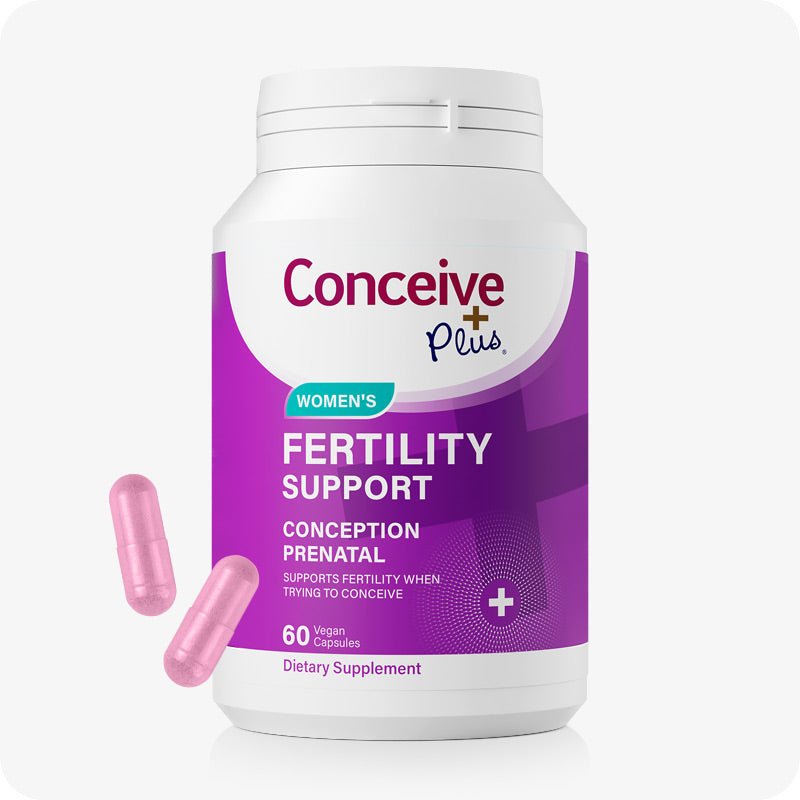
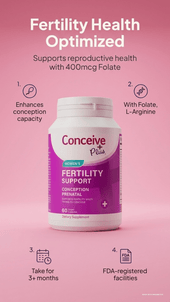
De FDA classificeert inositol als een voedingssupplement, maar de kwaliteit varieert tussen merken. Zoek naar producten die voldoen aan de nieuwste etiketteringsnormen van 2026, die een enkele, prominente verplichte disclaimer bevatten. Hoewel poeders met één ingrediënt soms goedkoper zijn, presteren uitgebreide "Vrouwen Vruchtbaarheids Ondersteuning" mengsels vaak beter omdat ze meerdere PCOS-routes tegelijk aanpakken. Je kunt best verkochte vruchtbaarheidsproducten gebruiken als referentie voor hoe een hoogwaardige, klinische formule eruit zou moeten zien. Hoogwaardige opties garanderen zuiverheid en vermijden onnodige vulstoffen die de opname van myo-inositol voor pcos vruchtbaarheid kunnen verstoren.
Klaar om de volgende stap in je reis te zetten? Ontdek vandaag nog onze op bewijs gebaseerde vruchtbaarheidsoplossingen om de juiste ondersteuning voor jouw unieke cyclus te vinden.
Inositol integreren in je holistische PCOS vruchtbaarheidsplan
Supplementen zijn een basis, niet het hele huis. Hoewel myo-inositol voor pcos vruchtbaarheid een krachtige interventie is, werkt het het beste als het deel uitmaakt van een bredere strategie. Het hormonale systeem van je lichaam werkt niet in een vacuüm. Het reageert op wat je eet, hoe je beweegt en hoe je met stress omgaat. Door je supplementenprotocol te omringen met ondersteunende leefgewoonten creëer je een synergetisch effect dat je vooruitgang naar een regelmatige cyclus kan versnellen.
Een dieet met een lage glycemische index is hier je beste bondgenoot. Wanneer je voedingsmiddelen eet die je bloedsuiker niet snel laten stijgen, verlaag je de hoeveelheid insuline die je alvleesklier moet produceren. Dit vermindert de "ruis" waar je eierstokken doorheen moeten filteren, waardoor het inositol zijn werk efficiënter kan doen. Combineer dit met matige lichaamsbeweging, zoals stevig wandelen of krachttraining, om de insulinegevoeligheid verder te verbeteren. Je valt in feite de oorzaak van PCOS vanuit drie verschillende hoeken aan: voeding, beweging en gerichte supplementatie. Deze veelzijdige aanpak leidt doorgaans tot de meest duurzame resultaten in 2026.
Succes volgen voorbij de weegschaal
Veel vrouwen raken ontmoedigd als ze niet meteen gewichtsverlies zien, maar verbeteringen in de vruchtbaarheid gebeuren vaak stilletjes voordat de weegschaal iets aangeeft. Let op "overwinningen zonder de weegschaal" zoals een helderdere huid, minder trek in suiker en het verschijnen van "eiwitachtig" cervicaal slijm. Dit zijn fysieke tekenen dat je androgeenniveaus dalen en je oestrogeen begint te balanceren. Je kunt Conceive Plus trackingtools gebruiken om deze subtiele veranderingen vast te leggen en patronen in je cyclus te herkennen. De meeste vrouwen ervaren hun eerste "Inositol Periode"—een natuurlijke, door supplementen geïnduceerde cyclus—binnen 30 tot 90 dagen van consistent gebruik.
Het maximaliseren van de vruchtbare periode
Zodra myo-inositol voor pcos vruchtbaarheid je ovulatie herstelt, moet je klaar zijn voor de vruchtbare periode. Het herstellen van een cyclus is de eerste hindernis, maar succesvolle bevruchting vereist een "sperma-vriendelijke" omgeving. Stressvolle situaties of bepaalde vaginale omstandigheden kunnen de beweeglijkheid van sperma belemmeren, waardoor het moeilijker wordt voor het sperma om het eitje te bereiken. Richt je op gehydrateerd blijven en het behouden van een gezonde vaginale pH tijdens je piekdagen om ervoor te zorgen dat het hoogwaardige eitje dat je hebt verzorgd de beste kans heeft om een gezond sperma te ontmoeten. Om je routine te vereenvoudigen en ervoor te zorgen dat je alles hebt wat je nodig hebt voor de reis die voor je ligt, kun je Conceive Plus Vruchtbaarheidsbundels kopen. Deze samengestelde sets zijn ontworpen om je PCOS-reis vanuit elke hoek te ondersteunen, door interne ondersteuning te combineren met de hulpmiddelen die je nodig hebt voor een succesvolle conceptie.
Neem de controle over je hormonale gezondheid in 2026
Je hebt nu de routekaart om verder te gaan dan de frustratie van onregelmatige cycli en insulineresistentie. Door prioriteit te geven aan de cellulaire communicatie die myo-inositol biedt, behandel je niet alleen symptomen; je verbetert actief de micro-omgeving van je eierstokken. Succes komt door te focussen op de fysiologische 40:1 verhouding en het aanhouden van een consistente routine van minstens 90 dagen om de echte impact op de rijping van je eicellen te zien. Het combineren van myo-inositol voor PCOS vruchtbaarheid met een laag-glycemische levensstijl creëert een krachtige basis voor je conceptiereis.
Wacht niet om je eicelkwaliteit te optimaliseren. Ondersteun je cyclus met Conceive Plus vruchtbaarheidssupplementen, die klinisch zijn samengesteld voor TTC en aanbevolen door vruchtbaarheidsklinieken wereldwijd. Vertrouwd door miljoenen in meer dan 70 landen, bieden deze producten de hoogwaardige ondersteuning die je lichaam nodig heeft tijdens deze belangrijke periode. Je hebt de tools en de wetenschap om je pad naar het ouderschap te ondersteunen. Blijf consistent, vertrouw op het biologische proces en zet die volgende stap met vertrouwen.
Veelgestelde vragen
Hoe lang duurt het voordat myo-inositol werkt voor PCOS vruchtbaarheid?
De meeste vrouwen zien meetbare verbeteringen in hun cyclus binnen 3 tot 6 maanden van consistent gebruik. Deze tijdlijn is nodig omdat het ongeveer 90 dagen duurt voordat een eicel rijpt voor de ovulatie. Hoewel je binnen de eerste weken misschien minder trek in suiker of meer energie merkt, vereist het gebruik van myo-inositol voor PCOS vruchtbaarheid een volledige toewijding van drie maanden om de kwaliteit van de eicellen te beïnvloeden en de menstruatieregulariteit te herstellen.
Kan ik myo-inositol nemen als ik geen PCOS heb maar wel onregelmatige cycli?
Ja, je kunt dit supplement gebruiken, zelfs als je niet officieel bent gediagnosticeerd met PCOS. Myo-inositol is een van nature voorkomend voedingsstof die de algemene insulinegevoeligheid en de gezondheid van de eierstokken ondersteunt. Als je onregelmatige cycli worden veroorzaakt door schommelingen in de bloedsuikerspiegel of een slechte rijping van de eicellen, kan inositol helpen deze processen te stabiliseren en een meer voorspelbare ovulatie bevorderen, ongeacht een specifieke diagnose.
Zijn er bijwerkingen bij langdurig gebruik van myo-inositol?
Klinisch onderzoek toont aan dat myo-inositol zeer goed wordt verdragen bij langdurig gebruik. In tegenstelling tot sommige voorgeschreven alternatieven veroorzaakt het meestal geen ernstige gastro-intestinale klachten of uitputting. Een klein aantal gebruikers meldt milde misselijkheid of een opgeblazen gevoel bij het starten met een hoge dosis. Je kunt deze kleine problemen meestal vermijden door je dagelijkse inname te splitsen in twee kleinere doses, ’s ochtends en ’s avonds.
Is het veilig om myo-inositol te blijven gebruiken zodra ik een positieve zwangerschapstest heb?
Het wordt over het algemeen als veilig beschouwd om je regime tijdens de zwangerschap voort te zetten, en veel experts raden het aan. Het handhaven van je dosis kan helpen gezonde bloedsuikerspiegels te ondersteunen en mogelijk het risico op zwangerschapsdiabetes te verminderen, vooral bij vrouwen met een geschiedenis van insulineresistentie. Je moet je supplementenplan altijd bespreken met je verloskundige zodra je zwangerschap is bevestigd om te zorgen dat het aansluit bij je prenatale zorg.
Helpt myo-inositol ook bij PCOS-symptomen zoals acne en haargroei?
Ja, het helpt deze symptomen te beheersen door de hormonale disbalans bij de bron aan te pakken. Door de insulinegevoeligheid te verbeteren, helpt myo-inositol bij PCOS vruchtbaarheid de overtollige testosteronniveaus te verlagen die cystische acne en ongewenste haargroei veroorzaken. Veel vrouwen merken na drie tot vier maanden consistent gebruik een helderdere huid en een vermindering van hirsutisme, omdat hun androgenen beginnen te stabiliseren.
Kan ik myo-inositol samen met mijn gewone prenatale vitamine innemen?
Je kunt inositol veilig combineren met je dagelijkse prenatale vitamine. Veel hoogwaardige vruchtbaarheidssupplementen mengen inositol zelfs al met foliumzuur en andere B-vitamines om het algehele effect op de voortplantingsgezondheid te versterken. Controleer gewoon de etiketten om te zorgen dat je geen hoge doses van dezelfde ingrediënten dubbel inneemt, hoewel inositol zelf meestal niet voorkomt in standaard "één-per-dag" multivitaminen.
Wat gebeurt er als ik meer dan de aanbevolen dosis inositol neem?
Het innemen van aanzienlijk meer dan de aanbevolen dagelijkse dosis van 4000 mg leidt meestal tot spijsverteringsproblemen. Je lichaam kan reageren met losse ontlasting, diarree of buikkrampen terwijl het de overtollige suikeralcohol verwerkt. Er is geen bewijs dat het nemen van "mega-doses" het vruchtbaarheidsproces versnelt, dus het is het beste om binnen het klinisch bestudeerde bereik te blijven om onnodige bijwerkingen te vermijden.
Heb ik in 2026 een recept nodig voor myo-inositol?
Nee, je hebt in 2026 geen recept nodig om myo-inositol te kopen. De FDA blijft het classificeren als een voedingssupplement, wat betekent dat het vrij verkrijgbaar is voor iedereen die zijn voortplantingsgezondheid wil ondersteunen. Hoewel je geen doktersvoorschrift nodig hebt, is het een goed idee om je zorgverlener te informeren over nieuwe supplementen die je aan je vruchtbaarheidsplan toevoegt.