IVF Preparation: The Complete 12-Week Guide to Optimising Your Body and Mind for IVF Success


In vitro fertilisation (IVF) is one of the most transformative reproductive technologies available today, offering hope to millions of people worldwide who struggle with infertility. According to the latest data from the Society for Assisted Reproductive Technology (SART), over 330,000 IVF cycles are performed each year in the United States alone, with live birth success rates approaching 55% for women under 35 when optimal preparation protocols are followed.
Yet the difference between a successful cycle and a disappointing outcome often comes down to what happens in the 12 weeks before egg retrieval. This critical preparation window — approximately three menstrual cycles or one full egg maturation timeline — is when you have the greatest opportunity to influence egg quality, sperm health, and the uterine environment that will welcome your embryo.
This comprehensive guide draws on peer-reviewed research from leading fertility centres, including Harvard Medical School, the European Society of Human Reproduction and Embryology (ESHRE), and the American Society for Reproductive Medicine (ASRM), to give you an evidence-based roadmap for IVF preparation.
Understanding the IVF Timeline: Why Preparation Matters
A full IVF cycle typically spans 4 to 6 weeks from the start of ovarian stimulation to the pregnancy test, but the preparation begins much earlier. Oocytes (eggs) take approximately 90 days to develop from primordial follicle to mature egg ready for retrieval. This means the lifestyle and nutritional choices you make today are directly influencing the eggs that will be retrieved in three months' time.
Research published in Human Reproduction Update (2023) demonstrated that women who followed a structured 12-week pre-IVF preparation protocol had significantly higher mature oocyte yields (a mean of 11.4 versus 8.2) and improved blastocyst formation rates compared to those who began stimulation without structured preparation. Similarly, sperm parameters, including DNA fragmentation index, motility, and morphology, show measurable improvement within 72 to 90 days of targeted intervention.
Nutritional Optimisation for IVF Success
Dietary patterns during the three months before an IVF cycle have emerged as one of the most modifiable factors influencing outcomes. A landmark prospective cohort study published in Fertility and Sterility (2022) followed 612 women undergoing their first IVF cycle and found that those adhering most closely to a Mediterranean-style dietary pattern had 65% higher odds of clinical pregnancy compared to those with the lowest adherence scores.
Coenzyme Q10 (CoQ10): A systematic review in Reproductive BioMedicine Online (2023) found that CoQ10 supplementation at 200-600 mg daily for 8-12 weeks before IVF significantly improved oocyte quality and embryo grade, especially in women over 35.
Omega-3 Fatty Acids: A randomised controlled trial of 180 women undergoing IVF demonstrated that those supplemented with 2 grams of omega-3s daily for 12 weeks prior to retrieval had higher blastocyst formation rates and improved endometrial thickness on transfer day.
Vitamin D: A meta-analysis of 11 studies encompassing over 2,700 IVF cycles found that women with sufficient vitamin D levels (≥30 ng/mL) had significantly higher clinical pregnancy rates (odds ratio 1.46) compared to those with insufficient levels.
Folate and Methylfolate: While folic acid is well-established for neural tube defect prevention, emerging evidence suggests that the active form 5-MTHF may be more beneficial for women with MTHFR gene variants, which affect up to 40% of the population.
Stress Management and The Mind-Body Connection
A 2023 meta-analysis published in Human Reproduction reviewed 36 studies involving 12,845 women and found that elevated pre-treatment anxiety scores were associated with a 25% reduction in clinical pregnancy rates following IVF.
Chronic stress activates the hypothalamic-pituitary-adrenal (HPA) axis, elevating cortisol levels that can disrupt the delicate hormonal cascade required for follicular development and implantation. Elevated cortisol has been directly linked to reduced oocyte quality, impaired endometrial development, and lower live birth rates.
Mindfulness-based interventions have shown particular promise. A randomised trial of 143 women undergoing IVF found that those who completed an 8-week MBSR programme had significantly lower anxiety scores and a 20% higher live birth rate compared to the control group.
Optimising Male Factor Fertility Before IVF
Sperm DNA fragmentation index (DFI) is now recognised as a critical predictor of IVF-ICSI outcomes. A prospective study of 1,000 couples undergoing ICSI found that those with male partners whose DFI exceeded 30% had a 2.5-fold higher risk of pregnancy loss compared to those with DFI below 15%. Key strategies include supplementation with zinc (30 mg daily), selenium (200 mcg), and CoQ10 (200 mg).
Uterine Health and Endometrial Preparation
Endometrial thickness is the most commonly assessed parameter. Most fertility centres consider a thickness of 7-10 mm on the day of progesterone trigger as optimal. Vitamin E (600 IU daily) and L-arginine (6 grams daily) have been studied for improving endometrial blood flow. A randomised trial of 118 women with thin endometrium found that the combination significantly increased endometrial thickness from a mean of 5.8 mm to 8.1 mm.
Fertility Supplements for Women: What the Evidence Says About IVF Preparation
Choosing the best fertility supplements for women during IVF preparation can meaningfully influence your outcomes. Research shows that targeted supplementation — especially when started 12 weeks before egg retrieval — can improve egg quality, fertilisation rates, and embryo development. The following trying to conceive supplements have the strongest evidence base for IVF preparation:
DHEA: A meta-analysis of 9 randomised trials found that DHEA supplementation improved ovarian response and increased live birth rates in women with diminished ovarian reserve.
Myo-Inositol: A randomised trial of 250 women with PCOS found that myo-inositol (4 grams daily) plus folic acid for 12 weeks prior to IVF significantly reduced the total gonadotropin dose required for stimulation.
Melatonin: A randomised placebo-controlled trial of 116 women undergoing IVF found that melatonin (3 mg nightly for 12 weeks) significantly increased fertilisation rates and embryo quality.
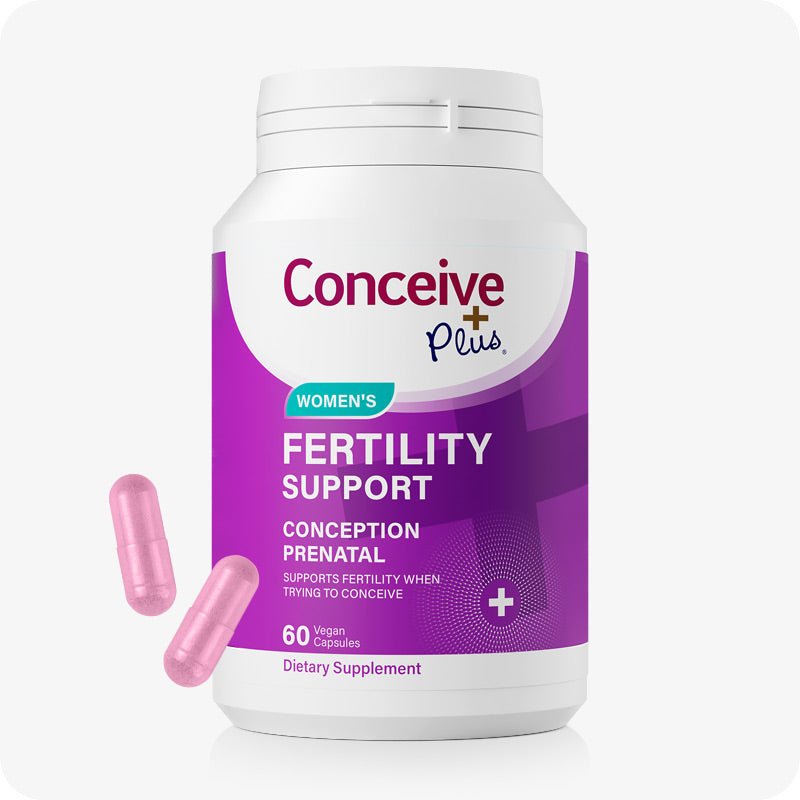
The best prenatal vitamins for IVF preparation go beyond standard folic acid — look for active methylfolate (5-MTHF), CoQ10 as ubiquinol, vitamin D3, and omega-3 DHA. Explore Conceive Plus fertility supplements for women — formulated specifically to support the IVF preparation window.
Lifestyle Modifications That Make a Difference
Exercise: Moderate physical activity — 30-45 minutes of brisk walking, swimming, or cycling 5 days per week — is associated with improved IVF outcomes. However, women who engaged in vigorous exercise more than 4 hours per week had 23% lower implantation rates.
Sleep: Women who reported sleeping fewer than 7 hours per night had 18% lower clinical pregnancy rates.
Environmental Toxins: Endocrine-disrupting chemicals found in plastics and non-stick cookware have been linked to reduced fertility outcomes. A 2023 review found that women with the highest urinary phthalate concentrations had 37% lower IVF success rates.
FAQ — Frequently Asked Questions About IVF Preparation
Q1: How long should I prepare for IVF before starting treatment?
Most fertility specialists recommend a minimum of 12 weeks (3 months) of dedicated preparation, corresponding to the full egg maturation cycle.
Q2: Can I take too many supplements during IVF preparation?
Yes. Taking more than the recommended doses can be counterproductive. Work with your fertility specialist to develop a targeted plan.
Q3: Is acupuncture worth trying during IVF?
Current evidence suggests modest benefit, particularly around the time of embryo transfer.
Q4: Does weight loss before IVF improve success rates?
For women with a BMI over 30, structured weight loss of 5-10% over 3-6 months significantly improves IVF outcomes.
Q5: Can men improve sperm quality during IVF preparation?
Absolutely. Lifestyle changes implemented 12 weeks before the IVF cycle can meaningfully improve sperm DNA integrity, motility, and morphology.
Q6: What blood tests should I have before starting IVF?
Standard pre-IVF blood work includes ovarian reserve markers (AMH, FSH, estradiol), thyroid function (TSH, T4), vitamin D, iron studies, and infectious disease screening.
Q7: Should I stop using fertility lubricants during IVF preparation?
Use only sperm-friendly, fertility-friendly lubricants. Most conventional lubricants impair sperm function.
Q8: Is it safe to exercise during IVF treatment?
Moderate exercise is beneficial. Vigorous high-intensity exercise should be reduced during the stimulation phase.
Q9: Can stress really affect IVF outcomes?
Yes. Stress management should be a core component of your IVF preparation plan.
Q10: How do I know if I need an endometrial biopsy before IVF?
Women with a history of recurrent implantation failure may benefit from endometrial receptivity array (ERA) testing.
Support Your IVF Journey with the Best Prenatal Vitamins and Fertility Supplements
Every step of your IVF journey matters, from the preparation phase to transfer day. Conceive Plus Female Fertility Support provides the comprehensive nutritional foundation your body needs during IVF preparation — the best prenatal vitamins including active folate (5-MTHF), CoQ10, vitamin D3, and omega-3s in optimal doses. Give yourself every advantage with the fertility supplements for women trusted by IVF patients worldwide.