Fertility Supplements: The Complete Evidence-Based Guide to Which Nutrients Actually Work in 2026


Fertility Supplements: The Complete Evidence-Based Guide to Which Nutrients Actually Work in 2026
Navigating the world of fertility supplements can feel overwhelming. Walk into any pharmacy or scroll through Amazon, and you will find dozens of bottles promising to boost your chances of conception. Some feature bold claims and glossy labels. Others rely on clever marketing rather than scientific evidence. The question every couple trying to conceive asks is simple: which supplements actually work?
In this comprehensive guide, we cut through the marketing noise and examine what the latest peer-reviewed research says about fertility supplementation. Whether you are just beginning your journey or have been trying for months, understanding the evidence behind key nutrients can help you make informed decisions about what to put into your body. Fertility nutrition is one of the most powerful tools at your disposal, and knowing which nutrients genuinely support reproductive health can save you time, money, and unnecessary frustration.
The Science Behind Fertility Supplementation
Fertility supplements are not magic pills - they are targeted doses of nutrients that support the biological processes involved in conception. Unlike a standard multivitamin, fertility-specific formulations provide higher doses of key nutrients that directly impact reproductive health. The concept of nutritional synergy is crucial here: nutrients do not work in isolation. Vitamin D improves calcium absorption, zinc supports the activity of over 300 enzymes, and CoQ10 enhances mitochondrial function in egg cells.
Research published in Human Reproduction Update in 2023 found that women taking specific fertility supplements had significantly higher rates of conception compared to those taking standard multivitamins. The difference comes down to dosage and bioavailability. While a standard multivitamin might contain 400 mcg of folic acid, fertility-specific supplements often provide 800-1,000 mcg alongside synergistic nutrients like methylfolate, which is more bioavailable for women with MTHFR gene variations affecting up to 40 percent of the population.
The timing of supplementation matters enormously. Because egg maturation takes approximately 90 days and sperm production takes about 74 days, starting supplements at least three months before attempting conception ensures nutrients are available during critical phases of gamete development. This three-month window is one of the most important concepts in fertility nutrition, yet it is frequently overlooked by couples eager to start trying.
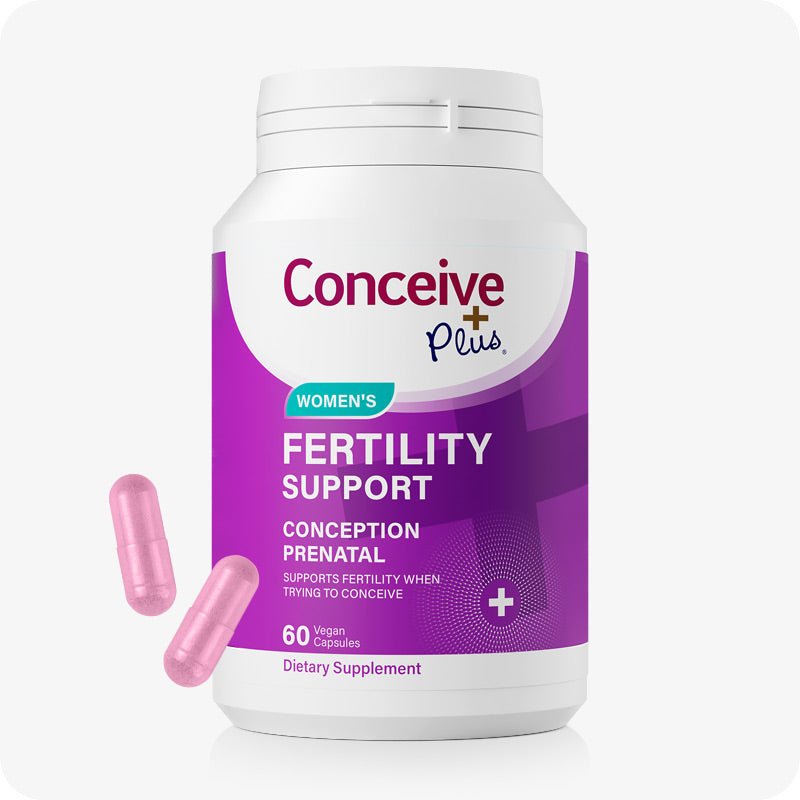
Conceive Plus Prenatal Essential Nutrients provides a comprehensive blend of science-backed ingredients in their most bioavailable forms, including methylated folate, CoQ10, vitamin D3, and over 20 evidence-based nutrients designed to bridge the gap between diet and optimal reproductive health.
Key Nutrients for Female Fertility
Folate and Methylfolate
Folate is perhaps the most well-researched fertility nutrient in existence. The CDC recommends that all women of childbearing age consume at least 400 mcg of folic acid daily to prevent neural tube defects. However, up to 40 percent of women carry a genetic variation in the MTHFR gene that makes it difficult to convert folic acid into its biologically active form, methylfolate. Advanced fertility supplements now use methylfolate directly, bypassing this conversion step and ensuring your body can actually utilise what you ingest.
A landmark study published in the New England Journal of Medicine demonstrated that adequate folate levels before conception reduce the risk of neural tube defects by up to 70 percent. But folate role extends far beyond preventing birth defects. This B vitamin is critical for DNA synthesis and cell division - processes fundamental during egg maturation and early embryonic development.
CoQ10
Coenzyme Q10 is a powerful antioxidant that plays a vital role in mitochondrial energy production. As women age, egg quality declines largely due to mitochondrial dysfunction. A 2022 randomized controlled trial in Fertility and Sterility found that women taking 600 mg of CoQ10 daily for 60 days demonstrated significantly better egg quality and higher fertilisation rates during IVF cycles. The effect is most pronounced in women over 35, but benefits have been observed across all age groups.
Vitamin D
Vitamin D receptors are present throughout the reproductive system - in the ovaries, endometrium, and placenta. A meta-analysis of 11 studies found that women with adequate vitamin D levels were significantly more likely to achieve pregnancy through IVF. Given that an estimated 40 percent of women of reproductive age have insufficient vitamin D levels, supplementation deserves serious consideration.
Myo-Inositol
Particularly beneficial for women with PCOS, myo-inositol has been shown to improve insulin sensitivity, reduce testosterone levels, and restore regular ovulation. A 2024 Cochrane review concluded that myo-inositol supplementation significantly improves ovulation rates and pregnancy outcomes in women with PCOS, with benefits comparable to metformin but with fewer side effects.
Key Nutrients for Male Fertility
Zinc
Zinc is arguably the single most critical mineral for male fertility. It is essential for testosterone production, sperm formation, and maintaining sperm cell membrane integrity. A systematic review in Nutrients (2023) found that zinc supplementation significantly improved sperm count, motility, and morphology in men with low baseline levels.
CoQ10 for Men
Just as CoQ10 supports egg quality, it also benefits sperm health. Sperm cells have high energy requirements for motility. Multiple studies show CoQ10 supplementation increases sperm concentration and motility by 30 to 50 percent in men with low baseline parameters.
Antioxidant Vitamins C and E
Vitamin C is present in high concentrations in seminal fluid, protecting sperm DNA from oxidative damage. A 12-week study found that combined vitamin C (1000 mg) and vitamin E (800 IU) supplementation reduced sperm DNA fragmentation by 25 percent.
How to Choose a Fertility Supplement Wisely
Not all fertility supplements are created equal. Look for products with third-party testing - verified by USP, NSF International, or ConsumerLab. Pay attention to nutrient forms: methylated B vitamins, chelated minerals like zinc picolinate, and ubiquinol are more bioavailable than standard counterparts.
Why Most Prenatal Vitamins Are Insufficient for Fertility
Standard prenatal vitamins are designed to support an established pregnancy, not to optimise conception. Most lack CoQ10, myo-inositol, and methylated B vitamins. If you are actively trying to conceive, a fertility-specific supplement provides targeted nutritional support that standard prenatals do not offer.
Frequently Asked Questions
1. Can fertility supplements help me get pregnant faster?
Research suggests appropriate supplementation can improve fertility markers and reduce time to conception. A 2023 study found women taking comprehensive fertility supplements were 1.6 times more likely to conceive within six months.
2. Are fertility supplements safe during IVF?
Many are safe and potentially beneficial, but always inform your reproductive endocrinologist about all supplements you are taking.
3. How long before conception should I start supplements?
At least three months - covering one full egg maturation cycle. Six months is ideal for women over 35.
4. Can men and women take the same supplements?
There is overlap, but men need more zinc and CoQ10 while women need more folate and iron. Gender-specific formulations are recommended.
5. What if I have MTHFR gene variations?
Choose supplements with methylfolate rather than folic acid to bypass the conversion step your body struggles with.
6. Can I take too many supplements?
Yes. Vitamin A and selenium can be harmful at excessive doses. Always follow recommended dosages and consult a healthcare provider.
7. Do I need supplements if I eat a healthy diet?
Therapeutic doses of CoQ10 (300-600 mg) cannot be achieved through food alone. Supplements fill crucial nutritional gaps.
8. Should I stop supplements once pregnant?
Folate and vitamin D should continue. High-dose CoQ10 is typically discontinued. Consult your provider.
9. Can supplements help with PCOS?
Myo-inositol has strong evidence for improving ovulation in PCOS. Vitamin D and omega-3s may also help.
10. What is the most important fertility supplement?
There is no single most important supplement, but methylfolate, CoQ10, and vitamin D are consistently highlighted as foundational.
Bottom Line
Fertility supplements are powerful evidence-based tools when chosen wisely and taken consistently. Focus on quality formulations with bioavailable ingredients, give them at least three months to work, and always consult with a healthcare provider for personalised advice.
Ready to support your fertility journey? Conceive Plus Prenatal Essential Nutrients provides methylated folate, CoQ10, vitamin D3, and over 20 evidence-based ingredients in their most bioavailable forms - formulated by fertility experts to bridge the gap between diet and optimal reproductive health.