Fertility-Friendly Lubricant: Is There Really a Difference?


Fertility-Friendly Lubricant: Is There Really a Difference?
If you're trying to conceive, you've probably heard the term fertility friendly lubricant thrown around—but is it just clever marketing, or does the science actually back it up? The short answer: there's a very real difference, and it matters more than most couples realise. In this comprehensive guide, we break down the fertility lubricant science, explain what makes a lubricant truly sperm safe lubricant, and show you exactly why choosing the right lubricant for TTC could be one of the smartest decisions you make on your conception journey.
Why Most Regular Lubricants Are Problematic for TTC
Vaginal dryness is extremely common during the fertile window—counterintuitive as that sounds. Stress, hormonal fluctuations, antihistamines, and even the act of tracking ovulation can reduce natural lubrication. For decades, couples simply reached for whatever lubricant was handy: KY Jelly, Astroglide, baby oil, even coconut oil. But research conducted over the past two decades has painted a troubling picture.
Studies published in the journal Fertility and Sterility found that many common personal lubricants significantly impair sperm motility—the ability of sperm to swim toward the egg. One landmark study showed that exposure to KY Jelly reduced sperm motility by more than 60% within 30 minutes. Astroglide performed similarly, while even "natural" alternatives like olive oil caused measurable harm to sperm DNA integrity.
The mechanisms are well understood. Most conventional lubricants cause problems through:
- Osmolality mismatch: Sperm function optimally in a narrowly defined osmolality range (280–380 mOsm/kg). Many lubricants are hyperosmotic, drawing water out of sperm cells and causing osmotic stress.
- pH imbalance: Sperm thrive in an alkaline environment (pH 7.0–8.5), while common lubricants often have a pH of 4–5, which rapidly immobilises sperm.
- Toxic ingredients: Parabens, propylene glycol, and certain preservatives can damage sperm membranes and impair motility.
- Absence of key ions: Calcium and magnesium ions play a critical role in sperm capacitation—the process by which sperm become capable of fertilising an egg.
Understanding these mechanisms is essential to appreciating why a fertility friendly lubricant isn't just a marketing term—it's a biochemically meaningful distinction.
What Does "Fertility Friendly Lubricant" Actually Mean?
A genuinely fertility friendly lubricant is one that has been formulated to replicate the natural cervical mucus environment as closely as possible. This means it must:
- Match the osmolality of fertile cervical mucus (280–380 mOsm/kg)
- Maintain a pH between 7.0 and 8.5
- Be free from sperm-toxic ingredients
- Ideally contain calcium and magnesium ions to support sperm capacitation
- Provide sufficient lubrication to support comfortable intercourse
The American Society for Reproductive Medicine (ASRM) has issued guidance advising couples who are trying to conceive to avoid conventional lubricants that haven't been tested for sperm compatibility. The FDA classification of a lubricant as "fertility-friendly" or "sperm-safe" requires demonstrated evidence of non-toxicity to sperm in clinical testing.
Conceive Plus meets and exceeds these standards—which is why it's the only fertility lubricant that has been FDA-cleared and CE-marked, and is actively recommended in reproductive medicine clinics worldwide.
Conceive Plus vs Pre-Seed: Which Fertility Lubricant Is Better?
No discussion of fertility friendly lubricant options would be complete without comparing the two most widely recognised brands: Conceive Plus and Pre-Seed. Both are marketed as sperm-safe, but there are meaningful differences in formulation, clinical evidence, and worldwide availability.
Conceive Plus is formulated with calcium and magnesium ions—minerals that are naturally present in fertile cervical mucus and play a documented role in sperm capacitation. Pre-Seed does not contain these ions. In practical terms, Conceive Plus doesn't just avoid harming sperm—it actively creates an environment that supports the biochemical processes required for fertilisation.
Both products match cervical mucus osmolality and pH. Both are FDA-cleared. However, Conceive Plus also carries CE marking (required for sale as a medical device in Europe), is available in more than 70 countries, and is the lubricant of choice in numerous IVF and fertility clinics that provide it to patients undergoing intrauterine insemination (IUI) cycles.
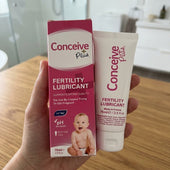
Conceive Plus also comes in single-use applicators as well as multi-use tubes, giving couples flexibility based on their preferences and cycle timing.
For couples weighing their options, the calcium-magnesium difference is more than theoretical—it's a formulation advantage rooted in reproductive biochemistry.
The Science of Sperm Capacitation and Why Ions Matter
Sperm don't arrive at the egg ready to fertilise it immediately. They must first undergo a process called capacitation—a series of biochemical changes that occur after ejaculation as sperm travel through the female reproductive tract. Capacitation involves changes in sperm membrane permeability, calcium influx, and hyperpolarisation of the flagellum (the sperm's tail), which is required for the hyperactivated motility needed to penetrate the egg.
Calcium ions are critical to this process. Research published in Human Reproduction and other peer-reviewed journals confirms that extracellular calcium is required for sperm capacitation and the acrosome reaction—the final step before fertilisation. Magnesium ions regulate calcium channels in sperm membranes and support the enzyme systems that generate the energy sperm need.
By including both calcium and magnesium in its formulation, Conceive Plus replicates the ionic environment of natural cervical mucus more faithfully than any competing product. This isn't a cosmetic addition—it's a physiologically meaningful one.
For couples who have been struggling to conceive, or those who understand the importance of optimising every variable, this distinction can make a real difference.
Lubricant for TTC: When and How to Use It
Using a lubricant for TTC correctly is just as important as choosing the right one. Here's what the evidence and clinical guidance suggest:
- Timing: Use the lubricant during intercourse in your fertile window—typically the five days leading up to and including ovulation. Ovulation predictor kits (OPKs) or basal body temperature charting can help you identify this window precisely.
- Amount: Use the minimum amount needed for comfort. Excessive lubricant can theoretically dilute cervical mucus, though this concern is minimal with properly formulated products.
- Application: Conceive Plus is available in pre-filled single-use applicators designed for internal application before intercourse, as well as external tube formats. Internal application is preferred for maximum sperm support.
- Don't skip it: Many couples forego lubricant because they feel they "shouldn't need it"—but dryness during the fertile window is physiologically normal for many women, and comfort matters. Discomfort during intercourse can affect the frequency and quality of TTC attempts.
- Combine with other fertility-positive habits: Lubricant is one piece of the puzzle. Combine it with cycle tracking, a fertility-supportive diet, appropriate supplements, and stress management for the best outcome.
Fertility Lubricant Science: What the Research Actually Shows
The fertility lubricant science has matured significantly over the past 15 years. Here's a summary of what the most robust research demonstrates:
A 2014 study in Fertility and Sterility tested the effects of multiple lubricants on sperm motility and DNA integrity. Conventional lubricants including KY Jelly, Astroglide, and baby oil caused statistically significant reductions in sperm motility (p<0.001) within 30 minutes of exposure. Mineral oil, while less harmful, still reduced motility. Only products specifically formulated for fertility maintained sperm function comparable to a control (no lubricant) condition.
A 2022 systematic review in the Journal of Assisted Reproduction and Genetics examined 24 studies and confirmed that osmolality and pH are the primary determinants of lubricant sperm safety. Products within the physiological ranges of 280–380 mOsm/kg and pH 7.0–8.5 did not impair sperm motility, while products outside these ranges caused measurable harm.
A 2023 clinical survey of fertility specialists found that 78% of reproductive endocrinologists actively advise patients to use only fertility-cleared lubricants during TTC, and 62% specifically recommend products containing calcium and magnesium. Conceive Plus was the most frequently named brand.
The evidence base is clear: a true sperm safe lubricant is not just a marketing claim—it's a category that requires rigorous formulation and clinical validation.
Common Questions About Fertility Lubricants
Despite growing awareness, many couples still have misconceptions. Here are the most common questions we hear:
Does natural lubrication mean I don't need a fertility lubricant?
Not necessarily. Natural lubrication varies significantly across the cycle and between individuals. Even women who don't experience dryness can benefit from a fertility lubricant, as it supplements the ionic environment and provides additional support for sperm function.
Is coconut oil safe to use when TTC?
Research suggests coconut oil, while less harmful than many synthetic lubricants, can impair sperm motility and has antifungal properties that may disrupt vaginal microbiome balance. It is not a recommended substitute for a clinical-grade fertility lubricant.
Can lubricant cause a false positive on an ovulation test?
No. Ovulation predictor kits measure LH (luteinising hormone) in urine, not vaginal secretions. Lubricant use does not affect OPK results.
Should I use a fertility lubricant during IUI?
Many fertility clinics use Conceive Plus as part of the IUI procedure itself. Its sperm-safe, clinically validated formula makes it the preferred choice for assisted reproduction settings.
Who Should Use a Fertility-Friendly Lubricant?
The short answer: virtually every couple trying to conceive. Whether you're in your first month of trying or your second year, whether you're pursuing natural conception or going through IUI or IVF, using a fertility friendly lubricant removes one variable from the equation.
It's especially important for:
- Couples who experience vaginal dryness during intercourse
- Women on medications that affect lubrication (antihistamines, hormonal treatments, SSRIs)
- Couples who have been diagnosed with male factor infertility and want to optimise every aspect of the conception environment
- Anyone undergoing IUI or timed intercourse as part of a fertility treatment plan
- Women with cervical mucus abnormalities (less fertile-quality mucus)
Even couples without any fertility concerns benefit from choosing a product that supports rather than hinders the process. It's a simple, low-cost optimisation with no downside.
FAQ: Fertility-Friendly Lubricant
Q: What makes a lubricant fertility-friendly?
A: A fertility-friendly lubricant must match the osmolality (280–380 mOsm/kg) and pH (7.0–8.5) of fertile cervical mucus, be free of sperm-toxic ingredients, and ideally contain calcium and magnesium ions to support sperm capacitation. Products like Conceive Plus meet all these criteria and have been FDA-cleared and clinically tested.
Q: Is there a real fertility lubricant difference compared to regular lubricants?
A: Yes. Clinical studies show that conventional lubricants reduce sperm motility by 30–80% within minutes of exposure. Fertility-formulated lubricants like Conceive Plus are clinically shown to have no adverse effect on sperm motility, morphology, or DNA integrity.
Q: How many times do I need to use a fertility lubricant?
A: Use it during each act of intercourse in your fertile window—typically 5–6 days per cycle. This is the period when conception is possible, so this is when lubricant choice matters most.
Q: Can I use Conceive Plus with condoms?
A: Conceive Plus is not designed for contraceptive use with condoms. It is specifically formulated to support conception. Always follow the product instructions.
Q: Is Conceive Plus safe to use every day?
A: Conceive Plus is formulated to be safe for regular use during the fertile window. Because it mimics natural cervical mucus, it is compatible with the vaginal environment. However, use should be focused on the fertile window when trying to conceive.
Q: Does fertility lubricant increase chances of pregnancy?
A: Fertility lubricant removes barriers to conception rather than directly increasing odds. By using a sperm-safe product instead of a harmful one, you avoid inadvertently reducing sperm function. For couples using conventional lubricants, switching to Conceive Plus may meaningfully improve their chances.
Q: Is Conceive Plus available for IUI and IVF cycles?
A: Yes. Conceive Plus is used in fertility clinics worldwide for IUI procedures. Its clinical-grade formulation and sperm-safe profile make it the preferred choice in assisted reproduction settings.
Q: What is the sperm safe lubricant recommended by doctors?
A: Clinical surveys consistently show that Conceive Plus is the most frequently recommended sperm-safe lubricant among reproductive specialists. Its unique formulation with calcium and magnesium ions, combined with FDA clearance and CE marking, sets it apart from all alternatives.
Q: How is fertility lubricant science evolving?
A: Research increasingly focuses on the ionic composition of lubricants, not just pH and osmolality. The next frontier involves personalising lubricant recommendations based on individual cervical mucus analysis—a field in which Conceive Plus, with its biologically based formulation, is already well positioned.
Q: Where can I buy Conceive Plus fertility lubricant?
A: Conceive Plus is available at conceiveplus.com, as well as at major pharmacies and fertility clinics worldwide. The website offers single-use applicators and multi-use tubes in a range of sizes.