Supplements for Low Sperm Motility: What the Science Says in 2026


Supplements for Low Sperm Motility: What the Science Says in 2026
When a couple struggles to conceive, the focus often lands squarely on female fertility. Yet male factors account for approximately 40–50% of all infertility cases, and low sperm motility — often called asthenospermia — is one of the most common culprits. The good news is that supplements for low sperm motility represent a well-researched, accessible, and effective first line of support for many men. This comprehensive guide walks you through the clinical evidence, the best ingredients to look for, and how to choose the right supplement to genuinely move the needle on your fertility.
What Is Sperm Motility and Why Does It Matter for Conception?
Sperm motility describes the ability of sperm to move efficiently — both the percentage that are moving and the quality of that movement. The World Health Organization defines normal motility as at least 42% of sperm showing any movement, with at least 30% demonstrating progressive forward motility. When these numbers fall below threshold, sperm have difficulty navigating the female reproductive tract, penetrating cervical mucus, travelling through the fallopian tubes, and ultimately fertilising an egg.
Poor motility is classified as follows:
- Grade A: Rapid progressive motility (the gold standard)
- Grade B: Slow progressive motility
- Grade C: Non-progressive motility
- Grade D: Immotile sperm
A diagnosis of low motility — especially low progressive motility — can significantly reduce the chances of natural conception. However, sperm production and motility are dynamic processes influenced by lifestyle, nutrition, oxidative stress, and micronutrient status. This means supplements for low sperm motility can produce measurable improvements within 2–3 sperm production cycles (approximately 3 months).
The Root Causes of Low Sperm Motility
Shop Conceive Plus Male Fertility Supplements →
Understanding what drives poor motility is essential for choosing the right targeted supplements. Common causes include oxidative stress (excess reactive oxygen species damaging sperm membranes), mitochondrial dysfunction (sperm rely almost entirely on mitochondria for ATP energy to propel their tails), micronutrient deficiencies (zinc, selenium, vitamin D, and folate play critical roles), lifestyle factors (smoking, excessive alcohol, sedentary behaviour, obesity, heat exposure), varicocele (enlarged veins raising testicular temperature), and hormonal imbalances.
Supplements for Low Sperm Motility: The Evidence-Based Ingredients
Not all supplements are created equal. The following ingredients have the strongest clinical evidence supporting their role in improving sperm motility and overall male fertility.
CoQ10 (Coenzyme Q10)
CoQ10 is arguably the most studied and most effective supplement for sperm motility. It functions as a powerful antioxidant and plays a central role in mitochondrial energy production. Seminal plasma CoQ10 levels are directly correlated with sperm motility. A landmark randomised controlled trial published in Fertility and Sterility found that 200–300 mg of CoQ10 daily for 6 months significantly improved sperm motility, concentration, and morphology. A 2021 meta-analysis of 7 RCTs confirmed these findings. The ubiquinol form may offer superior bioavailability.
L-Carnitine and Acetyl-L-Carnitine
L-carnitine is concentrated in the epididymis — the structure where sperm mature and acquire the ability to move. It facilitates fatty acid transport into mitochondria for energy production, directly fuelling sperm motility. Multiple clinical studies demonstrate that L-carnitine supplementation (2–3 g daily) significantly improves forward progressive motility. A combined L-carnitine and acetyl-L-carnitine protocol produced the strongest results in several trials.
Zinc
Zinc is essential for testosterone synthesis, sperm production, and the structural integrity of the sperm tail. Zinc deficiency is associated with reduced testosterone levels, decreased sperm count, and significantly impaired motility. Studies show that zinc supplementation (25–50 mg daily) improves motility in zinc-deficient men.
Selenium
Selenium is incorporated into selenoproteins critical for healthy sperm tail structure. The enzyme glutathione peroxidase 5, which protects sperm from oxidative damage in the epididymis, is selenium-dependent. Supplementation with 200 mcg of selenium daily has been shown to improve motility and morphology.
Vitamin D
Vitamin D receptors are present on sperm cells and play roles in calcium signalling essential for flagellar movement. Men with vitamin D deficiency have significantly lower motility than men with sufficient levels. Supplementation to achieve optimal vitamin D status (40–60 ng/mL) has been associated with improved progressive motility.
Folate (Methylfolate)
Low folate intake is associated with higher rates of sperm DNA fragmentation, which impairs motility and fertilisation potential. The methylated form (methylfolate or 5-MTHF) is preferable for men with MTHFR gene variants. Doses of 400–800 mcg daily are typically recommended.
Vitamin C and Lycopene
Vitamin C is the most abundant antioxidant in seminal plasma — it protects sperm DNA from oxidative damage and contributes to overall motility. Lycopene is a powerful carotenoid antioxidant naturally concentrated in the testes and seminal plasma, shown to reduce ROS levels and improve progressive motility.
How Conceive Plus Male Fertility Supplement Addresses Low Sperm Motility
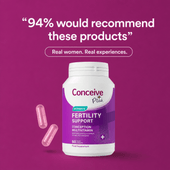
Rather than cobbling together eight or more individual supplements, Conceive Plus has formulated a comprehensive male fertility supplement that delivers clinically relevant doses of the most evidence-backed ingredients in a single daily formula. Conceive Plus men's supplement includes CoQ10, L-carnitine, zinc, selenium, vitamin D, methylfolate, vitamin C, and lycopene — specifically calibrated to work synergistically for optimal sperm motility support.
Unlike many generic multivitamins, Conceive Plus is formulated specifically for men trying to conceive, using the more bioavailable ubiquinol form of CoQ10 and methylfolate rather than folic acid — details that matter when you are actively trying to improve your fertility metrics.
Lifestyle Changes That Supercharge Your Supplement Results
Supplements for low sperm motility work best when paired with targeted lifestyle changes. Research consistently shows that combining nutritional supplementation with lifestyle optimisation produces faster and more pronounced improvements than supplements alone.
- Avoid heat: Keep testicles cool — avoid saunas, hot baths, tight underwear, and laptops on laps. Even modest testicular temperature elevation can reduce motility within days.
- Quit smoking: Smoking is one of the most potent drivers of oxidative stress in sperm. Studies show motility improvements within 3 months of quitting.
- Limit alcohol: Alcohol reduces testosterone and increases oxidative stress. Limiting intake to fewer than 4 units per week shows measurable benefits.
- Exercise regularly: Moderate aerobic exercise 3–5 days per week improves testosterone levels and reduces oxidative stress.
- Manage stress: Chronic psychological stress elevates cortisol, suppressing testosterone. Mindfulness, adequate sleep, and exercise all help.
- Optimise diet: A Mediterranean-pattern diet rich in antioxidants, healthy fats, and lean protein is associated with significantly better sperm parameters.
Conceive Plus vs Pre-Seed: Supporting Both Partners in Your Fertility Journey
When both partners are optimising fertility, the question often arises about which lubricant to use during intercourse. Most standard commercial lubricants — including water-based and silicone-based options — are toxic to sperm. Studies show that common lubricants like KY Jelly and Astroglide reduce sperm motility by up to 60–87% within 30 minutes of exposure.
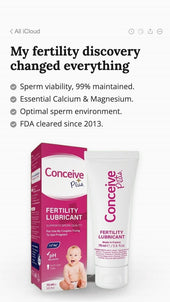
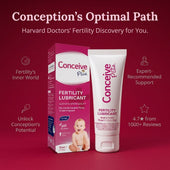
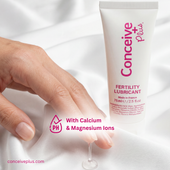
Conceive Plus fertility lubricant is specifically formulated to be sperm-compatible, with a pH (5.0–6.5) and osmolality that mirror fertile cervical mucus. It uniquely contains calcium and magnesium ions that have been shown to support sperm capacitation — the process sperm must undergo to gain fertilisation capability. This is a clinically meaningful differentiator compared to Pre-Seed. For couples in which the male partner is simultaneously addressing motility issues, using a sperm-compatible lubricant is an important complementary step.
How Long Until Supplements Improve Sperm Motility?
Spermatogenesis takes approximately 72–74 days. This means any supplement you start today will begin producing measurable changes in sperm quality in roughly 2.5 months, with the full effect visible at 3–6 months. Start supplements at least 3 months before attempting conception or IUI/IVF procedures. Have a follow-up semen analysis at the 3-month mark to objectively assess improvement.
When to See a Specialist
While supplements for low sperm motility can produce significant improvements in many cases, seek medical evaluation when: motility is below 20% (severe asthenospermia), there is a combination of low count, low motility, and poor morphology, you have been trying to conceive for more than 12 months (or 6 months if the female partner is over 35), there is a prior diagnosis of varicocele or infection, or sperm DNA fragmentation index is above 25%.
Frequently Asked Questions About Supplements for Low Sperm Motility
How long does it take for supplements to improve sperm motility?
Most men see measurable improvements in motility after 3 months of consistent supplementation, as this aligns with one full cycle of spermatogenesis. Some studies show continued improvement through 6 months, so a minimum 3-month commitment is recommended.
What is the most effective supplement for sperm motility?
CoQ10 and L-carnitine have the strongest clinical evidence for improving progressive sperm motility. Selenium, zinc, and vitamin D are also well-supported. A comprehensive formula combining multiple evidence-based ingredients typically outperforms single-ingredient supplements.
Can supplements completely cure low sperm motility?
Supplements can significantly improve motility — often enough to achieve natural conception. They are most effective when the underlying cause is nutritional or oxidative in nature. Structural or genetic causes may require medical intervention.
Are sperm motility supplements safe?
The ingredients with the best evidence — CoQ10, L-carnitine, zinc, selenium, folate, vitamin C, and vitamin D — are well-tolerated at recommended doses. Always choose supplements from reputable manufacturers with third-party testing.
Should both partners take supplements when trying to conceive?
Yes. Research consistently shows that optimising both partners' fertility nutrition produces the best outcomes. While the male partner focuses on motility-supporting nutrients, the female partner can benefit from folate, CoQ10, and antioxidants for egg quality and uterine health.
Can diet alone improve sperm motility without supplements?
Diet plays a significant role, and a Mediterranean-style diet rich in antioxidants can improve sperm parameters. However, achieving therapeutic doses of key nutrients like CoQ10 (200–300 mg daily) through diet alone is very difficult. Supplements bridge the gap.
Does masturbation frequency affect sperm motility when trying to conceive?
The optimal ejaculation frequency for conception is every 2–3 days. Abstinence beyond 5 days allows older sperm to accumulate, which typically have lower motility and higher DNA fragmentation. Regular ejaculation keeps the population refreshed.
Can stress reduce sperm motility even with good supplementation?
Yes. Chronic psychological stress elevates cortisol, which suppresses testosterone and increases oxidative stress — directly impairing sperm production and motility. Stress management is an essential component of a complete male fertility optimisation plan.
Is sperm motility genetic?
Some cases of severe or primary asthenospermia have genetic causes (such as primary ciliary dyskinesia or Y-chromosome microdeletions). However, the majority of motility issues are acquired and lifestyle/nutrition-related, making them responsive to supplementation and lifestyle change.
How do I know if my supplements are working?
The only way to objectively assess improvement is a follow-up semen analysis. Conduct a baseline analysis before starting supplements, then repeat at 3 months and again at 6 months. Track progressive motility percentage specifically.
Conclusion: Take Action on Sperm Motility Today
Low sperm motility is one of the most treatable aspects of male infertility. With the right supplements for low sperm motility — particularly CoQ10, L-carnitine, zinc, selenium, and vitamin D — combined with targeted lifestyle changes, many men achieve meaningful improvements within 3–6 months. Conceive Plus male fertility supplement is designed specifically for this purpose, combining the most clinically validated motility-supporting ingredients in one convenient daily formula.