pH Balanced Lubricant for Conception: Why It Matters More Than You Think


When you're trying to conceive, the details matter — and one of the most overlooked details is the pH level of anything that enters the vagina. If you've been using a lubricant without checking whether it's pH balanced for conception, you could be inadvertently working against your own fertility goals. Understanding vaginal pH and how lubricants interact with sperm survival may be one of the most important pieces of knowledge for couples in United States trying to get pregnant.
This guide explains exactly what vaginal pH means, why standard lubricants can damage sperm, and how a scientifically formulated, pH balanced lubricant for conception like Conceive Plus makes a measurable difference when you're trying to conceive.
What Is Vaginal pH and Why Does It Matter for Fertility?
pH is a measure of acidity or alkalinity on a scale from 0 to 14. A pH of 7 is neutral, below 7 is acidic, and above 7 is alkaline. The vaginal environment in a healthy woman of reproductive age is typically acidic, with a pH ranging from about 3.8 to 4.5. This acidity is maintained by beneficial lactobacillus bacteria and serves as a protective barrier against infections.
However, sperm thrive in a different pH environment. Semen has a pH of approximately 7.2 to 8.0 — considerably more alkaline than the vagina. This mismatch is not a design flaw; the alkalinity of semen temporarily neutralises vaginal acidity in the immediate path of sperm during intercourse, creating a brief window where sperm can survive and swim toward the egg.
The cervical mucus produced during the fertile window plays a critical role in this process. Around ovulation, cervical mucus becomes more abundant, clear, stretchy, and — crucially — more alkaline. This fertile-quality mucus creates a pH-balanced corridor through the otherwise acidic vagina, allowing sperm to survive and travel upward toward the fallopian tubes.
When a lubricant enters this equation, it can dramatically disrupt the carefully maintained pH balance. Most standard lubricants — including many popular brands sold in pharmacies across United States — have a pH that is either too acidic or too alkaline for sperm health. And the consequences can be significant.
How Standard Lubricants Damage Sperm
Research on lubricant toxicity to sperm has been extensive and consistent. A landmark study published in the journal Fertility and Sterility in 2007 tested several popular lubricants against human sperm under laboratory conditions. The results were striking: lubricants including K-Y Jelly, Astroglide, and Replens significantly reduced sperm motility within 60 minutes, with some products reducing sperm forward motion by more than 90%.
The mechanisms behind this sperm toxicity are multiple. First, pH incompatibility: a lubricant with a pH below 5 creates an environment that is hostile to sperm. Even brief exposure can damage the sperm membrane, impair motility, and reduce the ability of sperm to penetrate the egg. Second, osmolality — the concentration of dissolved particles in the lubricant. Lubricants that are too hyperosmolar (highly concentrated) draw water out of sperm cells through osmosis, causing them to shrink and become non-functional.
The World Health Organization (WHO) has published guidance on what constitutes a sperm-safe lubricant environment. According to WHO criteria, a lubricant suitable for use while trying to conceive should have a pH between approximately 7.0 and 8.5, and an osmolality between 260 and 380 mOsm/kg — parameters that closely match the natural seminal fluid environment.
Most commercial lubricants fail on one or both of these criteria. They're designed for comfort and pleasure, not fertility — and that's a crucial distinction that many couples in United States discover too late in their TTC journey.
The Science Behind pH Balanced Lubricants for Conception
A genuine pH balanced lubricant for conception is one that has been specifically formulated to match the physiological conditions that support sperm survival. This means:
- A pH in the range of 7.0–8.0, compatible with sperm function and closely matching the natural vaginal pH during the fertile window
- Osmolality within the physiologically compatible range (260–380 mOsm/kg), preventing osmotic damage to sperm membranes
- Absence of spermicidal ingredients, including parabens, glycerol (in high concentrations), and certain preservatives that harm sperm
- Isotonic formulation, meaning the lubricant doesn't create concentration gradients that damage sperm
Beyond these baseline requirements, some fertility-focused lubricants go further by actively mimicking the chemical composition of fertile cervical mucus — the natural medium through which sperm travel toward the egg. This is where Conceive Plus stands apart from generic "sperm-safe" products.
Why Conceive Plus Is Uniquely Formulated
Conceive Plus is the only fertility lubricant that contains calcium and magnesium ions — two minerals that are naturally present in fertile cervical mucus and seminal plasma. This formulation is not cosmetic; it has scientific rationale behind it.
Calcium ions play a direct role in sperm function. The acrosome reaction — the process by which a sperm releases enzymes to penetrate the egg — is triggered and regulated by calcium. Magnesium ions support sperm membrane stability and are involved in the enzymatic processes that drive sperm motility. By including these ions at physiologically appropriate concentrations, Conceive Plus creates a medium that more closely replicates the natural conditions sperm encounter in fertile cervical mucus.
Studies on Conceive Plus have demonstrated that it does not impair sperm motility or viability. Unlike most commercial lubricants, it has been tested in clinical settings and cleared by regulatory agencies including the US FDA as a device aid to conception. This regulatory designation — not merely "body-safe" but specifically cleared for conception — is a meaningful distinction for couples who want reassurance that the product has been evaluated for reproductive use.
Conceive Plus is available in multiple formats in United States: individual pre-filled applicators (ideal for targeted internal placement), tubes for external use, and multi-use tubes. Each format is designed to make fertility-focused lubrication accessible, comfortable, and effective.
When to Use a pH Balanced Lubricant and How to Maximise Effectiveness
Timing matters when it comes to fertility lubricant use. The most effective approach is to use Conceive Plus specifically during your fertile window — the approximately 5–6 day period leading up to and including ovulation when conception is possible.
To identify your fertile window, you can use:
- Ovulation predictor kits (OPKs) — these detect the LH surge that precedes ovulation by 24–36 hours
- Basal body temperature (BBT) charting — tracking your morning temperature can help identify the post-ovulation temperature rise, confirming ovulation
- Cervical mucus monitoring — watching for the clear, stretchy, egg-white cervical mucus that signals peak fertility
- Cycle tracking apps — helpful for identifying patterns, though less precise than OPKs for individual cycle variation
When using Conceive Plus, applying it internally (using the pre-filled applicators or the applicator included with tube formats) about 15 minutes before intercourse allows it to warm to body temperature and coat the vaginal walls, creating an optimal environment throughout the path sperm will travel. External application can also provide comfort and is appropriate for couples where dryness is primarily an external concern.
If you're undergoing intrauterine insemination (IUI) or other assisted reproduction procedures, check with your fertility clinic regarding their guidance on lubricant use. Many fertility clinics in United States stock and recommend Conceive Plus specifically because of its clinical evidence profile.
Vaginal Dryness During TTC: Why It's More Common Than You Think
One of the less-discussed challenges of trying to conceive is vaginal dryness — a condition that affects a significant proportion of women and can make timed intercourse uncomfortable or even painful. This is particularly common in women who:
- Are taking antihistamines or decongestants, which can reduce mucus production throughout the body
- Experience hormonal fluctuations during the luteal phase (between ovulation and menstruation)
- Have been trying to conceive for many months and are experiencing the psychological stress that can affect arousal and natural lubrication
- Are taking clomiphene (Clomid) or other ovulation-stimulating medications, which can reduce cervical mucus quality and quantity
- Have conditions like PCOS, thyroid disorders, or are approaching perimenopause
For these women, a pH balanced lubricant for conception serves a dual purpose: it addresses physical discomfort during intercourse, and it creates a sperm-supportive environment — ensuring that the need for lubrication doesn't come at the cost of fertility.
Using a standard lubricant to address dryness during TTC without considering its pH and sperm impact is a common but avoidable mistake. The right product can simultaneously solve both problems.
What the Research Says: Clinical Evidence for Fertility Lubricants
The evidence base for fertility lubricants has grown substantially over the past decade. Several key studies are worth understanding:
A 2012 study published in Fertility and Sterility compared the effects of Conceive Plus and other lubricants on sperm motility in vitro. Conceive Plus was among the lubricants that did not significantly impair sperm motility — contrasting with commonly used alternatives that caused significant reductions.
A 2014 study in the journal Human Reproduction followed more than 1,200 women who were trying to conceive and examined whether lubricant use affected time-to-pregnancy. The study found that women using lubricants not designed for conception had longer time-to-pregnancy, while those using conception-specific lubricants showed comparable outcomes to non-lubricant users.
The American Society for Reproductive Medicine (ASRM) and other fertility organisations now explicitly recommend that women who need lubrication during TTC use products specifically formulated to be sperm-safe, citing the potential for standard lubricants to impair sperm function.
pH Balanced Lubricant vs Regular Lubricant: The Key Differences Summarised
| Feature | Regular Lubricant | Conceive Plus (pH Balanced) |
|---|---|---|
| pH | Typically 3.5–5.5 (too acidic) | 7.0–8.0 (sperm-compatible) |
| Osmolality | Often hyperosmolar | Isotonic, physiologically matched |
| Sperm impact | Reduces motility up to 90%+ | Does not impair sperm function |
| Ions | None | Calcium & magnesium (like cervical mucus) |
| Regulatory status | Cosmetic/personal lubricant | FDA cleared as aid to conception |
| Designed for TTC | No | Yes |
Frequently Asked Questions: pH Balanced Lubricant for Conception
What pH should a fertility lubricant be?
A fertility lubricant should have a pH between approximately 7.0 and 8.5 to be compatible with sperm health. This range aligns with the pH of semen and fertile cervical mucus, both of which are naturally more alkaline than the resting vaginal environment.
Can regular lubricants prevent pregnancy?
While standard lubricants are not contraceptives, research consistently shows they can significantly impair sperm motility and viability. This reduction in sperm function could delay conception or reduce the probability of fertilisation in any given cycle.
Is Conceive Plus safe to use every time we have sex?
Yes. Conceive Plus is designed for regular use during the TTC period and is safe for use throughout your fertile window. It contains no harmful chemicals and is formulated to be gentle on vaginal tissues.
Does vaginal pH change during the menstrual cycle?
Yes. During most of the cycle, vaginal pH is acidic (3.8–4.5). Around ovulation, cervical mucus becomes more alkaline, helping sperm survive. Conceive Plus is formulated to mimic this fertile-phase environment regardless of where you are in your cycle.
Can I use Conceive Plus with IVF or IUI?
Many fertility clinics recommend Conceive Plus for use during natural cycles alongside treatment. If you're undergoing IVF or IUI, consult your fertility specialist — Conceive Plus is widely accepted in clinical settings and used in many fertility practices across United States.
How long should I use Conceive Plus before seeing results?
Conceive Plus is used per-cycle, during intercourse around ovulation. There is no "loading period" — it works immediately to create a sperm-supportive environment. Most couples continue using it throughout their TTC journey.
Does Conceive Plus contain any hormones?
No. Conceive Plus does not contain hormones, steroids, or any prescription ingredients. It is a hormone-free lubricant formulated with ions that match natural cervical mucus chemistry.
Can I use Conceive Plus if I don't experience dryness?
Yes. Even if you produce adequate natural lubrication, Conceive Plus can supplement your natural environment by ensuring optimal pH and ionic conditions throughout the vaginal canal during intercourse.
Is Conceive Plus available without a prescription in United States?
Yes. Conceive Plus is available over the counter and does not require a prescription. It's available online through the official Conceive Plus website and many pharmacies throughout United States.
What's the difference between the applicators and the tube?
The pre-filled applicators deposit the lubricant directly inside the vagina, close to the cervix — ideal for ensuring the entire sperm journey takes place in a pH-balanced environment. The tube format allows both internal application (with the included applicator) and external use. Both are equally effective for fertility purposes.
Choosing the Right Fertility Lubricant: What to Look For
When evaluating any lubricant for conception use, look for products that:
- State the pH clearly on packaging (aim for 7.0–8.0)
- Are classified or regulated as a conception aid, not merely a "body-safe" lubricant
- Have clinical data demonstrating no negative impact on sperm motility or viability
- Avoid glycerol, parabens, and high concentrations of other preservatives
- Are water-based and compatible with latex condoms (for couples alternating between TTC and protection)
Conceive Plus meets all of these criteria and goes further with its unique calcium and magnesium ion formulation — making it the most scientifically complete fertility lubricant available in United States.
Ready to Optimise Your Fertile Window?
Conceive Plus pH Balanced Fertility Lubricant is specifically formulated to support sperm survival — with calcium and magnesium ions that match natural cervical mucus, and a pH precisely calibrated for conception.
The Bottom Line: pH Balanced Lubricant Is a Fertility Decision
Most couples don't realise that their choice of lubricant could be affecting their chances of conception. The science is clear: standard lubricants — even those marketed as "gentle" or "natural" — can significantly impair sperm function through pH incompatibility and osmotic damage. A pH balanced lubricant for conception, specifically Conceive Plus, is designed to avoid these pitfalls and actively support the conditions sperm need to survive, swim, and fertilise.
If you're trying to conceive in United States and you use — or want to use — lubrication during intercourse, the choice is straightforward: make sure it's specifically formulated for fertility. The difference in pH may be invisible to the eye, but its impact on your TTC journey can be substantial.
Complete Your TTC Toolkit
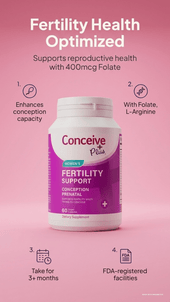
Pair Conceive Plus Lubricant with our fertility supplements for comprehensive conception support. Our bundles include everything you need for your fertility journey.