Folate vs Folic Acid for Pregnancy: Which Is Better for You and Your Baby?


Folate vs Folic Acid for Pregnancy: Which Is Better for You and Your Baby?
When you're trying to conceive or newly pregnant, one of the first things your doctor or midwife will recommend is a B-vitamin supplement to protect against neural tube defects. But here's where the folate vs folic acid pregnancy debate gets interesting: not all forms of this critical vitamin are created equal. Understanding the difference could genuinely change your outcome — especially if you carry a common genetic variant that affects how your body processes synthetic vitamins.
In this guide, we'll break down folate vs folic acid for pregnancy in plain language, explore the science behind each form, explain why methylfolate may be superior for many women, and help you make an informed decision about your prenatal supplementation.
What Is Folate? Understanding the Natural Form
Folate is the naturally occurring form of vitamin B9. It's found abundantly in leafy green vegetables (spinach, kale, romaine lettuce), legumes, avocado, eggs, and citrus fruits. The word "folate" actually derives from the Latin "folium," meaning leaf — a nod to its plant-based origins.
In your body, folate plays an indispensable role in DNA synthesis and repair, cell division, and the formation of red blood cells. During early pregnancy, adequate folate is critical for the proper closure of the neural tube — the embryonic precursor to the brain and spinal cord. This closure happens in the first 28 days after conception, often before many women even know they're pregnant.
When folate is consumed from food, your digestive system and liver convert it into 5-methyltetrahydrofolate (5-MTHF), the active form your cells can actually use. This conversion requires several enzymatic steps and is generally efficient in people without genetic variants affecting folate metabolism.
What Is Folic Acid? The Synthetic Alternative
Ready to support your fertility?
Shop Conceive Plus Fertility Supplements → — Clinically informed fertility nutrition for every stage of your journey.
Folic acid is the synthetic, oxidised form of vitamin B9. It was developed in the 1940s and has been used in food fortification programmes and supplements ever since. Most standard prenatal vitamins — particularly budget options — contain folic acid rather than the natural folate forms.
Folic acid must also be converted to 5-MTHF before your body can use it. However, this conversion pathway is different and, critically, more dependent on the enzyme MTHFR (methylenetetrahydrofolate reductase). When this enzyme doesn't function optimally — due to common genetic variants — folic acid may accumulate unmetabolised in the bloodstream rather than being converted to the active form your body needs.
The good news: for the majority of women, standard folic acid supplementation at 400–800 mcg daily has been clearly demonstrated to reduce neural tube defect risk by up to 70%. The large body of research on folic acid's benefits should not be dismissed. However, it's not the complete story — particularly for women with the MTHFR variant.
The MTHFR Factor: Why Folate vs Folic Acid Pregnancy Decisions Matter
The MTHFR gene provides instructions for making the enzyme responsible for converting folic acid and dietary folate into the usable 5-MTHF form. Two common variants — C677T and A1298C — can reduce this enzyme's efficiency by 30–70%.
Here's the striking part: these variants are remarkably common. Research published in the American Journal of Human Genetics estimates that approximately 10–15% of people of European descent carry two copies of the C677T variant (homozygous), while up to 40% carry at least one copy of either variant. Among some other ethnic groups, rates are even higher.
For women with reduced MTHFR function, folic acid supplementation may result in:
- Elevated levels of unmetabolised folic acid in blood plasma
- Paradoxically lower active folate levels despite supplementation
- Potentially impaired natural killer cell activity (relevant for implantation)
- Continued elevated homocysteine levels, which is associated with pregnancy complications
In contrast, methylfolate (5-MTHF) bypasses the MTHFR conversion step entirely. It is already in the bioactive form, ready for immediate cellular use regardless of your genetic makeup.
Methylfolate: The Most Bioavailable Form
Methylfolate — specifically L-methylfolate or 5-MTHF — is the form of folate that your cells actually use. When it comes to folate vs folic acid for pregnancy, methylfolate offers several distinct advantages:
1. Direct bioavailability — No metabolic conversion required. Methylfolate crosses the blood-brain barrier efficiently and is immediately available to cells.
2. Suitable for MTHFR variants — Women with reduced MTHFR function achieve adequate active folate levels from methylfolate supplementation even when folic acid supplementation falls short.
3. Better plasma folate response — A randomised controlled trial published in the British Journal of Pharmacology found that 5-MTHF supplementation produced significantly higher plasma folate concentrations compared with an equivalent dose of folic acid.
4. No unmetabolised folic acid buildup — Methylfolate is metabolised cleanly without the risk of synthetic folic acid accumulating in circulation.
5. Superior for homocysteine reduction — In women with elevated homocysteine (associated with recurrent pregnancy loss and cardiovascular risk), methylfolate has been shown to be more effective at lowering homocysteine levels than folic acid.
How Much Folate Do You Need When Trying to Conceive?
Standard recommendations from health organisations including the WHO, CDC, and NHS call for 400 mcg of folic acid (or equivalent folate) daily for women of childbearing age, ideally beginning at least one month before conception and continuing through the first trimester.
Higher doses are recommended for women with:
- Personal or family history of neural tube defects (4,000 mcg recommended)
- Epilepsy or taking anti-epileptic medications (consult your doctor)
- Diabetes or coeliac disease
- BMI over 30
- Confirmed MTHFR variants with prior pregnancy complications
However, "more is more" doesn't apply here. Very high doses of unmetabolised folic acid may have unintended consequences. When choosing a methylfolate supplement for pregnancy, 400–800 mcg is the typical therapeutic range for most women, with higher doses only under medical supervision.
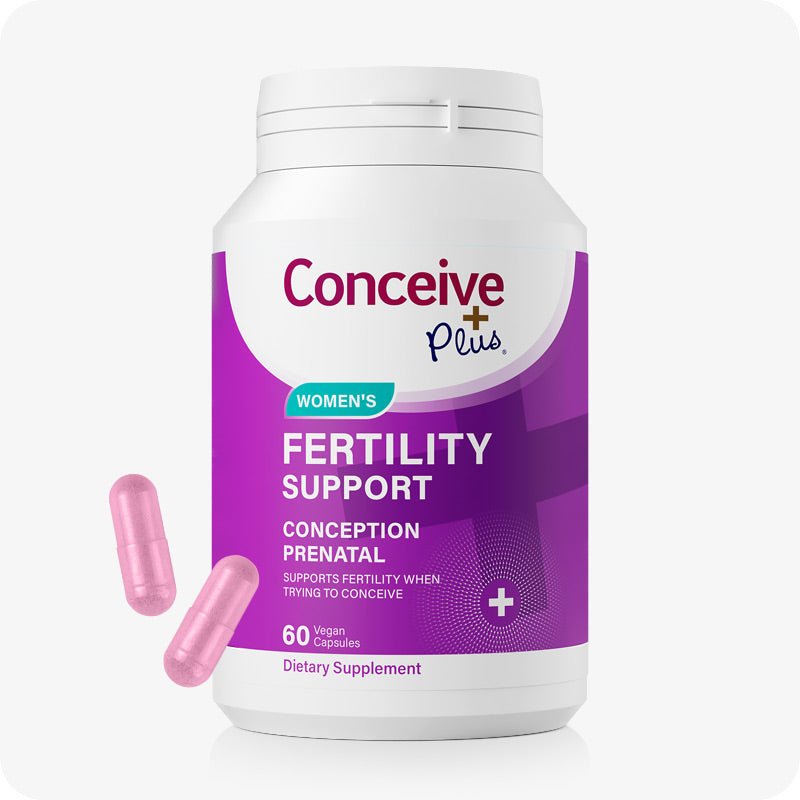
Conceive Plus Prenatal: Methylfolate-Powered Fertility Support
Conceive Plus prenatal vitamins contain L-methylfolate rather than synthetic folic acid — a deliberate formulation decision that sets our supplements apart from generic prenatal vitamins. We believe every woman deserves optimal folate bioavailability, regardless of whether she knows her MTHFR status.
Our Conceive Plus prenatal formula combines methylfolate with a comprehensive array of nutrients clinically associated with fertility and healthy pregnancy outcomes, including:
- L-methylfolate — active form B9 for neural tube protection
- Vitamin D3 — implicated in implantation success and immune regulation
- CoQ10 — mitochondrial support for egg quality
- Vitamin B12 (as methylcobalamin) — active form that works synergistically with methylfolate
- Iodine — critical for thyroid function during pregnancy
- Iron (as ferrous bisglycinate) — gentle, highly bioavailable form
- Zinc and selenium — antioxidants supporting egg and sperm health
Ready to upgrade your prenatal vitamin? Shop Conceive Plus Fertility Supplements →
Food Sources of Folate: Complementing Your Supplement
While supplementation is non-negotiable during the preconception and early pregnancy period, dietary folate provides additional support and context. When thinking about folate vs folic acid for pregnancy from a food perspective, natural food sources contain folate (not synthetic folic acid), making them inherently more aligned with your body's preferred form.
Top food sources of dietary folate per 100g serving:
- Chicken liver — 590 mcg (extremely rich, but limit to once weekly during pregnancy due to vitamin A content)
- Edamame — 311 mcg
- Lentils (cooked) — 181 mcg
- Asparagus — 149 mcg
- Spinach (raw) — 146 mcg
- Black-eyed peas (cooked) — 208 mcg
- Avocado — 81 mcg
- Broccoli — 63 mcg
- Romaine lettuce — 64 mcg
- Oranges — 30 mcg
Note that cooking significantly reduces folate content in vegetables — steaming preserves more than boiling. Despite a good diet rich in folate foods, most women cannot reach the recommended daily intake through food alone, making supplementation essential.
Should You Get MTHFR Tested Before Choosing a Prenatal Vitamin?
MTHFR testing is available through many healthcare providers and direct-to-consumer genetic testing companies. If you have a history of recurrent miscarriage, neural tube defect-affected pregnancies, elevated homocysteine, or a family history of these conditions, discussing MTHFR testing with your reproductive endocrinologist or OB/GYN is worthwhile.
However, here's a practical consideration: given how common MTHFR variants are — affecting 30–40% of the general population to varying degrees — many fertility experts now recommend methylfolate-containing prenatals for all women trying to conceive, rather than testing first and then switching. Starting with a methylfolate-based prenatal ensures optimal bioavailability for everyone, not just those with confirmed variants.
As Dr. Alan Gilchrist, a reproductive endocrinologist, noted in a review of prenatal nutrient bioavailability: "The practical case for methylfolate in prenatal formulations is compelling, not because folic acid is harmful in the majority, but because methylfolate is superior for a substantial minority who cannot be identified without genetic testing."
Folate During IVF: Does the Form Matter More?
For women undergoing IVF or other assisted reproductive technologies, the folate vs folic acid for pregnancy question takes on additional importance. IVF protocols involve hyperstimulation, embryo transfer, and the critical implantation window — all stages where optimal cellular folate status matters.
A 2018 study published in Reproductive BioMedicine Online found that women with MTHFR variants undergoing IVF had significantly lower clinical pregnancy rates compared to women without variants when both groups used standard folic acid. When the MTHFR variant group switched to methylfolate supplementation, their clinical pregnancy rates improved substantially.
Additionally, research suggests that adequate folate status supports:
- Optimal DNA synthesis during rapid cell division in the embryo
- Appropriate epigenetic programming in the developing embryo
- Reduced risk of chromosomal abnormalities (aneuploidy)
- Better blastocyst quality scores in some IVF studies
Frequently Asked Questions: Folate vs Folic Acid for Pregnancy
Q: Is methylfolate safe to take during pregnancy?
A: Yes. Methylfolate (5-MTHF) is the natural, bioactive form of folate and has an excellent safety profile. It is used in clinical prenatal formulations worldwide and is well-studied in pregnant and preconception populations. Always follow the dosage recommended on your supplement label or as directed by your healthcare provider.
Q: Can I take too much folate during pregnancy?
A: The upper tolerable intake level (UL) for folic acid is set at 1,000 mcg per day for adults, largely based on the concern that high doses could mask vitamin B12 deficiency. Methylfolate does not carry the same masking risk, though taking doses far above the recommended amount without medical guidance is unnecessary. Stick to 400–800 mcg unless a healthcare provider recommends otherwise.
Q: How early should I start taking folate or folic acid before pregnancy?
A: Ideally, begin supplementation at least one to three months before trying to conceive. Neural tube closure happens 21–28 days after fertilisation — often before a missed period — so your folate stores need to be adequate before you become pregnant.
Q: Does the form of folate affect sperm health too?
A: Yes, interestingly. Folate is important for sperm DNA integrity and may support healthy sperm count and morphology. Some fertility specialists recommend that male partners also take folate-containing supplements. Conceive Plus offers men's fertility supplements that include key nutrients for sperm health.
Q: Can I get enough folate from diet alone?
A: It is very difficult to reach the recommended 400–800 mcg of folate through diet alone, particularly during the preconception and early pregnancy period. Even women eating a folate-rich diet typically fall short. Supplementation is strongly recommended by all major health organisations for women trying to conceive and during early pregnancy.
Q: What's the difference between folate, folic acid, and methylfolate on supplement labels?
A: "Folate" on a label typically refers to the naturally occurring form from food sources. "Folic acid" is the synthetic oxidised form most commonly used in supplements and food fortification. "Methylfolate," "L-methylfolate," or "5-MTHF" all refer to the active form that bypasses the MTHFR conversion step. When choosing a prenatal vitamin, look for L-methylfolate or 5-MTHF for maximum bioavailability.
Q: Is Conceive Plus suitable for women with MTHFR variants?
A: Yes. Conceive Plus prenatal supplements use L-methylfolate — the active, bioavailable form — which is particularly beneficial for women with MTHFR variants who may have difficulty converting synthetic folic acid to the usable form.
Q: Should I stop taking folic acid and switch to methylfolate?
A: If you're currently taking a standard prenatal with folic acid and have no known MTHFR variants or fertility challenges, your current supplement is providing meaningful protection. However, switching to a methylfolate-based prenatal like Conceive Plus is a sound choice for additional peace of mind and optimal bioavailability for all women.
Q: Does folate form matter for miscarriage prevention?
A: Elevated homocysteine — a marker of impaired folate metabolism — has been associated with increased miscarriage risk in some studies. Women with MTHFR variants and elevated homocysteine may benefit from methylfolate specifically, as it is more effective at lowering homocysteine than folic acid alone. If you have experienced recurrent pregnancy loss, discuss folate metabolism testing with your doctor.
Q: What other nutrients should I look for alongside folate in a prenatal vitamin?
A: Look for vitamin D3, vitamin B12 (ideally as methylcobalamin), iodine, iron (as ferrous bisglycinate for gentle absorption), CoQ10, zinc, and selenium. These nutrients work synergistically to support fertility, healthy implantation, and fetal development. Conceive Plus formulates with all of these key co-factors.
The Bottom Line on Folate vs Folic Acid for Pregnancy
The folate vs folic acid pregnancy debate ultimately comes down to bioavailability and individual genetics. For women without MTHFR variants, standard folic acid supplementation provides meaningful neural tube protection with decades of evidence behind it. However, for a significant proportion of women — up to 40% — who carry MTHFR variants affecting folate metabolism, methylfolate offers superior protection by bypassing the conversion bottleneck entirely.
Given that MTHFR variants are common, testing is not always practical before conception, and the cost difference between folic acid and methylfolate-containing prenatals is modest, the case for choosing a methylfolate-based prenatal vitamin is compelling for most women trying to conceive.
Conceive Plus prioritises active, bioavailable nutrients in every formula — because when you're trying to build a family, you deserve more than the minimum. Our prenatal supplements are designed for real-world fertility, not just regulatory compliance.
Make the switch to smarter prenatal nutrition today. Explore Conceive Plus Fertility Supplements →
This article is for informational purposes only and does not constitute medical advice. Always consult with a qualified healthcare provider before starting or changing any supplement regimen during pregnancy or the preconception period.
Start your journey with Conceive Plus
Science-backed fertility supplements formulated for women and men trying to conceive. Trusted by thousands of couples worldwide.