Can Coconut Oil Be Used as a Lubricant When Trying to Conceive?


If you're trying to conceive (TTC), you've probably heard that coconut oil lubricant TTC is a popular natural alternative to commercial lubricants. Coconut oil is celebrated for its natural origins, moisturising properties, and wide availability — but when it comes to fertility, not all "natural" options are created equal.
This article digs into the science behind coconut oil and sperm health, what fertility specialists recommend for couples TTC, and why choosing the right lubricant could make a real difference to your conception journey.
What the Research Says About Coconut Oil and Sperm
Coconut oil has been used for centuries in cooking, skin care, and personal care. Its reputation as a "clean" and "chemical-free" product has made it a popular go-to for couples who prefer natural approaches. However, when the question is whether coconut oil lubricant TTC is safe for sperm, the research paints a more complicated picture.
A landmark study published in the journal Fertility and Sterility (Anderson et al., 2014) evaluated several common personal lubricants — including coconut oil — against sperm motility and DNA integrity. The study found that coconut oil significantly reduced sperm motility compared to controls. Sperm that encountered coconut oil showed decreased forward progression, which is critical for reaching and fertilising the egg.
A separate laboratory analysis found that at concentrations mimicking real-world use (25% v/v dilution), coconut oil reduced total sperm motility by over 40% within 60 minutes of exposure. Progressive motility — the type that matters most for conception — dropped even more dramatically.
The mechanism is thought to involve the fatty acid composition of coconut oil. Coconut oil is approximately 50% lauric acid, a medium-chain fatty acid that has demonstrated antimicrobial properties. While this is beneficial in other contexts, lauric acid and other components may disrupt the lipid bilayer of sperm cell membranes, impairing their function and motility.
It's worth noting that most of these studies were conducted in vitro (in laboratory settings), so human clinical trials are limited. However, reproductive endocrinologists widely advise against using coconut oil as a natural lubricant TTC based on existing evidence.
Why Natural Doesn't Always Mean Safe for TTC
The word "natural" carries enormous weight in today's wellness culture. If something comes from a plant and has no synthetic additives, it must be safe — right? Unfortunately, when it comes to coconut oil lubricant TTC and conception, this assumption can lead couples astray.
Consider that many plant-derived substances can be harmful to biological processes. Grapefruit juice, for example, interferes with certain medications. Many herbal supplements can disrupt hormonal balance. And as research shows, coconut oil — despite being entirely "natural" — poses measurable risks to sperm function.
The problem extends beyond coconut oil. Studies have shown that many common household lubricants, including saliva, olive oil, and baby oil, have similarly detrimental effects on sperm. A 2012 study in Obstetrics & Gynecology found that lubricants tested at physiological concentrations were toxic to sperm. Even small amounts can reduce motility significantly.
For couples who are actively trying to conceive, lubricant choice matters. The American Society for Reproductive Medicine (ASRM) and the Society for Male Reproduction and Urology (SMRU) both recommend that couples TTC use fertility-safe lubricants that have been specifically formulated and tested to be sperm-safe.
The Problem with pH and Osmolality
Two factors are critical when evaluating lubricants for fertility use: pH and osmolality. Understanding these concepts helps explain why coconut oil lubricant TTC falls short as a conception aid.
pH Balance: The vaginal environment is naturally acidic (pH 3.8–4.5), which helps protect against infection. However, sperm thrive in a more neutral to slightly alkaline environment (pH 7.2–8.0), which is why cervical mucus around ovulation becomes more alkaline to support sperm survival and transport. Coconut oil has a relatively neutral pH, which may not be problematic on its own — but it can disrupt the carefully calibrated vaginal ecosystem.
Osmolality: This refers to the concentration of dissolved particles in a solution. The World Health Organization (WHO) recommends that personal lubricants have an osmolality close to semen (250–380 mOsm/kg) to avoid damaging sperm cell membranes through osmotic stress. Many commercial lubricants — and natural oils including coconut oil — have osmolality values far outside this range, causing sperm cells to lose water (crenation) and become non-functional.
Research published in Human Reproduction found that lubricants with osmolality greater than 1,200 mOsm/kg significantly reduced sperm motility and progressive movement within 30 minutes. This osmotic damage is irreversible — sperm cannot recover once their membranes are compromised.
Fertility-optimised lubricants like Conceive Plus are specifically formulated to match the pH and osmolality of fertile cervical mucus, supporting rather than hindering sperm function.
coconut oil lubricant TTC: What Fertility Experts Recommend Instead
So if coconut oil lubricant TTC is not ideal, what do reproductive specialists suggest? The consensus among fertility experts is clear: use a lubricant that has been scientifically formulated and clinically tested for use during conception.
Key criteria for a fertility-safe lubricant include:
- Sperm-safe formula: Tested to demonstrate no significant reduction in sperm motility, viability, or DNA integrity
- Matched pH: Formulated to pH 7.0–8.5 to mirror fertile cervical mucus
- Isotonic osmolality: Close to the WHO-recommended range for semen (250–380 mOsm/kg)
- No harmful additives: Free from parabens, glycerin, and other chemicals that may disrupt the reproductive environment
- Regulatory approval: Cleared as a medical device (e.g., FDA 510(k) clearance or CE marking)
Conceive Plus meets all of these criteria. It is one of the most clinically studied fertility lubricants on the market, with a formula that contains calcium and magnesium ions to actively support the sperm's journey. Unlike coconut oil lubricant TTC approaches, Conceive Plus is specifically designed for couples trying to conceive.
Conceive Plus vs Pre-Seed: Which Fertility Lubricant Is Better?
Two names dominate the fertility lubricant category: Conceive Plus and Pre-Seed. Both are marketed as sperm-friendly options for couples TTC. Here's a detailed comparison to help you make an informed decision:
Conceive Plus
- Formula: Isotonic, pH-balanced (7.2–8.0), with added calcium and magnesium ions that actively support sperm capacitation and mobility
- Availability: Available in multi-use tubes and pre-filled applicators; sold in over 60 countries
- Regulatory status: FDA 510(k) cleared as a medical device; CE marked in Europe
- Clinical evidence: Multiple studies show no significant negative impact on sperm motility or viability; the added minerals have been shown to support sperm function
- Texture: Lightweight, non-sticky; mimics natural cervical mucus
- Additional benefits: Available in variants including Conceive Plus Men's Fertility Support for comprehensive couples support
- Price point: Competitively priced; multi-use tube offers excellent value
Pre-Seed
- Formula: Isotonic, pH-balanced (6.9–7.3); no added minerals
- Availability: Primarily available in the US; pre-filled applicator format
- Regulatory status: FDA 510(k) cleared as a medical device
- Clinical evidence: Research shows it does not significantly impair sperm function; older clinical data
- Texture: Slightly thicker gel consistency
- Price point: Generally higher per-use cost due to single-use applicator format
The Verdict
Both Conceive Plus and Pre-Seed are genuine improvements over coconut oil lubricant TTC approaches. However, Conceive Plus stands out for several reasons:
- The addition of calcium and magnesium ions actively supports sperm function rather than just avoiding harm
- Greater global availability and multiple format options
- Competitive pricing, particularly with the multi-use tube
- A broader product ecosystem including supplements and ovulation support
For couples using a natural fertility lubricant as part of their TTC strategy, Conceive Plus offers both safety and active support — a combination no natural oil can replicate.
How to Choose a Safe Lubricant for Conception
Choosing the right lubricant for conception requires attention to a few key factors. Here's what to look for:
1. Check Regulatory Status
Look for lubricants that are FDA-cleared or CE-marked as medical devices for fertility use. This means the manufacturer has submitted clinical evidence of sperm safety to a regulatory body. Products making vague "natural" claims without regulatory backing may not have been tested.
2. Read the Ingredient List
Avoid lubricants containing:
- Glycerin (attracts moisture osmotically, can be spermicidal at certain concentrations)
- Propylene glycol (linked to sperm motility reduction)
- Parabens (potential endocrine disruptors)
- Nonoxynol-9 (a spermicide — obviously avoid when TTC)
- Fragrances or flavourings (can disrupt vaginal pH)
3. Consider Format and Comfort
Pre-filled applicators allow precise internal application, which is ideal for timed intercourse. Multi-use tubes with applicators offer flexibility. Choose what works best for your comfort and routine.
4. Look at the Full Product Range
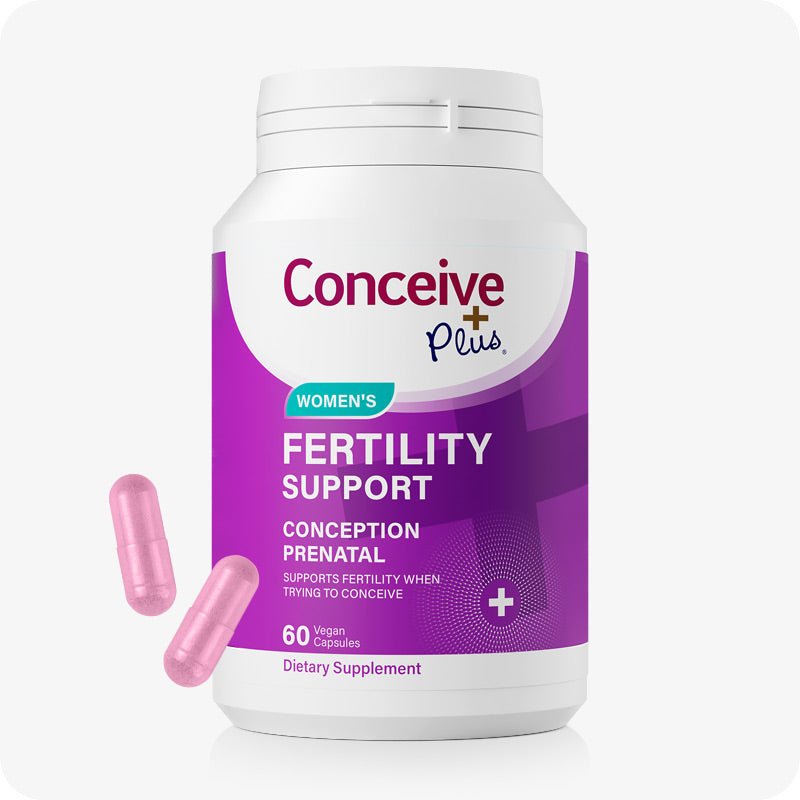
Some brands offer a complete fertility support ecosystem. Conceive Plus includes lubricants, supplements for men and women, prenatal vitamins, and ovulation support — allowing couples to address multiple aspects of fertility in one trusted brand.
Tips for Using Fertility Lubricants Effectively
Even the best natural fertility lubricant needs to be used correctly to maximise its benefits. Here are practical tips for incorporating fertility lubricants into your TTC routine:
- Track your fertile window: Fertility lubricants are most useful during your fertile window (the 5–6 days around ovulation). Use ovulation test strips or a basal body temperature chart to time intercourse accurately.
- Apply before intercourse: Apply Conceive Plus 5–10 minutes before intercourse to allow the product to reach body temperature and distribute evenly. This improves comfort and sperm transport.
- Use the right amount: More is not necessarily better. Follow the package instructions — typically one pre-filled applicator (3–4 mL) internally, or a small amount of gel externally.
- Don't substitute with coconut oil: Even if you've used coconut oil lubricant TTC in the past without apparent issues, the cumulative effect on sperm over multiple cycles can be significant. Switch to a clinically tested option.
- Avoid other lubricants simultaneously: Mixing fertility lubricants with other products can alter the pH and osmolality balance. Use Conceive Plus on its own.
- Maintain positioning: After intercourse, lying down for 15–20 minutes may help support sperm transport, though research on this is mixed. Avoid using the bathroom immediately after.
- Be consistent: Use fertility lubricants consistently each cycle during your fertile window rather than sporadically.
Frequently Asked Questions
Is coconut oil lubricant TTC actually safe for sperm?
No — research indicates that coconut oil can significantly reduce sperm motility. Studies show reductions of 40% or more in progressive sperm motility after exposure to coconut oil. Fertility experts recommend avoiding it when trying to conceive and switching to a clinically tested lubricant for conception like Conceive Plus.
Can coconut oil affect sperm DNA?
Some laboratory research suggests that coconut oil may affect sperm DNA integrity, though evidence is less conclusive than for motility effects. Given the risks, it is prudent to use a fertility-safe lubricant rather than risking potential DNA damage that could affect embryo quality.
What makes Conceive Plus sperm-safe?
Conceive Plus is formulated with an isotonic, pH-balanced base that matches fertile cervical mucus. It contains calcium and magnesium ions that support sperm function. It has been tested in clinical studies and cleared by the FDA as a medical device for conception use.
Is coconut oil lubricant TTC better than saliva?
Both coconut oil and saliva have been shown to impair sperm motility. Saliva contains enzymes (including amylase) that can damage sperm, and its osmolality is poorly matched to semen. Neither is recommended for couples TTC. A purpose-formulated fertility lubricant is the safest choice.
How does coconut oil compare to Conceive Plus in terms of pH?
Coconut oil typically has a pH of around 7–8, which is close to neutral. While this isn't dramatically different from the ideal range, coconut oil can still disrupt the vaginal environment and doesn't provide the carefully calibrated formula that Conceive Plus does. Conceive Plus is specifically designed to pH 7.2–8.0 to support sperm survival and transport.
Can I use coconut oil for lubrication at other times, just not during my fertile window?
If you use coconut oil at other times for general lubrication, this is less of a fertility concern. However, be aware that coconut oil can degrade latex condoms, increasing breakage risk. If contraception isn't a concern and you're not in your fertile window, the risk to conception specifically is lower — but it's still worth using a gentler, pH-appropriate option for vaginal health.
Are there any natural lubricants that are safe for TTC?
Research suggests that most natural oils — including olive oil, sunflower oil, and coconut oil — have some degree of sperm toxicity. The safest natural lubricant TTC alternative supported by evidence is fertile-quality cervical mucus itself. If additional lubrication is needed, a medically formulated fertility lubricant like Conceive Plus is the safest option. Some sources suggest raw egg white as an alternative, but this carries bacterial contamination risks.
How long should I use fertility lubricant before expecting results?
Fertility lubricants support conception but don't guarantee it. Most couples are advised to try for at least 6 months (under 35) or 3 months (over 35) before seeking medical advice. Using Conceive Plus correctly during your fertile window each cycle is the recommended approach.
Can men use Conceive Plus to support their fertility?
Conceive Plus offers a range of male fertility supplements alongside the lubricant product. While the lubricant itself is applied vaginally, the Conceive Plus Men's Fertility Support supplement provides antioxidants, zinc, CoQ10, and other nutrients clinically associated with improved sperm quality and motility.
Where can I buy Conceive Plus fertility lubricants?
Conceive Plus is available online at conceiveplus.com/collections/fertility-lubricants, in pharmacies, and through major retailers. It ships globally and is available in multiple formats to suit different preferences.
References: Anderson L et al. (2014) Effects of lubricants on sperm motility. Fertility and Sterility. Agarwal A et al. (2008) Effect of vaginal lubricants on sperm motility and chromatin integrity. Fertility and Sterility. Mowat A et al. (2014) Use of lubricants in assisted reproduction. Human Reproduction. WHO (2012) Vaginal lubricants and spermicides. WHO technical report. ASRM Practice Committee (2013) Optimizing natural fertility.