Is It Selfish to Have a Baby at 37 Exploring Pregnancy After 30


Is it selfish to have a baby at 37 — that question can pop up, especially when age and timing seem to cause doubts. Today, lots of people delay family planning, focusing first on careers, finances, or personal freedom. Then, when 36 and pregnant or 37 and pregnant becomes a reality, they start worrying about how late is too late to have a baby [1]. Well, let’s explore these concerns, particularly around pregnancy after 35, and see why it might not be as scary as some say.
We hear stories of individuals 38 and pregnant or even those who wonder, “am I too old to have a baby at 47?” Many times, it’s less about absolute age and more about your health, emotional readiness, and available medical support. Admittedly, having kids after 35 can raise an eyebrow in certain communities, but a growing number of couples choose to do so.
This article aims to break down the major topics: from whether having a baby at 35 or having a baby at 38 has real medical implications, to tips on staying healthy if you’re having a baby at 40 or older. We’ll chat about personal feelings, practical planning, and whether it’s truly “too old” or just a matter of personal choice.

Changing Perspectives on Parenthood
Ages ago, a lot of people had kids in their early 20s. Today, folks often push it back, which is why more are pregnant at 36 or even pregnant at 37. Still, a chunk of us battle internal doubts about how old can women have children or how old can you have a baby. The truth is that childbearing has no strict universal rule, though certain biological factors shift over time.
Some remain concerned about is 30 too old to have a baby, others worry is 35 too old to have a baby. Realistically, many doctors highlight mid-30s as a point where fertility can drop, but they also see success stories from 37-year-olds, 38-year-olds, or beyond. Then come more extreme age questions, like is 44 too old to have a baby. The key is that every body is unique, and if you're thinking, "I want to have a baby," it's essential to understand your own fertility health and consult with a specialist if needed. [2].
A Quick Note: If you find yourself wrestling with is 36 too old to have a baby, consider checking your personal health status. Hormonal levels, ovulation, and lifestyle can matter more than just the number on your ID.
Physical Changes and Medical Reality
Hormones shift over time, and doctors do mention pregnancy over 35 can raise certain issues, such as higher risk of gestational diabetes or high blood pressure. People also mention risks of pregnancy after 40 or risks of pregnancy at 40 in hushed tones. But is it guaranteed? No. Some younger pregnant folks also face these problems.
That said, older mothers often need extra monitoring. If you’re pregnant at 37 years old what to expect can differ from a 25-year-old’s journey. For example, you might have more frequent ultrasounds. This is to ensure the baby’s growth remains on track. Similarly, if you’re pregnant at 38 or pregnant at 38 years old what to expect, you may receive genetic screenings [3]. Being aware of these checks helps you plan better.
The question, what age is too old to have a baby? seldom has a one-size-fits-all answer. Plenty of individuals keep healthy lifestyles that offset some age-related risks, while others might face complications earlier. So your personal condition is critical, as well as following medical advice.
Emotional Readiness and Life Goals
Lots of people want to accomplish personal or career milestones first. That’s a big reason we see more 37 and pregnant or 39-year-olds expecting. For some, it’s about feeling mentally prepared; maybe they discovered a deeper sense of self or strong financial security. Others might just prefer focusing on themselves in their 20s, so they’re more at ease being pregnant at 39 [4].
But questions from others can be draining. They might say, how old is too old to have a baby or how old is too old to have kids? and cause self-doubt. If you get negativity from relatives or co-workers, lean on supportive friends or professionals. It's your body and your future.
Top Tips: Talk openly with a partner or counselor. Sorting through fear or guilt helps keep stress low, which can matter for fertility as well.
Practical Preparation
If you’re 36 and pregnant or older, it’s wise to plan finances or living situations. People might also weigh fertility treatments if natural conception isn’t happening quickly. For instance, some women try for half a year, get no positive result, and wonder is 36 too old to have a baby? That’s when seeking medical input can be a good step.
Ovulation-tracking apps or test strips might help you time intercourse effectively. And if your doctor suggests further tests, don’t fear them. They’re just tools to see if your hormone levels are stable or if IVF might help [5].
Top Tip: Evaluate your work environment. Sometimes jobs with high stress or odd hours can complicate pregnancy for older mothers. A little planning can ensure you remain healthy and have time for appointments.
Nutrition and Supplementation
No matter if you’re having a baby at 35 or older, pregnancy nutrient intake can support fertility. Various vitamins and minerals—like folic acid, vitamin E, iron, or magnesium—may improve hormonal balance and overall well-being. CoQ10, for instance, is used by some for better egg quality. Meanwhile, Myo-Inositol and D-Chiro Inositol might promote healthier ovulation.
If you’re worried about pregnancy after 35, the right balance can make a difference. But always check with a physician before taking any medication so you’re not just self-medicating [6].
Top Tips: Keep a diet rich in whole foods—vegetables, fruits, lean meats—and cut back on overly processed snacks. That’s beneficial at any stage, but especially if you’re older and want a stable pregnancy.

Debunking Age Myths
Many myths about pregnancy over 35 claim that childbirth becomes next to impossible. In reality, doctors regularly see healthy individuals pregnant at 36, 37, or even beyond 40. Some do worry about when is too old to have a baby or if they’ll manage as they get older. But guess what? There's no universal pivot at age 35 that instantly changes your fertility overnight [7].

✨ Trying to Conceive?
Our Ovulation & Fertility Bundle combines Myo-Inositol with essential vitamins to support healthy hormone balance and regular ovulation.
Shop Now — $55.00✓ Free shipping on orders over $40 | ✓ Trusted by millions of couples worldwide
Also, a big misconception: everyone older than 35 needs a C-section. Not true. Some older moms do end up with surgical births, but that can happen at any age. And while the chance of chromosomal abnormalities may tick up with age, screening and good prenatal care often help.
Top Tip: Don’t let horror stories overshadow your perspective. Yes, be informed, but also realize that each pregnancy is personal.
Work-Life Balance
Individuals who decide to be 37 and pregnant or 38 and pregnant might also be juggling significant career roles. Sometimes that’s precisely why they delayed childbearing [8]. If you’re established in your profession, you might have better maternity benefits. On the other hand, stress levels can be higher if you hold a demanding position.
Open conversations with employers about flex time or remote work might help. If you’re an entrepreneur, try delegating tasks so you’re not overwhelmed. That approach can reduce stress and let you enjoy the process of having kids after 35 without feeling torn in multiple directions.
The Influence of Social Circles
People around you may either encourage or discourage an older pregnancy. We’ve all encountered the well-meaning friend who questions is 30 too old to have a baby or how old is too old to have kids. Their commentary might come from outdated beliefs. Or it could be from genuine worry.
Find a group—online or offline—of mothers around your age. You can share tips, vent about challenges, and pick up moral support. If you’re pregnant at 38 or pregnant at 38 years old what to expect, connecting with similarly aged moms helps you see that you’re not an exception. Parenting is never an easy ride, but it can be rewarding regardless of age [9].
Financial Planning
When having a baby at 38 or older, some folks might already have stable careers and finances. That’s an advantage. But you still want to budget for baby items, potential medical treatments, or postpartum help [10]. If you can, build a bit of a savings cushion for unexpected costs.
At times, couples ask if they can handle all expenses if they’re having a baby at 40. The best approach is to do a rough estimate: monthly bills, insurance coverage, possible childcare. That can provide peace of mind, letting you enjoy the pregnancy more.
Tending to Mental Health
Age or no age, pregnancy can stir emotions—excitement, anxiety, maybe both. Being 37 and pregnant, for instance, might invite unsolicited remarks from neighbors. Or your own inner critic might whisper, “is it selfish to have a baby at 37?”
It’s super important to carve out self-care. This might include simple moments like journaling, short walks, or breathing exercises. If negativity creeps in, talk with a supportive friend or mental health professional. A healthy mind benefits both you and the baby [11].
Real-Life Challenges
Yes, older pregnancies can involve fatigue or more complicated recovery postpartum. Some folks pregnant at 39 discover they get tired more easily. If you already have older kids, juggling their needs while pregnant might be tricky. But younger parents face challenges, too—lack of financial resources or emotional maturity can also be tough.
Reading up on postpartum support and leaning on community resources helps. If you’re truly uncertain about am I too old to have a baby at 47, speak with healthcare pros to weigh those pros and cons. Ultimately, no stage is purely free of challenges, so decide what aligns best with your life [12].

The Bottom Line
So, is it selfish to have a baby at 37? Not necessarily. Each of us has a unique timeline. Some worry deeply about is 35 too old to have a baby or how old is too old to have a baby, but modern medicine, stable finances, and emotional maturity can make older parenthood a success [13].
Your readiness—physically, emotionally, financially—matters more than a specific birthday. If you’re pregnant at 36 or pregnancy after 35 is your reality, it’s crucial to stay informed, adopt healthy habits, and maintain supportive relationships. Whether you end up pregnant at 37 or discover you’re 38 and pregnant, you can still have a safe, fulfilling experience.
Age shouldn’t overshadow your entire view. If you remain mindful of potential risks, keep open communication with healthcare providers, and nurture your overall well-being, being older can bring its own rewards. In the end, deciding when is too old to have a baby or if it’s “too old” at all depends on your personal landscape.
FAQs
Does pregnancy over 35 always mean a high-risk label?
Not automatically. Doctors may watch you more closely, but many older moms have normal experiences.
How do I handle fear about risks of pregnancy after 40?
Consult with a healthcare provider. Early screenings and a healthy lifestyle can address possible concerns before they escalate.
What about “is 44 too old to have a baby?”
It varies widely. Some do conceive in their mid-40s. Medical evaluations are key to making informed choices.
I’m worried about risks of pregnancy at 40. Should I go for extra tests?
Likely, your doctor will suggest relevant tests, such as ultrasounds or blood screenings, so you’ll stay aware of your baby’s development.
Any best step if I’m uncertain about how old is too old to have kids?
Reflect on your health, finances, and emotional readiness. Professional advice can guide you, but it’s ultimately about your unique circumstances.
Citations
- American College of Obstetricians and Gynecologists. (2020). Pregnancy at Age 35 Years or Older. Retrieved from: https://www.acog.org/clinical/clinical-guidance/obstetric-care-consensus/articles/2022/08/pregnancy-at-age-35-years-or-older#:~:text=We%20suggest%20that%20pregnancy%20with,on%20specific%20age%20and%20comorbidities.
- Practice Committee of the American Society for Reproductive Medicine in collaboration with the Society for Reproductive Endocrinology and Infertility. Electronic address: ASRM@asrm.org, & Practice Committee of the American Society for Reproductive Medicine in collaboration with the Society for Reproductive Endocrinology and Infertility (2017). Optimizing natural fertility: a committee opinion. Fertility and sterility. Retrieved from: https://pubmed.ncbi.nlm.nih.gov/28228319/
- Pawde, A. A., Kulkarni, M. P., & Unni, J. (2015). Pregnancy in women aged 35 years and above: a prospective observational study. Journal of obstetrics and gynaecology of India. Retrieved from: https://pmc.ncbi.nlm.nih.gov/articles/PMC4395583/
- Mills, M., Rindfuss, R. R., McDonald, P., te Velde, E., & ESHRE Reproduction and Society Task Force (2011). Why do people postpone parenthood? Reasons and social policy incentives. Human reproduction update. Retrieved from: https://pubmed.ncbi.nlm.nih.gov/21652599/
- Practice Committee of the American Society for Reproductive Medicine and the Practice Committee of the Society for Reproductive Endocrinology and Infertility. Electronic address: asrm@asrm.org (2022). Optimizing natural fertility: a committee opinion. Fertility and sterility. Retrieved from: https://pubmed.ncbi.nlm.nih.gov/34815068/
- Mayo Clinic. (2021). Prenatal Vitamins: Why They Matter, How to Choose. Retrieved from: https://www.mayoclinic.org/healthy-lifestyle/pregnancy-week-by-week/in-depth/prenatal-vitamins/art-20046945#:~:text=Beyond%20checking%20for%20folic%20acid,B%20vitamins%2C%20zinc%20and%20iodine.
- Leridon H. (2004). Can assisted reproduction technology compensate for the natural decline in fertility with age? A model assessment. Human reproduction (Oxford, England). Retrieved from: https://pubmed.ncbi.nlm.nih.gov/15205397/
- Osterman, M. J. K., Hamilton, B. E., Martin, J. A., Driscoll, A. K., & Valenzuela, C. P. (2023). Births: Final Data for 2021. National vital statistics reports : from the Centers for Disease Control and Prevention, National Center for Health Statistics, National Vital Statistics System. Retrieved from: https://pubmed.ncbi.nlm.nih.gov/36723449/
- Mercer R. T. (2004). Becoming a mother versus maternal role attainment. Journal of nursing scholarship : an official publication of Sigma Theta Tau International Honor Society of Nursing. Retrieved from: https://pubmed.ncbi.nlm.nih.gov/15495491/
- Institute of Medicine (US) Committee on a Comprehensive Review of the HHS Office of Family Planning Title X Program; Stith Butler A, Wright Clayton E, editors. A Review of the HHS Family Planning Program: Mission, Management, and Measurement of Results. Washington (DC): National Academies Press (US); 2009. 2, Overview of Family Planning in the United States. Retrieved from: https://www.ncbi.nlm.nih.gov/books/NBK215219/
- Nadholta, P., Kumar, K., Saha, P. K., Suri, V., Singh, A., & Anand, A. (2023). Mind-body practice as a primer to maintain psychological health among pregnant women-YOGESTA-a randomized controlled trial. Frontiers in public health. Retrieved from: https://pmc.ncbi.nlm.nih.gov/articles/PMC10520697/
- Bouzaglou, A., Aubenas, I., Abbou, H., Rouanet, S., Carbonnel, M., Pirtea, P., & Ayoubi, J. M. B. (2020). Pregnancy at 40 years Old and Above: Obstetrical, Fetal, and Neonatal Outcomes. Is Age an Independent Risk Factor for Those Complications?. Frontiers in medicine. Retrieved from: https://pmc.ncbi.nlm.nih.gov/articles/PMC7266997/
- Balasch, J., & Gratacós, E. (2012). Delayed childbearing: effects on fertility and the outcome of pregnancy. Current opinion in obstetrics & gynecology. Retrieved from: https://pubmed.ncbi.nlm.nih.gov/22450043/
🌱 Support Your Fertility Journey
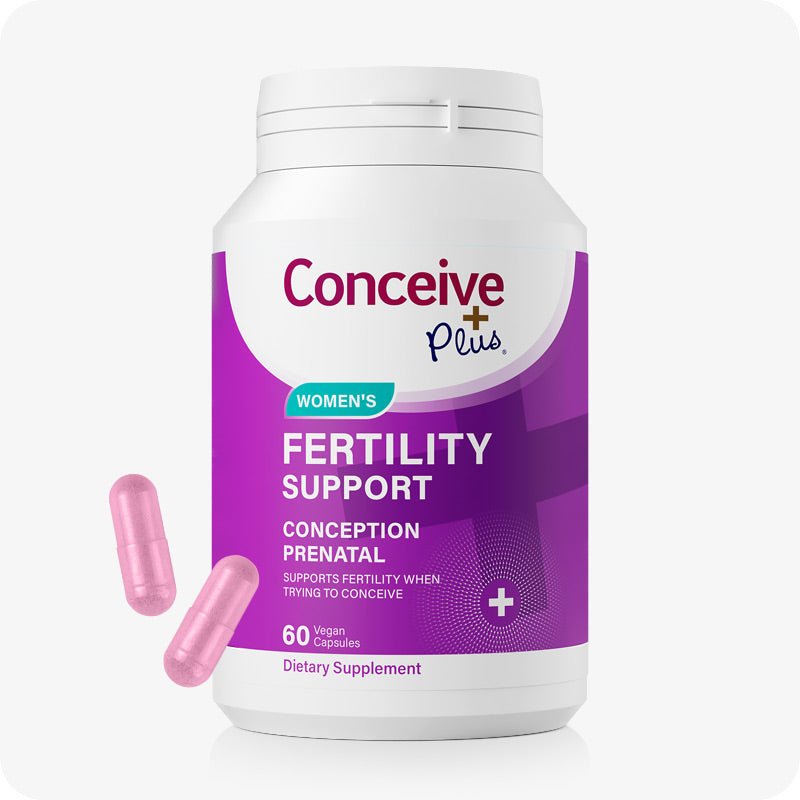
Conceive Plus fertility supplements are clinically formulated to help regulate your cycle and support egg quality.
Shop Fertility Support →Frequently Asked Questions
Recommended by Fertility Experts
Conceive Plus Men's Fertility Support
Designed to support healthy sperm production, motility, and overall male reproductive health with clinically studied nutrients.
Shop Now →Q: Can I get pregnant naturally at 37?
A: Yes, many women conceive naturally at 37, though fertility does decline with age. According to the American Society for Reproductive Medicine (ASRM), a woman's fertility begins to decline more noticeably after age 35, with about 85% of women aged 35-39 able to conceive within one year of trying. While your egg quality and quantity decrease over time, conception is absolutely possible at 37 without assisted reproductive technology. However, if you've been trying for six months without success, consulting a fertility specialist is recommended, and supporting overall reproductive health through proper nutrition and supplements like Conceive Plus can help optimize your chances.
Q: What are the risks of having a baby at 37?
A: Maternal age over 35 is associated with slightly increased risks including gestational diabetes, preeclampsia, and chromosomal abnormalities like Down syndrome, though most pregnancies result in healthy babies. According to the CDC, the risk of Down syndrome at age 37 is approximately 1 in 250, compared to 1 in 1,500 at age 20. However, these statistics represent overall risk—many 37-year-old women have completely uncomplicated pregnancies and healthy babies. Modern prenatal screening and healthcare monitoring can detect potential complications early, allowing for appropriate management and intervention. Most reproductive health experts agree that maternal age alone is not a contraindication to pregnancy at 37.
Q: Is 37 too old to have your first baby?
A: No, 37 is not too old to have your first baby, and advanced maternal age doesn't automatically compromise your ability to be a good parent. The American College of Obstetricians and Gynecologists (ACOG) recognizes that many women successfully have healthy first pregnancies in their late 30s and 40s. While age does affect fertility and requires more medical monitoring, having a child at 37 is increasingly common in the United States, with the average age of first-time mothers now around 26-27 and growing older each year. Your health status, lifestyle choices, and access to prenatal care matter far more than your age alone, and supporting reproductive wellness through proper supplementation and medical guidance can improve outcomes.
Q: How does age affect egg quality and fertility?
A: Egg quality declines with age due to accumulated cellular damage and fewer remaining eggs in the ovarian reserve, which is why women over 35 may experience lower conception rates and higher miscarriage rates. Research shows that at age 37, approximately 25-30% of eggs carry chromosomal abnormalities, compared to 5% at age 25, which affects both fertility and pregnancy loss risk. Women are born with a finite number of eggs (approximately 1-2 million), and this supply decreases each month through a process called atresia, accelerating after age 35. While age-related changes to egg quality cannot be reversed, maintaining overall reproductive health through proper nutrition, prenatal vitamins, and supplements formulated for fertility like Conceive Plus may help optimize egg health and conception odds. Testing ovarian reserve through FSH levels or ultrasound can help determine your individual fertility status at 37.
Q: What should I do to increase my chances of getting pregnant at 37?
A: If you're trying to conceive at 37, focus on optimizing your health through regular exercise, balanced nutrition, stress management, and prenatal supplementation that supports reproductive function. The American Fertility Association recommends that women over 35 begin trying for six months before seeking fertility evaluation, and tracking ovulation through basal body temperature or ovulation predictor kits can help identify your fertile window. Taking prenatal vitamins with key nutrients like folate, CoQ10, and inositol—ingredients found in fertility-specific supplements like Conceive Plus—may help support egg quality and conception rates. If you haven't conceived after six months of regular unprotected intercourse at age 37, consult a reproductive endocrinologist for testing and personalized guidance. Reducing modifiable risk factors like smoking, excessive alcohol consumption, and maintaining a healthy BMI can also significantly improve your fertility outcomes.
Trusted by Couples in Over 70 Countries
Support Male Fertility From the Inside Out
Male fertility is just as important as female fertility in the conception journey. Conceive Plus Men's range delivers targeted nutritional support to promote healthy sperm and overall reproductive wellbeing.
Shop Men's Range →