Age and Fertility in 2026: What Every Woman Should Know About Her Biological Clock


Age and Fertility in 2026: What Every Woman Should Know About Her Biological Clock
Few topics in reproductive health carry as much emotional weight as the relationship between age and fertility. Whether you're planning to start a family in your twenties, navigating the complexities of conception in your thirties, or exploring your options in your forties, understanding how age affects reproductive capacity is essential knowledge — not for creating anxiety, but for empowering informed decisions.
This comprehensive guide breaks down the science, dispels the myths, and offers practical strategies to support your fertility at every stage of life.
How Female Fertility Changes With Age: The Biological Timeline
A woman is born with all the eggs she will ever have — approximately one to two million at birth. By puberty, that number has already dropped to around 300,000 to 500,000. From that point, the body continues to lose eggs each month — not just the one released during ovulation, but a far larger cohort that begins maturing and then dies before ovulation occurs. This process, called atresia, is entirely normal and relentless.
By age 30, a woman typically has around 100,000 to 150,000 eggs remaining. By 40, that number may be as low as 10,000 — but quantity alone doesn't tell the whole story. Quality matters just as much, if not more. Egg quality refers to the chromosomal integrity of the egg. As women age, the proportion of eggs with chromosomal abnormalities increases significantly. At 35, roughly 30–40% of eggs may be chromosomally abnormal. By 40, that figure can exceed 60–80%.
These biological changes translate into real-world fertility statistics. According to data published in the journal Human Reproduction, women aged 25–29 have a monthly fecundability rate (chance of conception per cycle) of approximately 25–30%. By ages 35–39, this drops to around 10–15%, and by age 40–44, it falls further to 5% or less per cycle.
What does this mean in practical terms? It means that age is the single most important non-pathological factor affecting female fertility. However, it also means that many women in their late thirties and even early forties do conceive — often with the right support.
The Role of Ovarian Reserve: Understanding AMH and Antral Follicle Count
Two key markers are used to assess a woman's remaining egg supply — known as ovarian reserve. The first is Anti-Müllerian Hormone (AMH), a hormone produced by small follicles in the ovaries. Higher AMH levels generally indicate more follicles remaining; lower levels suggest diminished reserve. AMH testing is one of the most useful tools reproductive endocrinologists use to assess fertility and predict how well a woman might respond to ovarian stimulation.
The second marker is antral follicle count (AFC), measured via transvaginal ultrasound early in the menstrual cycle. The number of small follicles visible gives a direct snapshot of egg supply. AFC tends to correlate well with AMH levels.
It's important to note that neither AMH nor AFC tells the full story. A woman with low AMH can still conceive naturally. These tests are tools to help guide decisions, not verdicts. That said, women over 35 who have been trying to conceive for six months without success — or women over 40 who have been trying for three months — are generally encouraged to have their ovarian reserve tested as part of a fertility workup.
Research published in Fertility and Sterility found that AMH levels decline on average by 5–6% per year between ages 25 and 40, with acceleration after age 37. This underscores why early evaluation can be valuable for women who want to understand their personal fertility trajectory.
Age and Egg Quality: The Chromosomal Connection
The decline in egg quality with age is primarily driven by changes in the spindle apparatus — the cellular machinery responsible for separating chromosomes correctly when an egg matures. As women age, this process becomes more error-prone, leading to eggs with the wrong number of chromosomes (a condition called aneuploidy).
Aneuploid eggs either fail to fertilize, fail to develop past early embryonic stages, or result in miscarriage. This is why miscarriage rates increase with maternal age: at 35, the miscarriage risk per recognized pregnancy is approximately 20%; by 40, it rises to 30–40%; by 44, it exceeds 50%.
The good news is that when a chromosomally normal egg is fertilized and a healthy embryo develops, the chances of a successful pregnancy remain high regardless of the mother's age — which is why techniques like preimplantation genetic testing (PGT-A) in IVF can improve outcomes for older women by identifying euploid (chromosomally normal) embryos for transfer.
Male Age and Fertility: An Often-Overlooked Factor
While much focus is placed on maternal age, paternal age also matters. Men continue to produce sperm throughout life, but the quality of that sperm declines with age. Studies show that men over 40 have sperm with greater DNA fragmentation and lower motility compared to younger men. A landmark study in the journal Epidemiology found that paternal age was associated with increased time to conception, and research from the Karolinska Institute linked advanced paternal age to higher rates of chromosomal abnormalities in offspring.
Sperm DNA fragmentation — damage to the genetic material within sperm — is particularly relevant to fertility outcomes. High fragmentation rates are associated with lower fertilization rates, poor embryo development, and increased miscarriage risk. Men who are concerned about age-related changes to their fertility can request a semen analysis with DNA fragmentation testing.
Lifestyle Factors That Influence Fertility at Any Age
While age-related decline is biological and inevitable, numerous lifestyle factors influence reproductive health and can either accelerate or mitigate fertility challenges. The good news: many of these are within your control.
Nutrition and antioxidants: Oxidative stress — an imbalance between free radicals and antioxidants — damages eggs and sperm. A diet rich in antioxidants (found in colorful fruits and vegetables, nuts, and whole grains) can help protect reproductive cells. Key nutrients like folate, CoQ10, vitamin D, zinc, and omega-3 fatty acids have all been studied for their role in supporting egg quality, hormonal balance, and overall reproductive function.
Body weight: Both underweight and overweight status are associated with hormonal disruption and reduced fertility. BMI extremes can disrupt ovulation, alter menstrual cycles, and impair implantation. A 2020 meta-analysis in Reproductive Biology and Endocrinology confirmed that achieving a healthy BMI before attempting conception significantly improves outcomes.
Smoking: Smoking accelerates egg loss and is strongly associated with earlier menopause — by an average of 1–4 years. Women who smoke have significantly lower AMH levels than non-smokers of the same age. Quitting smoking is one of the most impactful steps any woman can take to preserve fertility.
Alcohol and caffeine: Moderate alcohol consumption has been associated with reduced fertility and increased miscarriage risk. High caffeine intake (above 200mg/day) has similarly been linked to longer time to conception. Reducing both is prudent advice for those actively trying to conceive.
Stress: Chronic psychological stress activates the hypothalamic-pituitary-adrenal (HPA) axis, which can suppress reproductive hormones and disrupt ovulation. While the relationship between stress and fertility is complex, stress management practices — including mindfulness, adequate sleep, and gentle exercise — are consistently recommended by reproductive specialists.
Nutritional Supplements and Egg Quality Support
Targeted supplementation is increasingly recognized as an adjunct strategy for women seeking to optimize their fertility, particularly as they age. Several key nutrients have accumulated meaningful clinical evidence:
Coenzyme Q10 (CoQ10): Mitochondria are the energy-producing structures within cells — and eggs require enormous mitochondrial energy to complete maturation and early embryonic development. CoQ10 supports mitochondrial function and has antioxidant properties. A randomized controlled trial published in Fertility and Sterility found that supplementation with CoQ10 in women with diminished ovarian reserve improved ovarian response and egg quality.
Folate (Methylfolate): Essential for DNA synthesis and repair, folate is critical before and during early pregnancy to prevent neural tube defects. Women with the MTHFR gene variant benefit from taking the active form — methylfolate — rather than synthetic folic acid.
Vitamin D: Vitamin D receptors are found throughout the female reproductive tract, including on ovarian follicles. Low vitamin D levels have been associated with poorer IVF outcomes and reduced ovarian reserve. A 2019 meta-analysis found that adequate vitamin D was linked to higher clinical pregnancy rates in IVF cycles.
Inositol (Myo-inositol and D-chiro-inositol): These naturally occurring carbohydrates play a role in insulin signaling and FSH signaling within follicles. Multiple randomized trials have found that inositol supplementation improves egg quality, reduces time to conception, and is particularly beneficial in women with polycystic ovary syndrome (PCOS).
N-acetyl cysteine (NAC): A precursor to glutathione — the body's master antioxidant — NAC supports the ovarian environment and has been studied for its role in improving PCOS outcomes and reducing oxidative damage to eggs.
Ready to Support Your Fertility Journey?
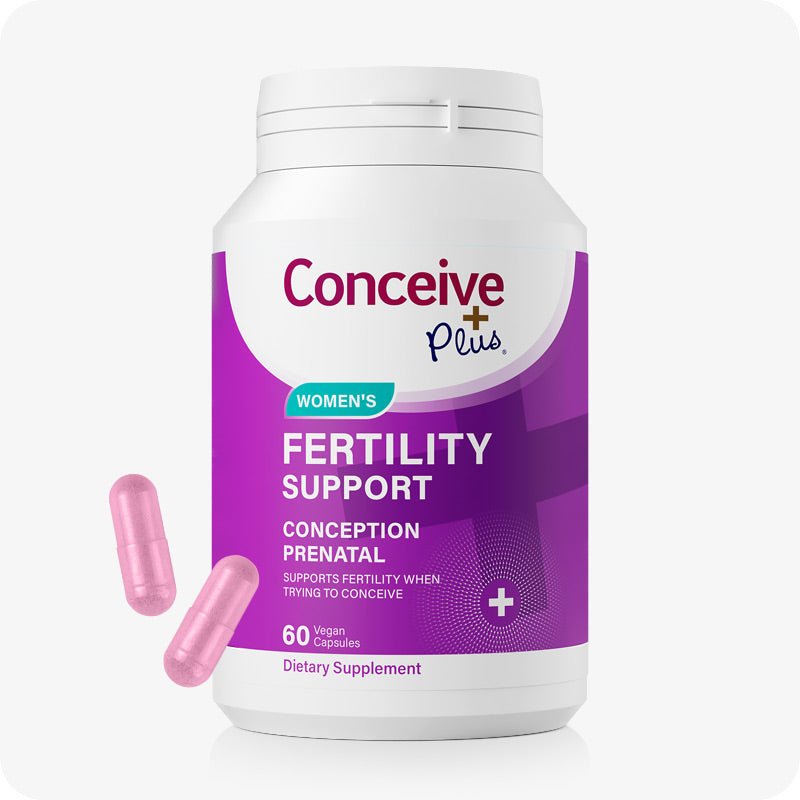
As you navigate the intersection of age and fertility, targeted nutritional support can make a meaningful difference. Conceive Plus Women's Fertility Support is formulated with clinically studied ingredients including CoQ10, methylfolate, myo-inositol, and key micronutrients designed to support egg quality, hormonal balance, and reproductive wellness.
Explore Women's Fertility Support →When to Seek a Fertility Specialist
Knowing when to consult a reproductive endocrinologist (RE) is crucial for women navigating age-related fertility concerns. General guidelines from the American Society for Reproductive Medicine (ASRM) recommend:
- Women under 35: seek evaluation after 12 months of regular, unprotected intercourse without conception
- Women aged 35–39: seek evaluation after 6 months
- Women aged 40 and older: seek evaluation immediately or proactively
- Any woman with known risk factors (irregular cycles, prior reproductive surgery, endometriosis, PCOS, recurrent miscarriage): seek evaluation earlier
A comprehensive fertility workup typically includes ovarian reserve testing (AMH and AFC), hormonal panel (FSH, LH, estradiol, prolactin, thyroid), a uterine assessment (via ultrasound and sometimes hysteroscopy), and a semen analysis for the partner. These results provide a complete picture and help guide personalized treatment recommendations.
Fertility Preservation: Egg Freezing and Other Options
For women who are not yet ready to start a family but are concerned about age-related decline, egg freezing (oocyte cryopreservation) offers a meaningful option. The technology has improved dramatically over the past decade, with vitrification (flash-freezing) resulting in survival rates of 80–90% post-thaw and pregnancy rates per transfer comparable to fresh IVF for younger women.
The ideal age for egg freezing is typically before 35, as egg quantity and quality are higher and more eggs can be retrieved per cycle. However, women aged 35–38 who have adequate ovarian reserve can still achieve meaningful results. Most fertility specialists recommend freezing 10–20 mature eggs to give a reasonable chance of achieving at least one live birth.
Beyond egg freezing, embryo banking (freezing fertilized embryos with a partner's sperm), ovarian tissue cryopreservation, and donor egg IVF are additional pathways available to women facing age-related fertility challenges.
Emotional Wellbeing: Navigating Age-Related Fertility Anxiety
The emotional weight of fertility concerns — particularly those linked to age — should never be minimized. Many women report significant anxiety, grief, and pressure when confronting the biological realities of their reproductive window. Societal messaging can compound these feelings, creating a sense of urgency or inadequacy that is rarely helpful and often harmful.
Mental health support — whether through individual therapy, couples counseling, or fertility-specific support groups — is a legitimate and important component of any fertility journey. Organizations like RESOLVE: The National Infertility Association offer resources, community, and advocacy for those navigating reproductive challenges at any age.
It's also worth acknowledging that many women build their families later in life through a variety of pathways — including natural conception, assisted reproduction, donor gametes, and adoption — all of which are valid, loving, and fulfilling routes to parenthood.
Frequently Asked Questions About Age and Fertility
At what age does female fertility start to decline?
Female fertility begins declining in the late twenties, with a more pronounced drop after age 32. The decline accelerates significantly after age 37. However, individual variation is substantial — some women in their late thirties maintain good ovarian reserve, while others experience earlier decline.
Can I still get pregnant naturally at 40?
Yes, natural conception after 40 is possible, though statistically less likely. Many women in their early forties conceive naturally. The recommendation is to seek fertility evaluation after three months of trying if over 40, given the importance of time in this age group.
What is a good AMH level for my age?
AMH values are age-dependent. A general reference: AMH above 1.0 ng/mL is considered normal for women in their thirties; values between 0.5–1.0 ng/mL are lower than average; below 0.5 ng/mL suggests significantly diminished reserve. Your reproductive endocrinologist will interpret results in the context of your full clinical picture.
Does stress affect fertility in older women?
Chronic stress can disrupt hormonal signaling and suppress ovulation, which may compound age-related fertility challenges. Managing stress through mindfulness, sleep hygiene, and counseling is a recommended component of fertility optimization at any age.
How can I improve my egg quality at 38?
While you cannot increase the number of eggs you have, you can support the quality of the eggs that remain through antioxidant-rich diet, key supplements (CoQ10, methylfolate, vitamin D, myo-inositol), avoiding smoking and excessive alcohol, maintaining a healthy weight, and managing oxidative stress. Consult your healthcare provider before beginning any supplement regimen.
Is IVF more successful when you're younger?
Yes — IVF success rates correlate strongly with age, primarily due to egg quality. Using your own eggs, IVF success rates per transfer at age 35 are approximately 40%; at 40, around 20%; at 43, roughly 5%. Donor egg IVF — using eggs from a younger donor — bypasses age-related egg quality decline and can achieve success rates of 40–50% per transfer regardless of recipient age.
What vitamins are most important for fertility after 35?
Key fertility supplements for women over 35 include CoQ10 (200–600mg daily), methylfolate (400–800mcg), vitamin D3 (1000–2000 IU, or more if deficient), myo-inositol (2–4g daily), omega-3 fatty acids, and iron if depleted. A comprehensive prenatal vitamin should form the foundation, with targeted additions based on individual needs and medical guidance.
Can I improve my chances of conception naturally in my late thirties?
Absolutely. Timing intercourse accurately using ovulation tracking, optimizing nutrition, reducing toxin exposure, supporting sperm quality in your partner, and using a fertility-friendly lubricant can all meaningfully improve conception odds. Working with a fertility-aware OB-GYN or reproductive specialist from the outset can also streamline the process.
Does male age affect pregnancy outcomes?
Yes. Advanced paternal age (generally considered 40+) is associated with increased sperm DNA fragmentation, reduced motility, and higher rates of some chromosomal abnormalities in offspring. Men can support sperm health through antioxidant supplementation, a healthy diet, avoiding heat exposure to the testes, and limiting alcohol and tobacco use.
What's the difference between infertility and age-related subfertility?
Infertility is clinically defined as failure to conceive after 12 months of unprotected intercourse (or 6 months for women over 35). Age-related subfertility refers to reduced but not absent fertility due to declining egg quantity and quality — it doesn't mean conception is impossible, but that it may take longer and benefit from additional support.
Ready to Support Your Fertility Journey?
Conceive Plus Women's Fertility Support provides a comprehensive blend of evidence-backed nutrients — including CoQ10, methylfolate, myo-inositol, and essential vitamins — formulated to support egg quality, hormonal health, and reproductive readiness at every age. Give your fertility journey the nutritional foundation it deserves.
Explore Women's Fertility Support →