Fertility Supplements: What the Science Says and How to Choose the Right One


The supplement aisle can feel overwhelming when you're trying to conceive. With hundreds of products making bold claims, it's difficult to know which fertility supplements are actually backed by science — and which are simply clever marketing. Understanding the evidence behind key nutrients can help you make informed decisions and give your body the nutritional support it genuinely needs during your fertility journey.
This guide breaks down the most well-researched fertility-supporting nutrients, explains how they work in the body, and helps you navigate the sometimes confusing world of reproductive health supplementation.
Why Nutritional Support Matters for Fertility
Fertility is a whole-body process. The quality of eggs, the regularity of ovulation, the receptivity of the uterine lining, and the health of the hormonal system that coordinates all of this — each element is influenced by the micronutrients your cells use every day. When the body is short on essential vitamins, minerals, or antioxidants, these processes can be subtly disrupted in ways that affect your ability to conceive.
Research published in journals like Human Reproduction and the American Journal of Clinical Nutrition has consistently shown associations between micronutrient status and reproductive outcomes. A 2019 review in Nutrients found that multiple micronutrient deficiencies are common among women of reproductive age and may negatively affect both ovarian function and early embryo development.
Even in countries with generally adequate food supplies, targeted nutrient deficiencies are common. Folate, vitamin D, iron, and iodine are frequently insufficient in women's diets — and all four are directly relevant to fertility and healthy pregnancy outcomes.
This doesn't mean supplements replace a nutritious diet. Food provides a complex matrix of compounds that work synergistically in ways supplements can't fully replicate. But supplementation can help close nutritional gaps, especially during the specific window of trying to conceive — a period when nutrient demands are elevated and the stakes are high.
Folate and Methylfolate: The Foundation of Preconception Nutrition
Supporting Your Fertility Journey
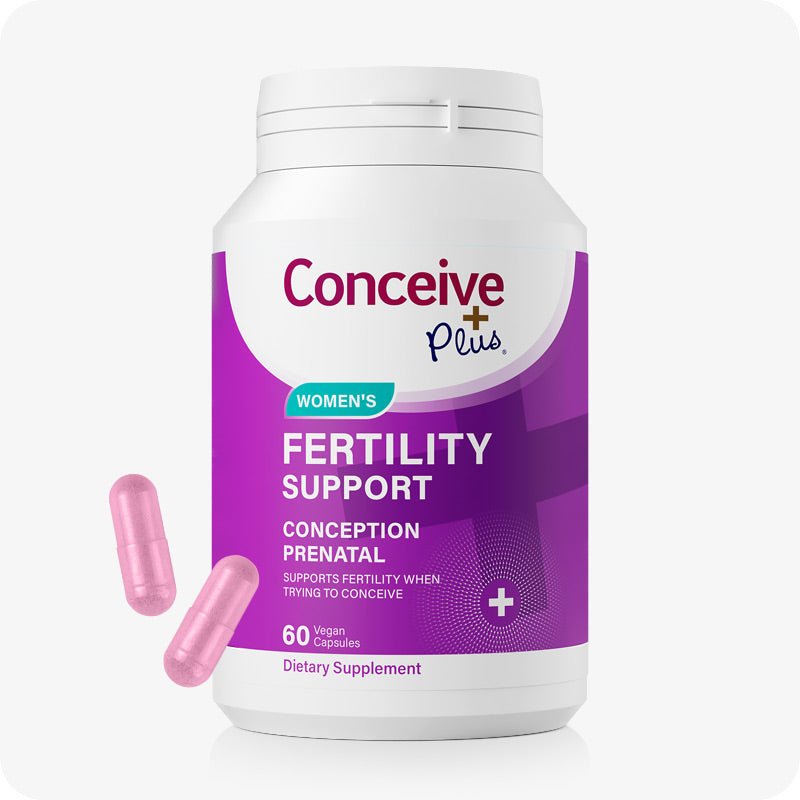
Conceive Plus Women's Fertility Support is clinically formulated to support reproductive health and ovulation support. Trusted by thousands of couples worldwide.
Shop Women's Fertility Support →If there's one nutrient universally recommended before and during pregnancy, it's folate — or more precisely, the forms of folate your body can actually use. Folate is a B vitamin that plays a central role in DNA synthesis and cell division. During the earliest weeks after conception, when the neural tube is forming, adequate folate is critical for preventing neural tube defects such as spina bifida and anencephaly.
Most health authorities, including the CDC in the United States, recommend that women who are trying to conceive take at least 400 micrograms of folic acid daily. However, research has increasingly focused on a different form: 5-methyltetrahydrofolate (5-MTHF), also known as methylfolate or active folate.
The difference matters because of a very common genetic variation: the MTHFR gene mutation. Approximately 40–60% of the general population carries one or two copies of mutations in the MTHFR gene, which reduce their ability to convert synthetic folic acid into the bioactive form the body actually uses. For these women, standard folic acid supplements may be poorly utilised. Methylfolate bypasses this conversion step and is directly usable by the body.
Beyond neural tube protection, folate plays a role in egg development. Studies have shown that women with higher folate intake have better quality embryos in IVF cycles and are more likely to achieve successful implantation. A study in Human Reproduction found that women in the highest quartile of folate intake had a 33% lower risk of ovulatory infertility compared to those in the lowest quartile.
CoQ10: Powering the Energy Machinery of Your Eggs
Coenzyme Q10 — commonly abbreviated as CoQ10 — is one of the most talked-about fertility supplements, and for good reason. This fat-soluble compound is a key component of the mitochondrial electron transport chain, meaning it's essential for cellular energy production. And eggs are among the most energy-demanding cells in the human body.
Egg maturation is an extraordinarily energy-intensive process. As an egg grows and prepares for fertilisation, its mitochondria must generate enormous quantities of ATP — the cellular currency of energy. Without adequate CoQ10, this process can be compromised, leading to chromosomal errors, poor fertilisation rates, or early embryo arrest.
CoQ10 levels naturally decline with age — a fact that has made it particularly relevant to discussions about age-related decline in egg quality. But even in younger women, CoQ10 status can vary widely, and supplementation has shown promise in supporting egg quality across reproductive ages.
A 2018 study published in the Journal of Assisted Reproduction and Genetics examined CoQ10 supplementation in women undergoing IVF. The group receiving 600mg of CoQ10 daily for 60 days prior to retrieval showed significantly more mature oocytes and higher fertilisation rates than controls. Other studies have found improved embryo quality and higher pregnancy rates with CoQ10 supplementation.
The typical supplemental dose studied ranges from 200mg to 600mg per day. CoQ10 is available in two forms — ubiquinol and ubiquinone. Ubiquinol is the reduced, active form and tends to be better absorbed, particularly in older individuals.
Inositol: A Key Player in Hormonal Balance and Ovarian Function
Inositol is a naturally occurring compound that belongs to the vitamin B family, though it can be synthesised by the body. It exists in several forms, but myo-inositol and D-chiro-inositol are the two most studied in the context of fertility.
Inositol plays a fundamental role in insulin signalling pathways. This is particularly relevant to fertility because insulin resistance — the condition in which cells don't respond properly to insulin — disrupts hormonal balance in ways that affect ovulation. High insulin levels stimulate the ovaries to produce excess androgens (male hormones), which interfere with normal follicle development and ovulation.
Women with polycystic ovary syndrome (PCOS) frequently have elevated insulin levels and benefit substantially from inositol supplementation. But inositol is also beneficial for women without PCOS. Research has shown that myo-inositol can improve oocyte quality independently of insulin status by supporting the signalling pathways involved in follicle-stimulating hormone (FSH) activity.
A systematic review and meta-analysis published in the European Review for Medical and Pharmacological Sciences found that myo-inositol supplementation significantly improved ovarian function, egg quality, and pregnancy rates in women undergoing IVF. Another study found that the optimal ratio of myo-inositol to D-chiro-inositol is approximately 40:1, mirroring the natural ratio found in healthy ovarian follicular fluid.
Inositol is generally well-tolerated, with gastrointestinal side effects (mild nausea or diarrhoea) occasionally reported at higher doses. Typical doses in fertility studies range from 2g to 4g of myo-inositol daily.
Vitamin D: The Hormone-Like Vitamin Your Fertility Needs
Vitamin D occupies a unique place in nutritional science: it acts more like a hormone than a traditional vitamin, influencing gene expression across dozens of cell types. Vitamin D receptors (VDRs) are found in the uterus, ovaries, and placenta — making it directly relevant to fertility and pregnancy.
Vitamin D deficiency is extraordinarily widespread. Studies suggest that between 40–80% of American adults have insufficient vitamin D levels, particularly those with darker skin tones, those who spend limited time outdoors, and those living at higher latitudes. Among women undergoing fertility treatment, deficiency rates are similarly high.
The evidence linking vitamin D to fertility outcomes is compelling. A systematic review in the European Journal of Endocrinology found that women with adequate vitamin D levels had significantly higher rates of clinical pregnancy after IVF compared to vitamin D-deficient women. A prospective cohort study of 1,191 women found that those with higher vitamin D levels had lower rates of early pregnancy loss.
Vitamin D appears to support fertility through multiple mechanisms: regulating the immune response to support implantation, influencing uterine receptivity, supporting progesterone production, and modulating the inflammatory environment of the endometrium.
The recommended dietary allowance for vitamin D is 600 IU/day for adults, but many fertility specialists recommend levels of 1,000–2,000 IU or more, especially when blood tests reveal deficiency. Having your vitamin D levels tested before starting supplementation allows for personalised dosing.
Omega-3 Fatty Acids: Anti-Inflammatory Support for Reproductive Health
Omega-3 fatty acids — specifically EPA (eicosapentaenoic acid) and DHA (docosahexaenoic acid) — are essential fatty acids that the body cannot synthesise on its own. They must come from diet or supplementation. These fats play important roles in reducing inflammation, supporting hormone production, and maintaining the structural integrity of cell membranes — all of which are relevant to fertility.
Chronic low-grade inflammation is increasingly recognised as a factor that can impair fertility. Omega-3 fatty acids help modulate inflammatory pathways, potentially reducing the negative effects of inflammatory conditions on reproductive outcomes. For women with endometriosis — a condition characterised by widespread inflammation — omega-3 supplementation has shown particular promise.
A study in the Human Reproduction Update found that higher dietary omega-3 intake was associated with lower risk of ovulatory infertility. Another study in the Journal of Clinical Endocrinology & Metabolism found that omega-3 supplementation improved egg quality markers in women undergoing IVF.
DHA is also essential for fetal brain and eye development, making it important not just for fertility but for the pregnancy that follows. The American College of Obstetricians and Gynecologists recommends that pregnant women consume at least 200mg of DHA per day.
Good dietary sources include fatty fish like salmon, sardines, and mackerel. For those who don't eat fish regularly, algae-based omega-3 supplements provide a sustainable, mercury-free alternative that delivers both EPA and DHA directly.
Iron, Iodine, and Zinc: Supporting Reproductive Function from Within
While the "headline" fertility supplements often get most of the attention, several other essential minerals deserve recognition for their roles in reproductive health.
Iron is critical for healthy ovulation and egg development. Iron deficiency — the world's most common nutritional deficiency, affecting approximately 1.2 billion people globally — has been linked to ovulatory infertility in several prospective studies. The Nurses' Health Study II, a large cohort study at Harvard, found that higher dietary iron intake was associated with a significantly lower risk of ovulatory infertility. The form of iron matters: non-heme iron from plant sources and supplements, when consumed with vitamin C, is well-absorbed and associated with fertility benefits.
Iodine is essential for thyroid hormone production, and thyroid function has a profound effect on fertility. Even subclinical hypothyroidism — where thyroid hormone levels are within the "normal" range but not optimal — can impair ovulation, implantation, and early pregnancy development. Iodine requirements increase significantly during pregnancy (to 220mcg/day from the non-pregnant RDA of 150mcg), and many prenatal supplements are now formulated with iodine. Getting adequate iodine before pregnancy supports optimal thyroid function from the start.
Zinc plays a role in the development and maturation of oocytes (eggs). It's involved in cell division, the regulation of follicle-stimulating hormone (FSH), and the formation of the zona pellucida — the protective layer surrounding an egg. Studies have found lower zinc levels in women with reduced ovarian reserve and those with unexplained infertility. Zinc also supports immune function and has anti-inflammatory properties relevant to reproductive health.
How to Choose a Fertility Supplement: What to Look For
Given the number of products available, knowing what to look for in a fertility supplement can save you time, money, and frustration. Here are the key criteria:
Third-party testing and quality certification. Look for supplements that are tested by independent organisations such as NSF International, USP, or Informed Sport. These certifications verify that the product contains what it claims to contain, at the levels stated, without harmful contaminants.
Bioavailable forms of key nutrients. Not all forms of a nutrient are equal in terms of absorption. Look for methylfolate rather than synthetic folic acid, chelated minerals (such as magnesium glycinate rather than magnesium oxide), and ubiquinol rather than ubiquinone for CoQ10. Premium formulations cost more, but the increased bioavailability can make a meaningful difference.
Appropriate doses backed by research. Some supplements contain doses far below what's been studied in clinical trials — essentially too low to have a meaningful effect. Check that key nutrients are present at doses used in research. For example, CoQ10 at 100mg is significantly less than the 400–600mg used in most fertility studies.
Transparency in labeling. Reputable companies provide full ingredient transparency, including all inactive ingredients. Proprietary blends that don't disclose individual ingredient amounts make it impossible to evaluate whether doses are adequate.
Formulation designed for preconception. General women's multivitamins are not the same as preconception or prenatal formulas. Fertility-specific supplements typically contain higher doses of folate, include inositol and CoQ10, and are formulated with pregnancy preparation in mind.
Timing Your Supplementation for Maximum Benefit
The timing of when you start supplementation is as important as which supplements you take. Egg maturation (folliculogenesis) takes approximately 90 days from the time a follicle begins developing to ovulation. This means that nutritional influences during the three months before the egg is released can significantly affect egg quality.
This 90-day window is the scientific basis for the recommendation to start preconception supplementation at least three months before trying to conceive. Starting earlier is generally better: there's no downside to having optimal nutritional status for longer.
Many fertility specialists recommend continuing supplements throughout the first trimester of pregnancy, at which point a prenatal vitamin that meets pregnancy-specific needs becomes the priority. Some nutrients — like folate, vitamin D, DHA, and iodine — should be continued throughout pregnancy and breastfeeding.
Consistency matters more than perfect timing. Taking your supplements daily, with food to enhance absorption of fat-soluble vitamins, is more important than worrying about the exact hour of the day.
Frequently Asked Questions About Fertility Supplements
Q: Can fertility supplements really improve my chances of getting pregnant?
A: For women with nutritional deficiencies or specific nutrient-related issues (like MTHFR mutations, PCOS, or low vitamin D), targeted supplementation can meaningfully support fertility. For women who are already nutritionally replete, supplements help maintain optimal status during the preconception period. They are not a treatment for underlying medical causes of infertility and don't replace professional medical evaluation.
Q: How long should I take fertility supplements before trying to conceive?
A: Most experts recommend starting at least 3 months before trying to conceive, with earlier being beneficial. This aligns with the roughly 90-day egg maturation cycle, ensuring that nutritional support is present during follicle development.
Q: Is it safe to take multiple fertility supplements at once?
A: It depends on the specific supplements and doses. Many fertility-focused formulas combine multiple relevant nutrients in one product at appropriate doses. If you're combining multiple separate supplements, it's possible to over-supplement certain nutrients (particularly fat-soluble vitamins like A and D, which accumulate in the body). Working with a healthcare provider ensures your regimen is appropriate.
Q: What is MTHFR and should it affect my folate supplementation?
A: MTHFR is a gene that encodes an enzyme needed to convert folic acid into its active form. Common mutations in this gene (particularly C677T and A1298C) reduce this conversion efficiency. Testing for MTHFR variants is available, and those with the mutation may benefit more from methylfolate (active folate) than from standard synthetic folic acid.
Q: Can CoQ10 really improve egg quality?
A: Multiple studies have shown improvements in egg quality markers, fertilisation rates, and embryo development in women taking CoQ10 before IVF. While direct evidence for natural conception is limited, the biological mechanism (supporting mitochondrial energy production in eggs) is well established. CoQ10 is most widely recommended for women 35 and older, but has potential benefits at any age.
Q: Are prenatal vitamins the same as fertility supplements?
A: There is significant overlap — most prenatal vitamins contain folate, iron, iodine, vitamin D, and other nutrients important for both fertility and pregnancy. However, dedicated fertility supplements may include additional compounds like CoQ10, inositol, and higher doses of certain antioxidants that are particularly relevant during the preconception phase.
Q: Should my partner also take fertility supplements?
A: Yes — sperm quality is influenced by nutritional status just as egg quality is. Antioxidants like vitamin C, vitamin E, zinc, and CoQ10 are particularly relevant for sperm health. Many couples choose to supplement together when they're trying to conceive.
Q: Can I get all the nutrients I need from food?
A: A nutrient-dense, varied diet is the foundation of reproductive health. However, meeting all preconception nutrient targets through diet alone is challenging — particularly for folate, vitamin D, omega-3s, and iodine. Supplementation fills gaps and ensures consistent intake of key nutrients during this critical window.
Q: Do fertility supplements have side effects?
A: Most fertility supplements are well-tolerated when taken at appropriate doses. Common minor side effects include nausea (especially from iron, which is better absorbed with food), mild digestive changes with high-dose inositol, and fishy aftertaste from fish oil. If you experience significant side effects, speak with your healthcare provider about adjusting your regimen.
Q: When should I see a doctor rather than relying on supplements alone?
A: Supplements support health but are not a treatment for infertility. If you've been trying to conceive for 12 months without success (or 6 months if you're 35 or older), it's time to consult a reproductive specialist. Supplements are most effective as part of a comprehensive approach that includes medical evaluation when needed.
Supporting Your Fertility Journey
Conceive Plus Women's Fertility Support is clinically formulated to support reproductive health and ovulation support. Trusted by thousands of couples worldwide.
Shop Women's Fertility Support →