Trying to Conceive With PCOS: The Complete Supplement Protocol


PCOS Trying to Conceive Supplements: The Complete Protocol for 2026
For the millions of women living with polycystic ovary syndrome (PCOS), the path to pregnancy often feels complicated and overwhelming. PCOS is one of the most common hormonal disorders affecting reproductive-aged women, impacting approximately 8–13% of women globally. Yet with the right support — including targeted PCOS trying to conceive supplements — many women with PCOS go on to have healthy pregnancies.
This comprehensive guide walks you through the science-backed supplement protocol specifically designed for women with PCOS who are trying to conceive, including how each nutrient works, dosing guidance, and why Conceive Plus remains the most trusted fertility supplement brand for TTC couples worldwide.
Understanding PCOS and How It Affects Fertility
Polycystic ovary syndrome (PCOS) is a hormonal imbalance characterised by elevated androgens (male hormones), irregular or absent ovulation, and often the presence of small cysts on the ovaries. The primary fertility challenge in PCOS is anovulation — cycles where no egg is released — making natural conception difficult without intervention.
PCOS is also strongly linked to insulin resistance, which affects around 70% of women with the condition. Elevated insulin triggers the ovaries to produce excess androgens, further disrupting the ovulatory cycle. Additionally, women with PCOS often experience:
- Irregular or prolonged menstrual cycles (oligomenorrhoea)
- Elevated LH:FSH ratio, disrupting follicle development
- Higher rates of early pregnancy loss
- Difficulty with egg quality due to chronic inflammation
- Reduced mitochondrial function in oocytes
The encouraging news? Many of these underlying mechanisms respond well to targeted nutritional interventions. PCOS trying to conceive supplements work at the hormonal, metabolic and cellular level to restore ovulatory function and improve fertility outcomes.
Inositol for PCOS TTC: The #1 Evidence-Based Supplement
Ready to support your fertility journey? Conceive Plus has helped hundreds of thousands of couples worldwide. Explore our complete range of fertility supplements and lubricants — formulated with fertility specialists and trusted by clinics globally.
If there is one supplement that stands above all others for PCOS and fertility, it is inositol — specifically the combination of myo-inositol and D-chiro-inositol. This is the most well-researched of all supplements for PCOS TTC, with dozens of randomised controlled trials supporting its use.
Inositol is a naturally occurring sugar alcohol involved in insulin signalling. In women with PCOS, there is often a deficiency in the conversion of myo-inositol to D-chiro-inositol in the ovaries, contributing to insulin resistance and impaired egg quality.
Key research findings:
- A 2020 meta-analysis in Gynecological Endocrinology found myo-inositol supplementation significantly improved ovulation rate, menstrual regularity and AMH levels in PCOS patients
- A 40:1 ratio of myo-inositol to D-chiro-inositol (matching the body's physiological ratio) is considered optimal for ovarian function
- Studies show improvement in oocyte quality, embryo quality and clinical pregnancy rates in PCOS women undergoing IVF who supplemented with inositol
- Within 12–16 weeks of supplementation, many women see restoration of regular ovulatory cycles
Recommended dose: 2,000–4,000mg myo-inositol daily (split into two doses), plus 50–100mg D-chiro-inositol, for at least 3 months before conception.
Vitamin D: The Fertility Hormone Regulator for PCOS
Vitamin D deficiency is extraordinarily common in women with PCOS — studies suggest over 67–85% of PCOS patients have insufficient vitamin D levels. This is not a coincidence. Vitamin D receptors are found throughout the female reproductive system, including the ovaries, uterus and hypothalamus-pituitary axis that governs ovulation.
Research consistently links low vitamin D to worse fertility outcomes in PCOS:
- Vitamin D deficiency correlates with greater insulin resistance and higher androgen levels
- Supplementation has been shown to improve menstrual regularity, AMH levels and ovulation rate
- A 2019 systematic review in Nutrients found vitamin D supplementation significantly improved follicle development and pregnancy rates in PCOS women
- Adequate vitamin D reduces chronic low-grade inflammation — a key driver of PCOS pathology
Before supplementing, ask your GP for a 25(OH)D blood test. Optimal levels for fertility are generally considered to be 40–60 ng/mL. Many PCOS women require 2,000–5,000 IU daily to achieve and maintain optimal levels.
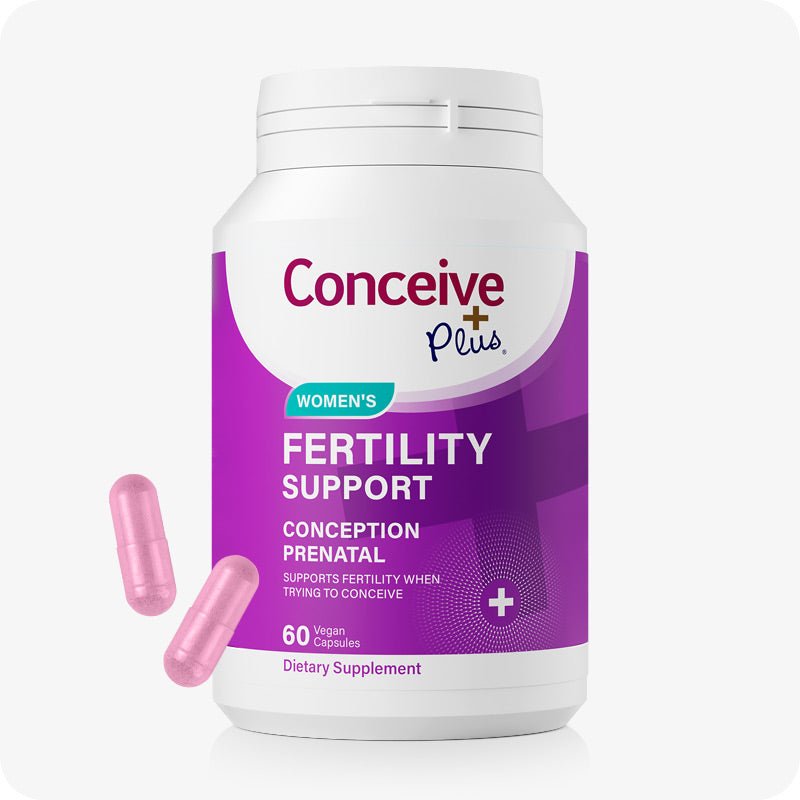
Conceive Plus women's fertility supplements include vitamin D3 alongside the full spectrum of fertility-supporting nutrients — making it one of the most complete PCOS conception supplement options available without needing multiple separate products.
N-Acetyl Cysteine (NAC): The Insulin Sensitiser With Fertility Benefits
N-Acetyl Cysteine (NAC) is a precursor to glutathione, the body's most powerful antioxidant, and has emerged as one of the most promising PCOS fertility supplements. Its primary mechanism of action in PCOS is insulin sensitisation — improving cellular response to insulin and reducing the downstream hormonal disruption that impairs ovulation.
Clinical evidence for NAC in PCOS TTC:
- A landmark randomised controlled trial in Fertility and Sterility found NAC was comparable to metformin (the standard PCOS drug) for improving ovulation rates and pregnancy outcomes
- NAC significantly reduced total testosterone and free androgen index in PCOS women after 24 weeks
- Combined with clomifene (Clomid), NAC improved ovulation induction and pregnancy rates compared to clomifene alone
- As an antioxidant, NAC directly improves egg quality by neutralising reactive oxygen species in ovarian follicles
Recommended dose: 600mg NAC, 2–3 times daily, taken with meals for best tolerability. Allow 8–12 weeks to see hormonal changes.
CoQ10 for Egg Quality in PCOS: Protecting Your Oocytes
Coenzyme Q10 (CoQ10) plays a central role in mitochondrial energy production — and eggs require extraordinary amounts of energy to complete the complex process of maturation, fertilisation and early embryo division. PCOS is associated with increased oxidative stress in follicular fluid, which directly damages oocytes.
CoQ10 as a PCOS conception supplement targets this problem at the cellular level:
- A 2018 randomised trial found CoQ10 supplementation (600mg/day) significantly improved oocyte quality and embryo development in women undergoing IVF for PCOS
- CoQ10 reduces follicular fluid reactive oxygen species (ROS) — a key marker of egg damage
- Women with PCOS who supplemented CoQ10 had higher fertilisation rates and more top-quality embryos
- CoQ10 also supports the endometrium, improving uterine receptivity for implantation
Recommended dose: 400–600mg ubiquinol (the active form) daily, taken with a fat-containing meal for better absorption. For women over 35 with PCOS, the higher end of the range is generally recommended.
The Conceive Plus fertility supplement range incorporates CoQ10 alongside other key antioxidants, providing a convenient, clinically-informed approach to PCOS fertility support. Available at conceiveplus.com/collections/fertility-supplements.
Folate and B Vitamins: Essential for PCOS Conception
All women trying to conceive need adequate folate — but for women with PCOS, this is especially important. PCOS is associated with higher rates of the MTHFR gene variant, which impairs the conversion of synthetic folic acid to the active form (5-methyltetrahydrofolate or 5-MTHF). This means many PCOS women may not benefit adequately from standard folic acid supplements.
Why methylfolate matters for PCOS TTC:
- Methylfolate (active folate) is required for proper cell division and fetal neural tube development in early pregnancy
- Adequate folate reduces homocysteine levels — elevated homocysteine is common in PCOS and associated with impaired implantation
- B12 deficiency (common in PCOS women who have taken metformin) further impairs folate metabolism
- B6 supports progesterone production, which is often deficient in PCOS women post-ovulation
Look for supplements that contain methylfolate (5-MTHF) rather than basic folic acid — or speak to your doctor about appropriate supplementation based on your MTHFR status. Conceive Plus women's fertility supplements use active folate for maximum bioavailability.
Omega-3 Fatty Acids: Reducing PCOS Inflammation
Chronic low-grade inflammation is a hallmark of PCOS and a significant contributor to impaired ovulation and egg quality. Omega-3 fatty acids (EPA and DHA) are among the most well-established anti-inflammatory compounds in nutritional medicine, and their fertility benefits extend beyond inflammation alone.
Research on omega-3 for PCOS fertility:
- A 2018 randomised trial found omega-3 supplementation for 8 weeks significantly reduced testosterone, LH and the LH:FSH ratio in PCOS women — all markers of improved hormonal balance
- Omega-3s improve insulin sensitivity independently of weight loss
- DHA is incorporated into the zona pellucida (egg membrane) and is essential for proper fertilisation
- Omega-3 supplementation during IVF is associated with better embryo quality and higher clinical pregnancy rates
Recommended dose: 2,000–3,000mg combined EPA/DHA daily from a high-quality, third-party tested fish oil or algal oil source (algal oil is plant-based and provides DHA without the risk of contaminants).
Building Your Complete PCOS TTC Supplement Protocol
The evidence points clearly: a multi-nutrient approach targeting insulin sensitivity, oxidative stress, hormonal balance and egg quality gives women with PCOS the best foundation for natural conception. Here is a summary of the complete PCOS supplement protocol:
| Supplement | Primary Benefit | Recommended Daily Dose |
|---|---|---|
| Myo-Inositol | Insulin sensitisation, ovulation restoration | 2,000–4,000mg |
| D-Chiro-Inositol | Androgen reduction, egg quality | 50–100mg |
| Vitamin D3 | Hormonal regulation, follicle development | 2,000–5,000 IU |
| NAC | Antioxidant, insulin sensitiser | 1,200–1,800mg (split) |
| CoQ10 (Ubiquinol) | Egg quality, mitochondrial function | 400–600mg |
| Methylfolate | Cell division, neural tube protection | 400–800mcg |
| Omega-3 (EPA/DHA) | Anti-inflammation, hormonal balance | 2,000–3,000mg |
| Magnesium | Insulin signalling, sleep, stress | 300–400mg |
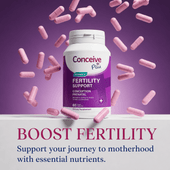
While sourcing each supplement separately is possible, comprehensive fertility supplements like Conceive Plus are specifically formulated to provide these nutrients in clinically informed ratios, removing the guesswork and making daily adherence much simpler. PCOS trying to conceive supplements work best when taken consistently for a minimum of 3 months — the full lifecycle of an egg as it develops within the follicle.
Conceive Plus vs Pre-Seed: What About Lubricant for PCOS?
Many women with PCOS experience vaginal dryness as a side effect of hormonal imbalance — particularly reduced oestrogen. Standard lubricants can harm sperm motility by up to 100%, making lubricant choice critical when TTC. Both Conceive Plus and Pre-Seed are marketed as sperm-friendly options, but there are important differences.
Conceive Plus fertility lubricant is uniquely formulated with calcium and magnesium ions — minerals that actively support the sperm capacitation process required for fertilisation. Pre-Seed does not contain these ions. Conceive Plus also matches the natural pH (7.2–8.5) of fertile cervical mucus and is isotonic to protect sperm cell integrity. For women with PCOS who may already have compromised fertile mucus production, these differences are clinically meaningful.
Explore the full Conceive Plus lubricant range at conceiveplus.com/collections/fertility-lubricants.
Lifestyle Factors That Amplify Supplement Benefits for PCOS
Supplements work best alongside targeted lifestyle changes. For PCOS specifically, these evidence-based strategies enhance the effectiveness of your supplement protocol:
- Low-glycaemic index (GI) diet: Reduces insulin spikes, the root driver of PCOS pathology. Prioritise vegetables, legumes, lean proteins and whole grains over refined carbohydrates and sugars
- Regular moderate exercise: Even 30 minutes of walking daily improves insulin sensitivity. Avoid excessive high-intensity exercise, which can increase cortisol and worsen hormonal imbalance
- Stress management: Chronic stress elevates cortisol, which disrupts the HPO axis governing ovulation. Mindfulness, yoga and adequate sleep (7–9 hours) are all evidence-based interventions
- Reduce environmental endocrine disruptors: BPA (plastics), phthalates (cosmetics) and pesticide residues all disrupt hormonal signalling and are particularly problematic in PCOS
- Track ovulation: Use a combination of basal body temperature charting and LH urine testing strips. PCOS makes ovulation prediction challenging — digital BBT monitors that account for cycle irregularity are particularly helpful
When to Seek Medical Support for PCOS and Fertility
While targeted supplements provide a strong foundation, some women with PCOS will benefit from additional medical intervention. Consider consulting a fertility specialist if:
- You have been trying to conceive for 6 months without a positive pregnancy test (less than 35 years old) or 3–6 months (35 and over)
- Your cycles remain absent or very irregular (greater than 35–40 days) despite 3 months of supplement use
- Your partner's semen analysis shows any abnormalities
- You have additional factors such as blocked tubes, fibroids or a diagnosis of endometriosis
Medical options for PCOS ovulation induction include letrozole (now first-line in most guidelines), clomifene citrate, and metformin. These can be used alongside your supplement protocol — always inform your doctor of all supplements you are taking.
Frequently Asked Questions: PCOS Supplements for TTC
Q1: How long do PCOS trying to conceive supplements take to work?
A: Most clinical studies use a 12–16 week timeframe to see meaningful hormonal and ovulatory changes. This aligns with the 90-day follicle development cycle. Give any supplement protocol at least 3 months before evaluating results.
Q2: Is inositol safe to take during pregnancy?
A: Inositol is considered safe in pregnancy and some research even supports its use in early pregnancy to reduce gestational diabetes risk. Always discuss continuation of any supplement with your doctor once pregnant.
Q3: Can I take PCOS supplements alongside metformin?
A: Yes, in most cases — but always consult your prescribing doctor first. Note that metformin depletes B12, so ensure your supplement protocol includes adequate B12. Inositol and metformin have complementary mechanisms and have been studied together.
Q4: Do I need all these supplements, or can I just take a prenatal vitamin?
A: Standard prenatal vitamins do not typically include therapeutic doses of inositol, NAC or CoQ10. A PCOS-specific supplement protocol generally requires targeted supplements in addition to (or instead of) a basic prenatal. Conceive Plus fertility supplements are formulated specifically for TTC, not just pregnancy maintenance.
Q5: What is the best inositol ratio for PCOS TTC?
A: The scientific consensus supports a 40:1 ratio of myo-inositol to D-chiro-inositol, mirroring the body's natural ovarian ratio. Products using a 5:1 or 1:1 ratio are not well-supported by current evidence for fertility outcomes.
Q6: Does PCOS mean I will definitely need IVF?
A: No. The majority of women with PCOS who desire pregnancy will conceive — many naturally or with relatively simple interventions like lifestyle changes, supplements and oral ovulation induction medication. IVF is typically reserved for cases where simpler interventions have not worked after an appropriate trial period.
Q7: Can CoQ10 help with PCOS egg quality?
A: Yes. Multiple studies show CoQ10 reduces oxidative stress in ovarian follicles, directly improving oocyte quality — which is often compromised in PCOS. Women with PCOS over 30 especially benefit from CoQ10 supplementation starting 3–6 months before trying to conceive.
Q8: Should my partner also take supplements when I have PCOS?
A: Absolutely. Male fertility matters equally — approximately 50% of fertility challenges involve a male factor. While you work on restoring ovulation through PCOS supplements, your partner should support sperm health with antioxidant-rich male fertility supplements including zinc, selenium, vitamin C, and CoQ10. Conceive Plus offers dedicated male fertility support as part of the same range.
Q9: Are there any supplements I should avoid with PCOS?
A: High-dose DHEA is generally not recommended for PCOS as it may worsen androgen excess. Some herbal supplements (like vitex/chaste tree berry) can interfere with ovulation induction medications. Always consult a healthcare provider before adding new supplements.
Q10: Where can I buy Conceive Plus PCOS fertility supplements?
A: Conceive Plus fertility supplements are available online at conceiveplus.com/collections/fertility-supplements with fast shipping across the United States. Backed by over 15 years of clinical use and trusted by fertility specialists worldwide.
Conclusion: Your PCOS Supplement Action Plan
PCOS is one of the most common — and most manageable — causes of ovulatory infertility. The evidence base for targeted nutritional supplementation has matured significantly over the past decade, and women with PCOS now have access to a genuinely science-backed protocol that addresses the root causes of their fertility challenges.
Start with inositol, add vitamin D, NAC, CoQ10 and methylfolate, support with omega-3s — and give the protocol at least 90 days of consistent use. Pair your PCOS trying to conceive supplements with a low-GI diet, regular movement and stress management for the best possible foundation for conception.
Conceive Plus has supported hundreds of thousands of couples on their fertility journey, offering both fertility supplements and sperm-friendly lubricants developed with fertility specialists. Explore the complete Conceive Plus range at conceiveplus.com/collections/fertility-supplements and take the first step toward your pregnancy goal today.
Ready to support your fertility journey? Conceive Plus has helped hundreds of thousands of couples worldwide. Explore our complete range of fertility supplements and lubricants — formulated with fertility specialists and trusted by clinics globally.