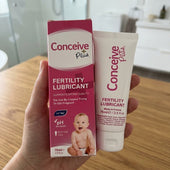
Fertility Lubricant Guide: What to Look For When Trying to Conceive


Fertility Lubricant Guide: What to Look For When Trying to Conceive
When you're trying to conceive, every detail matters — including the lubricant you use. Many couples don't realise that standard personal lubricants can actually harm sperm, reducing motility and viability before they ever reach the egg. A fertility lubricant is specifically designed to work with your body's natural biology, supporting sperm on their journey rather than hindering it. This comprehensive guide covers everything you need to know about choosing the right fertility lubricant for your TTC journey.
Why Most Lubricants Are Harmful When Trying to Conceive
Standard personal lubricants — even those marketed as "natural" or "gentle" — can pose serious problems for conception. Studies published in the journal Fertility and Sterility have shown that many common lubricants significantly reduce sperm motility and viability.
The main issues are:
- pH imbalance: The vaginal environment during peak fertility sits between pH 7.0–8.5, matching seminal fluid. Most lubricants are formulated at pH 4–5 (acidic), which damages sperm cell membranes.
- Osmolality mismatch: Lubricants with very high or low osmolality cause sperm to shrink or swell, disrupting motility.
- Chemical ingredients: Parabens, glycerin, and certain preservatives are toxic to sperm.
- Physical barrier effect: Thick, sticky lubricants can physically impede sperm movement through cervical mucus.
A 2014 study found that products like KY Jelly, Astroglide, and even saliva reduced sperm motility by up to 60–100% within 60 minutes of contact. For couples already facing challenges, this is a significant and avoidable setback.
What Makes a True Fertility Lubricant
Conceive Plus is trusted by thousands of couples worldwide. Explore our complete range of fertility products.
Shop Conceive Plus →
A genuine fertility lubricant must meet specific criteria to be considered safe and beneficial for conception. Here's what to look for:
1. pH-Balanced to Match Fertile Cervical Mucus
During ovulation, cervical mucus becomes thin, clear, and stretchy — with a pH of 7.0–8.5. A proper fertility lubricant must match this pH range to avoid damaging sperm.
2. Isotonic Osmolality
The World Health Organization recommends lubricants have an osmolality of 290–380 mOsm/kg to match seminal fluid. Products outside this range stress sperm cells.
3. Sperm-Safe Ingredients
The best fertility lubricants avoid glycerin, parabens, and harsh preservatives. Some advanced formulations include hydroxyethylcellulose (HEC), a water-based polymer that mimics cervical mucus without harming sperm.
4. Contains Calcium and Magnesium Ions
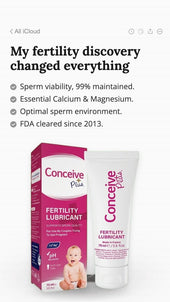
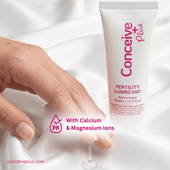
This is where Conceive Plus stands apart. It is the only leading fertility lubricant that contains calcium (Ca²⁺) and magnesium (Mg²⁺) ions — minerals essential for sperm capacitation, the biological process that prepares sperm to fertilise an egg. No other major conception lubricant includes these critical minerals.
5. FDA Cleared as a Medical Device
FDA clearance as a medical device (not just cosmetic) means the product has been evaluated for safety and effectiveness. Conceive Plus holds this clearance, providing an extra layer of confidence.
Conceive Plus vs Pre-Seed: Which Fertility Lubricant Is Better?
The two most discussed sperm friendly lubricants on the market are Conceive Plus and Pre-Seed. Here's how they compare:
| Feature | Conceive Plus | Pre-Seed |
|---|---|---|
| pH Range | 7.2–8.2 | 7.1–8.8 |
| Osmolality | 290–380 mOsm/kg | ~300 mOsm/kg |
| Calcium & Magnesium Ions | ✅ Yes | ❌ No |
| FDA Cleared | ✅ Yes | ✅ Yes |
| Hormone-Free | ✅ Yes | ✅ Yes |
| Available Formats | Tube, applicators, single-use | Tube, applicators |
| Clinically Used | ✅ Fertility clinics worldwide | Limited |
The key differentiator is the calcium and magnesium ion formula. These minerals play a direct role in sperm motility and capacitation — the process by which sperm gain the ability to penetrate and fertilise an egg. Conceive Plus is the only fertility lubricant designed to actively support this process rather than simply avoiding harm.
Many fertility specialists recommend Conceive Plus over alternatives precisely because of this added biological support.
Conceive Plus is trusted by fertility specialists worldwide. Available in multiple formats — tube, single-use applicators, and sachets.
Shop Conceive Plus Fertility Lubricants →
How to Use a Fertility Lubricant Correctly
Using your fertility lubricant correctly makes a real difference to its effectiveness:
- Timing: Apply just before intercourse — not hours before. For the best experience with applicators, insert 15–30 minutes before sex.
- Amount: Use 2–4 ml internally, or as needed externally. More is not always better — excess lubricant can dilute cervical mucus.
- Temperature: Store at room temperature. Cold lubricant is uncomfortable and may temporarily affect sperm.
- Frequency: Use on every cycle day you have intercourse during your fertile window, typically days 10–16 of a 28-day cycle.
- Avoid mixing: Don't combine with other lubricants, spermicidal products, or standard condoms (which are latex-treated with spermicide).
Lubricant pH for Conception: The Science Explained
Understanding lubricant pH for conception can help you make a more informed choice. Here's the biology:
Sperm are most motile and survive longest in environments with a pH between 7.0 and 8.5. The acrosome reaction — which allows sperm to penetrate the egg — also requires this near-neutral to slightly alkaline environment.
Standard vaginal pH is acidic (3.8–4.5) for good reason: it protects against infection. However, during ovulation, cervical mucus becomes more alkaline (pH 7+), creating a "fertility window" in which sperm can safely travel upward. A proper fertility lubricant should maintain this pH range.
Products like Conceive Plus are formulated at pH 7.2–8.2, perfectly matching the fertile cervical environment. This is not accidental — it reflects careful formulation designed by reproductive scientists.
Best Lubricant for TTC: Format Comparison
The best lubricant for TTC isn't just about ingredients — the format matters too:
- Tube format: Economical, easy to dispense externally, good for couples who prefer spontaneity. Conceive Plus 75ml tube is the most popular format.
- Pre-filled applicators: Allow internal application, depositing the fertility lubricant close to the cervix where it's most effective. Recommended by most fertility specialists.
- Single-use sachets: Hygienic, travel-friendly, great for couples timing intercourse precisely around ovulation.
Many couples use applicators during their fertile window for maximum effectiveness, switching to the tube for external use at other times.
Common Questions About Fertility Lubricants
Does a fertility lubricant increase your chances of getting pregnant?
A fertility lubricant removes barriers to conception (sperm-hostile pH, osmolality) and in the case of Conceive Plus, provides active biological support. While no lubricant can overcome serious fertility issues, using one instead of a standard lubricant significantly improves sperm survival and motility during the journey to the egg.
Can I use Conceive Plus throughout my cycle?
Yes. Conceive Plus is safe to use throughout your cycle. For TTC purposes, concentrate on using it during your 5–6 day fertile window.
What if I don't need lubricant but want the fertility benefits?
Some couples use Conceive Plus specifically for its fertility-supporting formula even without vaginal dryness. The applicator format can be used to deposit the conception lubricant internally without using it as a lubricant per se.
Choose your format and join thousands of couples who've trusted Conceive Plus on their TTC journey.
Explore All Fertility Lubricant Options →
Frequently Asked Questions
Q: What is the difference between a fertility lubricant and a regular lubricant?
A: A fertility lubricant is formulated to match the pH and osmolality of fertile cervical mucus (pH 7.0–8.5, osmolality 290–380 mOsm/kg), and uses sperm-safe ingredients. Regular lubricants are typically acidic and may contain spermicidal compounds.
Q: Is Conceive Plus the best fertility lubricant available?
A: Conceive Plus is widely regarded as one of the leading fertility lubricants due to its unique calcium and magnesium ion formula, FDA clearance, and widespread use in fertility clinics globally.
Q: Can a fertility lubricant help with low sperm motility?
A: A sperm friendly lubricant like Conceive Plus will not treat clinical sperm motility disorders, but it creates the optimal environment for whatever motile sperm are present. For diagnosed low motility, consult a fertility specialist.
Q: When should I apply a fertility lubricant?
A: Apply just before intercourse during your fertile window (typically days 10–16). Applicators can be used 15–30 minutes before intercourse for internal application.
Q: Can I use a fertility lubricant with IUI?
A: Fertility lubricants are typically not used with IUI (intrauterine insemination), as sperm are inserted directly into the uterus bypassing the vagina. Consult your clinic for guidance.
Q: Does lubricant pH actually affect sperm survival?
A: Yes. Studies show sperm survive and move best at pH 7.0–8.5. Products outside this range significantly reduce motility within minutes of contact.
Q: Is Conceive Plus safe if I'm already pregnant?
A: Conceive Plus is formulated to be safe, but once pregnant, there is typically no need for a fertility lubricant. Use a standard pregnancy-safe moisturiser if vaginal dryness is an issue.
Q: How does Conceive Plus compare to using nothing at all?
A: If you don't experience vaginal dryness, you may not need a lubricant at all. However, using Conceive Plus adds the benefit of its calcium/magnesium formula, which may support sperm capacitation regardless of natural lubrication levels.
Q: Can men use Conceive Plus externally?
A: Yes, Conceive Plus can be applied externally for use during intercourse. It is safe for skin contact.
Q: Where can I buy Conceive Plus fertility lubricant?
A: Conceive Plus is available online at conceiveplus.com, as well as in pharmacies and fertility clinics worldwide.
Conclusion: Choosing the Right Fertility Lubricant
When trying to conceive, your choice of fertility lubricant is a small but meaningful decision that can make a real difference. The science is clear: standard lubricants harm sperm, while a properly formulated sperm friendly lubricant supports them.
Look for a product that is pH-balanced to match fertile cervical mucus (7.0–8.5), isotonic in osmolality, free from spermicidal ingredients, and ideally contains the unique calcium and magnesium ions found in Conceive Plus. Add FDA clearance and clinical endorsement, and the choice becomes clear.
Conceive Plus is the fertility lubricant trusted by thousands of couples and recommended by fertility specialists. Whether you choose the tube, applicators, or single-use sachets, you're giving your conception journey the support it deserves.
Lubricants, supplements, ovulation support, and more. Trusted by fertility specialists worldwide.
Explore All Products at Conceive Plus →