Fertility Lubricant for Dryness: Why Vaginal Dryness Affects Conception


Fertility Lubricant for Dryness: Why Vaginal Dryness Affects Conception
If you are trying to conceive and experiencing vaginal dryness, you are far from alone. Studies suggest that up to 17% of women of reproductive age report persistent vaginal dryness, and for those actively trying to get pregnant, the figure is even higher due to hormonal shifts, fertility medications, and the psychological stress of the conception journey. What many couples do not realise is that vaginal dryness does more than cause discomfort — it can directly interfere with your ability to conceive by creating an inhospitable environment for sperm. A high-quality fertility lubricant for dryness can make a meaningful difference, and understanding why is the first step toward addressing it effectively.
In this comprehensive guide, we break down exactly why vaginal dryness is more than a physical inconvenience when you are trying to conceive, what causes it during the TTC journey, how conventional lubricants can worsen your chances, and why Conceive Plus is uniquely formulated to support — not sabotage — the reproductive process.
What Is Vaginal Dryness and Why Does It Happen During TTC?
Vaginal dryness occurs when the vaginal walls fail to produce sufficient natural lubrication. This lubrication, often referred to as cervical mucus, is not just about comfort — it is part of the biological machinery of conception. Healthy cervical mucus provides a protective transport medium for sperm, helping viable sperm reach and survive until the egg is released.
Common causes of vaginal dryness during the trying-to-conceive phase include:
- Clomiphene citrate (Clomid): One of the most frequently prescribed ovulation-induction medications, Clomid is notorious for reducing cervical mucus quantity and quality. Research published in Fertility and Sterility confirms that Clomid's anti-estrogenic effect on the cervix can reduce mucus production significantly.
- Letrozole (Femara): While generally considered more cervix-friendly than Clomid, letrozole can still reduce natural lubrication in some women.
- Progesterone supplementation: Prescribed during the luteal phase or during IVF protocols, progesterone can cause noticeable dryness.
- Stress and cortisol: The psychological burden of infertility significantly elevates cortisol levels, which can suppress estrogen — the hormone responsible for vaginal lubrication.
- Age: Estrogen naturally declines in women over 35, which reduces vaginal secretions. Women over 40 are particularly susceptible.
- Hormonal imbalances: Conditions such as PCOS, thyroid dysfunction, or hyperprolactinaemia can all impair cervical mucus production.
- Antihistamines and certain antidepressants: These medications are known to cause systemic dryness, including in the vaginal area.
- Breastfeeding: Low estrogen during lactation causes significant dryness, which matters for women trying to conceive while breastfeeding.
The result of any of these factors is that natural lubrication becomes insufficient — not just uncomfortable, but functionally challenging when trying to conceive.
How Vaginal Dryness Directly Impairs Conception
Cervical mucus plays an essential biological role in reproduction. Around ovulation, healthy cervical mucus becomes more fluid and takes on what fertility specialists describe as an "egg-white" consistency. This fertile-quality mucus serves several critical functions:
- It nourishes sperm with nutrients
- It filters out abnormal or damaged sperm
- It provides a transport medium through the cervical canal
- It protects sperm from the naturally acidic vaginal environment
- It can help extend sperm survival from hours to days
When dryness reduces or eliminates this mucus, sperm are left exposed to the vaginal environment, which is typically acidic (pH 3.8–4.5) to protect against infection. That acidity, while crucial for vaginal health, is harmful to sperm — a pH below 6.0 significantly impairs sperm motility and viability. A 2017 study in the Journal of Assisted Reproduction and Genetics confirmed that sperm motility drops dramatically within minutes of exposure to an acidic vaginal environment without protective mucus.
Additionally, without natural lubrication, intercourse during the fertile window can become painful, which may lead couples to have sex less frequently or avoid it altogether — further reducing conception chances.
Why Most Common Lubricants Are Dangerous When Trying to Conceive
Many couples turn to over-the-counter lubricants to manage dryness — but conventional products can make the situation dramatically worse. A landmark study published in Fertility and Sterility tested popular lubricants including KY Jelly, Astroglide, and olive oil against sperm function. The results were alarming: most reduced sperm motility by 60–90% within 60 minutes of exposure. Some caused complete sperm immobilisation.
Why? Most standard lubricants are:
- Hyperosmolar: Their salt concentration is far higher than that of cervical mucus or semen, causing sperm cells to shrink and lose motility through osmotic stress
- Wrong pH: Most are formulated for general use at vaginal pH (3.8–4.5), which is hostile to sperm
- Contain spermicidal ingredients: Glycerol, polyquaternium, and some preservatives have direct toxic effects on sperm
Even products marketed as "natural" or "water-based" are not automatically safe for conception — the osmolality and pH of the product matter enormously.
What Makes a True Fertility Lubricant for Dryness?
A genuine fertility lubricant for dryness must meet several specific criteria to be effective and safe during the TTC journey. These are not marketing claims — they are evidence-based requirements outlined in guidelines from the American Society for Reproductive Medicine (ASRM) and the WHO's laboratory manual for human semen examination.
The essential requirements are:
- pH 7.0–8.5: The optimal pH range for sperm survival and motility, matching that of semen and fertile cervical mucus
- Iso-osmolar formulation: Salt concentration matching that of natural reproductive fluids (280–380 mOsm/kg), preventing osmotic damage to sperm
- Absence of spermicidal agents: No glycerol, polyquaternium, parabens, or other compounds that harm sperm
- Tested on sperm motility: Should demonstrate no adverse effect on sperm in laboratory studies
- Ideally, supplementary calcium and magnesium ions: These divalent cations are present in fertile cervical mucus and support capacitation — the final preparation sperm must undergo before fertilisation
Conceive Plus vs Pre-Seed: Which Fertility Lubricant Is Right for You?
When researching a fertility lubricant for dryness, two names come up repeatedly: Conceive Plus and Pre-Seed. Both are marketed as sperm-friendly, but there are meaningful differences worth understanding.
Conceive Plus:
- Formulated with a pH of 7.2–8.2 to match the optimal sperm environment
- Isotonic and iso-osmolar — precisely matched to fertile cervical mucus
- Uniquely contains calcium and magnesium ions — minerals clinically shown to support sperm capacitation and the acrosome reaction required for fertilisation
- Available in both tube and individual applicator formats for internal use
- FDA-cleared as a medical device for use during conception attempts
- Used in fertility clinics worldwide, including for IUI and IVF procedures
- Free from parabens, glycerol, and spermicidal agents
Pre-Seed:
- Also sperm-safe with appropriate pH and osmolality
- FDA-cleared for use during conception
- Does not contain calcium and magnesium ions
- Primarily available in applicator format
The key differentiator is the calcium and magnesium ion supplementation in Conceive Plus. These ions are not cosmetic additions — they play an active role in sperm function. Research has shown that calcium signalling is essential for the acrosome reaction (the process by which sperm penetrates the egg), and magnesium ions are required for sperm capacitation in the female reproductive tract. No other leading fertility lubricant includes this formulation.
For couples dealing with dryness, especially those who are also managing male factor concerns or unexplained infertility, Conceive Plus provides an extra layer of biological support that Pre-Seed does not.
How to Use a Fertility Lubricant for Dryness Correctly
Even the best fertility lubricant for dryness only works if applied correctly. Here are the key guidelines:
- Time it around ovulation: Use the lubricant during your fertile window (typically the 5 days before ovulation and the day of ovulation). Using ovulation predictor kits (OPKs) alongside your lubricant gives you the best timing advantage.
- Use internal applicators for best results: Conceive Plus offers pre-filled disposable applicators that deposit the lubricant directly at the cervix, ensuring sperm have the best possible environment from the moment of ejaculation.
- Apply 15 minutes before intercourse: This allows the lubricant to distribute evenly before sexual activity, reducing the need to apply at the last moment (which can disrupt intimacy).
- Use the correct amount: More is not always better. The Conceive Plus applicator contains the clinically recommended volume to supplement natural mucus without overwhelming it.
- Do not mix with other lubricants: Using Conceive Plus alongside incompatible products defeats the purpose. Stick to one fertility-safe lubricant at a time.
- Continue use if on fertility medications: If you are taking Clomid, letrozole, or progesterone, the dryness they cause is real and ongoing — continue using Conceive Plus throughout your medicated cycles as needed.
Additional Strategies for Managing Dryness While Trying to Conceive
While a high-quality fertility lubricant for dryness is the most direct intervention, addressing the root cause of dryness can also help. Consider the following complementary strategies:
- Increase water intake: Hydration directly affects cervical mucus production. Aim for 8–10 glasses of water daily.
- Vitamin E supplementation: Clinical research suggests that vitamin E (400–800 IU daily) can improve vaginal lubrication by supporting mucous membrane integrity.
- Evening primrose oil: Taken from cycle start to ovulation, some women find that EPO improves cervical mucus quality. Stop use after ovulation as it may cause uterine contractions.
- Manage stress: Cortisol suppresses estrogen production. Mind-body practices including yoga, meditation, and acupuncture have shown measurable reductions in fertility-related stress hormones.
- Avoid antihistamines near ovulation: If you are taking antihistamines for allergies, try to time them away from your fertile window, or discuss alternatives with your doctor.
- Check thyroid function: Hypothyroidism is a frequently overlooked cause of low estrogen and poor cervical mucus. Ask your doctor for a full thyroid panel if you have unexplained dryness.
- Avoid douching and scented products: These disrupt the vaginal microbiome and can worsen dryness and pH imbalance.
Fertility Lubricant for Dryness: What the Science Says
The research supporting fertility lubricants for TTC use is robust and growing. Key studies include:
A 2014 study in Obstetrics and Gynecology found that couples who used a sperm-friendly lubricant had no reduction in pregnancy rates compared to those with adequate natural lubrication — a significant finding given the concerns many couples have about whether lubricant use could somehow affect conception.
Research published in the Journal of Reproduction and Infertility demonstrated that calcium and magnesium ions — as found in Conceive Plus — significantly enhanced sperm motility and capacitation rates in vitro compared to control conditions without these ions.
A comprehensive review in Human Reproduction Update confirmed that standard lubricants reduce sperm motility by 50–90% while iso-osmolar, pH-balanced formulations do not — making the distinction between "regular" and "fertility" lubricants clinically meaningful, not just a marketing positioning.
These data points reinforce the importance of product selection when trying to conceive. Not all lubricants are equal, and the difference can be the difference between conception and continued frustration.
Conceive Plus fertility lubricants are specifically formulated with the calcium and magnesium ions your body needs, in the exact pH and osmolality to support sperm survival and motility. Shop the full range at conceiveplus.com/collections/fertility-lubricants.
Frequently Asked Questions About Fertility Lubricant for Dryness
Can vaginal dryness actually prevent pregnancy?
Dryness itself does not directly prevent pregnancy, but it creates two major problems: it makes intercourse uncomfortable (reducing frequency), and it eliminates the protective mucus that helps sperm survive and navigate to the egg. Without cervical mucus, sperm are exposed to the acidic vaginal environment, which can immobilise them within minutes. So while dryness is not an absolute barrier to conception, it significantly reduces your chances per cycle.
Is it safe to use a fertility lubricant every cycle?
Yes. Products like Conceive Plus are formulated for regular use and contain no harmful chemicals. They are safe to use every cycle, including on fertility medication cycles and during IUI or IVF procedures (consult your clinic for their specific protocols).
Does Conceive Plus increase the chances of getting pregnant?
Conceive Plus does not guarantee pregnancy, but it removes a barrier that dryness creates. By providing a sperm-friendly environment, it ensures that dryness does not become a reason sperm fail to reach the egg. For couples where dryness is a contributing factor, using Conceive Plus may meaningfully improve their odds per cycle.
Can I use Conceive Plus with Clomid or letrozole?
Yes. These medications commonly cause dryness, and Conceive Plus is specifically appropriate in medicated cycles. It does not interact with Clomid or letrozole. Many fertility specialists actively recommend it to their patients on these medications.
What is the difference between internal applicators and the tube?
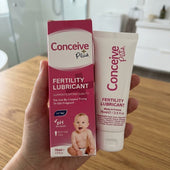
The Conceive Plus tube is applied externally and around the vaginal opening, providing lubrication for comfort during intercourse. The pre-filled individual applicators deposit the product internally, directly near the cervix — providing better coverage for sperm survival. For women with significant dryness or using it specifically for TTC purposes, the internal applicators are generally recommended.
Can men use Conceive Plus too?
Conceive Plus is designed for vaginal use to create a sperm-friendly environment. It should not be applied directly to the penis during intercourse in place of regular lubricant, as it is formulated for internal use. However, it is safe for contact with sperm, and using it internally as directed creates the right conditions for sperm that enters through ejaculation.
Does Conceive Plus expire?
Yes, like all medical products, Conceive Plus has an expiry date printed on the packaging. Always check before use and do not use expired product, as the pH and osmolality may no longer be optimal.
Can I use Conceive Plus if I have PCOS?
Yes. PCOS often comes with reduced or thick, hostile cervical mucus, and Conceive Plus is specifically beneficial in this context. Its sperm-friendly formulation provides supplemental lubrication when PCOS affects natural mucus quality. Many women with PCOS also find that it helps compensate for poor cervical mucus days even when their cycle is otherwise irregular.
How quickly does Conceive Plus work?
Conceive Plus works immediately. It creates the right environment for sperm from the moment of application. There is no "loading up" period — you apply it and it works in that cycle. For best results, use it during your confirmed fertile window, identified by tracking ovulation through OPKs, BBT charting, or ultrasound monitoring.
Are there any side effects of using Conceive Plus?
Conceive Plus is very well tolerated. Because it is free from parabens, glycerol, and common irritants, side effects are rare. Some women report mild sensitivity if they have very reactive skin, but this is uncommon. If you experience any irritation, discontinue use and consult your healthcare provider.
Whether you are just starting out or have been trying for months, managing vaginal dryness with the right fertility lubricant is one of the simplest, most evidence-backed steps you can take. Conceive Plus is formulated by fertility specialists, used in clinics worldwide, and uniquely enriched with calcium and magnesium ions to actively support sperm function — not just replace moisture. Browse our full fertility lubricant collection at conceiveplus.com/collections/fertility-lubricants and find the format that works best for you.