Luteal Phase Calculator: Tracking Fertility More Precisely


When it comes to understanding reproductive health and increasing your chances of conception, one aspect often overlooked is the luteal phase. This critical portion of the menstrual cycle occurs after ovulation and before menstruation. It plays a pivotal role in preparing the body for a possible pregnancy. A tool known as a luteal phase calculator is helping many individuals take control of their fertility by offering insights into this often misunderstood timeframe.

What Is the Luteal Phase?
The luteal phase begins right after ovulation—when an egg is released from the ovary—and continues until the start of menstruation. This phase typically lasts between 12 and 14 days, although anything between 10 and 16 days can still be considered within the normal range. During this time, the ruptured follicle transforms into the corpus luteum, which produces progesterone to support a potential pregnancy by thickening the uterine lining. If you have a luteal phase long condition, it may be beneficial to understand its impact on your cycle and fertility potential, as prolonged luteal phases can sometimes signal hormonal imbalances.
If fertilization does not occur, progesterone levels drop, triggering the shedding of the uterine lining. If pregnancy happens, the hormone continues to be produced, maintaining the uterine lining and supporting early pregnancy [1].
Additionally, paying attention to your luteal phase discharge can offer valuable insights into your fertility, helping to assess the health of your luteal phase and reproductive system.
Why the Luteal Phase Matters in Fertility Tracking
The length and stability of the luteal phase are critical for implantation and early pregnancy. A luteal phase that’s too short—a condition often called luteal phase defect—may not allow enough time for a fertilized egg to properly implant. This can lead to difficulty conceiving or early pregnancy loss.
This is why so many individuals trying to conceive are turning to tools like a luteal calculator. Understanding whether your luteal phase is within the optimal range can be the key to identifying potential fertility challenges or confirming your cycle is functioning normally [2].

✨ Trying to Conceive?
Our Ovulation & Fertility Bundle combines Myo-Inositol with essential vitamins to support healthy hormone balance and regular ovulation.
Shop Now — $55.00✓ Free shipping on orders over $40 | ✓ Trusted by millions of couples worldwide

How to Calculate the Luteal Phase
Knowing how to calculate luteal phase is relatively straightforward but does require accurate cycle tracking. The luteal phase is the number of days between ovulation and the first day of your next period. The challenge lies in accurately identifying the day of ovulation, which isn’t always mid-cycle and can vary monthly.
Several methods can help pinpoint ovulation:
- Basal Body Temperature (BBT): A slight increase in resting temperature typically occurs after ovulation [3].
- Ovulation Predictor Kits (OPKs): These detect the luteinizing hormone (LH) surge that happens just before ovulation.
- Cervical Mucus Monitoring: Fertile cervical mucus resembles raw egg whites and appears near ovulation.
- Ultrasound or Hormone Testing: These medical methods offer the most precise timing but are usually reserved for fertility evaluations [4].
Once ovulation is confirmed, counting the days until menstruation begins gives you your luteal phase length. A luteal phase calculator automates this process by allowing users to input the date of ovulation and the first day of their next cycle, instantly returning the luteal length.
Digital Tools for Better Accuracy
Several mobile apps and websites now include a built-in luteal phase tracker or luteal calculator feature. These tools are especially helpful when paired with other fertility data like BBT and OPK results. Over time, they can detect trends or irregularities that might otherwise go unnoticed, offering a clearer picture of reproductive health.
Moreover, digital tools often provide tailored insights or suggestions based on your cycle patterns, helping users make informed decisions about when to try for a baby or when to consult a fertility specialist.
The Bottom Line
Using a luteal phase calculator helps simplify the process of tracking and understanding this phase, making fertility awareness more accessible and precise. By learning how to calculate luteal phase correctly and incorporating the data into your overall fertility plan, you gain powerful insight into one of the most crucial phases of your cycle. Whether through a manual method or a digital luteal calculator, this tool is a smart addition to any fertility tracking routine.
In the pursuit of pregnancy or simply better understanding your body, accurate cycle tracking is essential—and that includes more than just knowing when your period starts. The luteal phase holds valuable clues about your hormonal balance and reproductive readiness.

References
- Reed BG, Carr BR. The Normal Menstrual Cycle and the Control of Ovulation. [Updated 2018 Aug 5]. In: Feingold KR, Ahmed SF, Anawalt B, et al., editors. Endotext [Internet]. South Dartmouth (MA): MDText.com, Inc.; 2000-. Available from: https://www.ncbi.nlm.nih.gov/books/NBK279054/
- Wilcox AJ, Baird DD, Weinberg CR. Time of implantation of the conceptus and loss of pregnancy. N Engl J Med. 1999 Jun 10;340(23):1796-9. doi: 10.1056/NEJM199906103402304. PMID: 10362823.
- Steward K, Raja A. Physiology, Ovulation And Basal Body Temperature. [Updated 2023 Jul 17]. In: StatPearls [Internet]. Treasure Island (FL): StatPearls Publishing; 2025 Jan-. Available from: https://www.ncbi.nlm.nih.gov/books/NBK546686/
- Ulrich CC, Dewald O. Pregnancy Ultrasound Evaluation. [Updated 2023 Feb 13]. In: StatPearls [Internet]. Treasure Island (FL): StatPearls Publishing; 2025 Jan-. Available from: https://www.ncbi.nlm.nih.gov/books/NBK557572/
🌱 Support Your Fertility Journey
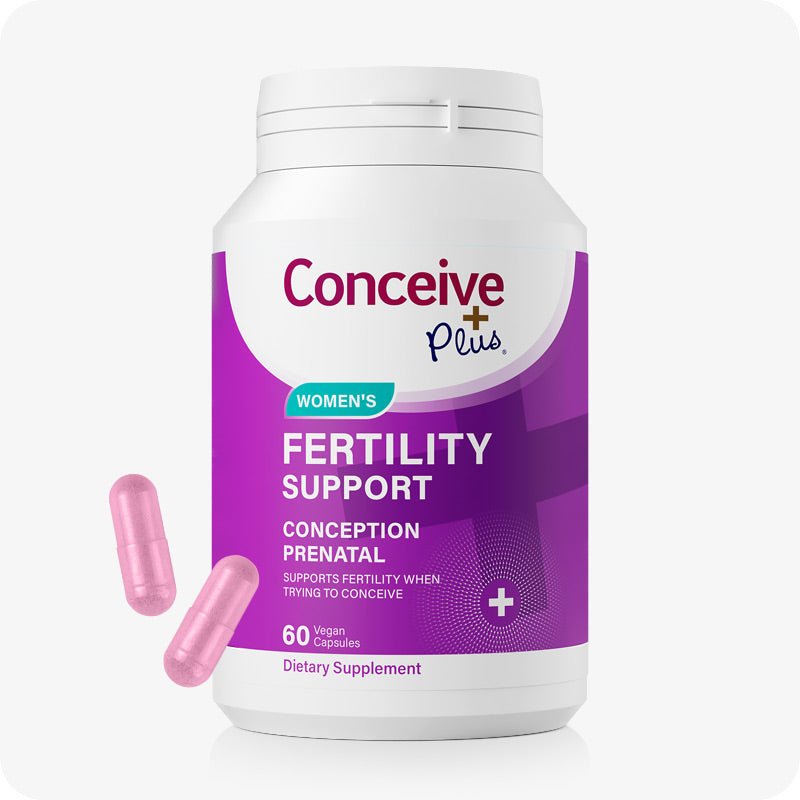
Conceive Plus fertility supplements are clinically formulated to help regulate your cycle and support egg quality.
Shop Fertility Support →Frequently Asked Questions
Recommended by Fertility Experts
Conceive Plus Men's Fertility Support
Designed to support healthy sperm production, motility, and overall male reproductive health with clinically studied nutrients.
Shop Now →Q: How do you calculate luteal phase?
A: The luteal phase is calculated by identifying your ovulation date and counting forward approximately 12-16 days until menstruation begins. Most individuals can pinpoint ovulation by tracking basal body temperature (a slight rise of 0.4-0.8°F after ovulation), observing cervical mucus changes, or using ovulation predictor kits that detect the LH surge. Once you know your ovulation date, simply add 12-16 days to determine when your luteal phase ends and menstruation should begin. The American Society for Reproductive Medicine (ASRM) notes that luteal phase length is remarkably consistent for each individual, typically varying by only 1-2 days month to month. Many fertility-focused individuals use this predictability to optimize their health during this phase, including adjusting nutrition and supplementation like Conceive Plus to support hormonal balance.
Q: How to calculate luteal phase length?
A: Luteal phase length is calculated by counting the number of days from ovulation until the first day of your next menstrual period. For most people, this duration ranges from 12-16 days, with an average of 14 days according to reproductive health research. To track this accurately, record your ovulation date (confirmed through temperature charting, LH surge detection, or ultrasound monitoring) and count forward until menstruation begins. The key advantage of knowing your specific luteal phase length is that it remains relatively stable month to month—if your luteal phase is consistently 13 days, you can reliably predict your next period. This precision enables better family planning decisions and allows you to time nutritional and supplement support, such as Conceive Plus, strategically during your fertile window and luteal phase recovery period.
Q: When is my luteal phase calculator—how do I use one?
A: A luteal phase calculator works by inputting your cycle length and ovulation date (or first day of menstruation) to automatically calculate when your luteal phase begins and ends. Most calculators ask for your average cycle length—typically 28-32 days for most people—and then estimate ovulation around day 14, counting backward from your next expected period. To use one effectively, track at least 3-6 months of menstrual data to establish your personal cycle pattern, since cycle lengths can vary by 2-3 days among individuals. The calculator then projects your luteal phase window, helping you understand when hormonal shifts occur and when to adjust lifestyle factors like sleep, stress management, and nutritional intake. Many fertility-conscious individuals use these calculations to align supplementation timing with their cycle, ensuring they're supporting their body's needs during the luteal phase when progesterone levels naturally rise.
Q: How to determine luteal phase accurately?
A: The most accurate way to determine your luteal phase is to confirm ovulation through basal body temperature tracking, which shows a sustained temperature elevation of 0.4-0.8°F for 3+ consecutive days following ovulation. Another highly reliable method is using ovulation predictor kits (OPKs) that detect the LH surge, which occurs 24-36 hours before ovulation, allowing you to pinpoint the exact day ovulation occurs. Some individuals also use fertility monitors or wearable devices that track hormone metabolites in urine or saliva, providing real-time confirmation of ovulation. Once ovulation is confirmed, your luteal phase officially begins that same day and typically lasts 12-16 days until menstruation. For those seeking to optimize their reproductive health, combining these tracking methods with targeted support—such as cycle-synced nutrition and supplements like Conceive Plus—can enhance your ability to support conception during both the fertile window and subsequent luteal phase.
Q: How to count luteal phase days correctly?
A: To count luteal phase days correctly, start counting from day one immediately after ovulation occurs and continue counting until the first day of your next menstrual period. If you ovulate on day 14 of your cycle, day 15 becomes luteal phase day 1, continuing through day 27 or 28 (depending on whether your luteal phase is 13-14 days). According to reproductive research, approximately 50% of individuals have a luteal phase lasting 12-13 days, while 30% experience 14-15 days, making individual tracking essential for accuracy. Keeping a simple calendar or using a fertility tracking app allows you to log each luteal phase day and identify patterns in symptoms like breast tenderness, mood changes, or energy levels. Understanding your precise luteal phase length helps you plan supplementation timing and lifestyle adjustments, as research shows that supporting hormonal balance during this phase—through proper nutrition and products like Conceive Plus—may improve overall reproductive wellness and cycle regularity.
Trusted by Couples in Over 70 Countries
Support Male Fertility From the Inside Out
Male fertility is just as important as female fertility in the conception journey. Conceive Plus Men's range delivers targeted nutritional support to promote healthy sperm and overall reproductive wellbeing.
Shop Men's Range →