Lubricant Ingredients to Avoid When Trying to Conceive: The Ultimate 2026 Checklist


What if the product you're using to make intimacy easier is actually the very thing slowing your conception progress? Many couples assume that simply avoiding spermicide is enough, but the reality is that common lubricant ingredients to avoid when trying to conceive, such as glycerin and propylene glycol, can create a hyperosmotic environment that damages sperm. Even household oils you might consider "natural" often contain peroxides that interfere with your goals.
It's exhausting to track every cycle only to feel confused by vague marketing terms like "sperm-friendly" that have no regulated definition. You deserve a clear path to choosing products that are clinically proven to help, not hinder. This guide will show you exactly how to identify the best lubricant for conception based on FDA safety standards. We'll preview the eight brands currently cleared under the PEB medical device code as of June 2026 and provide a checklist of pH and osmolality requirements to ensure your lubricant mimics the natural environment of fertile cervical mucus. By the end of this article, you'll have the confidence to choose products that truly support sperm health.
Key Takeaways
- Identify the hidden lubricant ingredients to avoid when trying to conceive that act as accidental contraceptives by dehydrating or damaging sperm cells.
- Discover why a specific pH range of 7.0 to 8.5 and low osmolality are non-negotiable factors for maintaining sperm motility and integrity.
- Learn to navigate product labels with a simple checklist that prioritizes FDA-cleared status over generic "sperm-friendly" marketing claims.
- Find out how specialized formulations use essential minerals like Calcium and Magnesium to mimic the natural physiological environment of fertile cervical mucus.
The Hidden Impact of Lubricant Ingredients on Conception
Many couples don't realize that their choice of personal lubricant can unintentionally sabotage their fertility goals. While we often think of lubricants as helpful aids for intimacy, many standard formulas function as accidental contraceptives. They create a chemical and physical environment that is hostile to sperm, even if the label doesn't explicitly list a spermicide. Understanding the lubricant ingredients to avoid when trying to conceive is the first step in ensuring your body's natural processes aren't being blocked by the very products meant to assist them.
The vaginal environment during the fertile window is specifically designed by nature to support sperm survival. Standard products often disrupt this delicate balance by altering pH levels or introducing chemicals that slow down motility. This creates a hidden hurdle for couples who are already dealing with the frustrations of slow conception progress. To better understand how these products impact your journey, watch this helpful video:
The Barrier Effect: How Lube Stops Sperm
Standard lubricants often possess a high viscosity that functions as a thick wall, physically trapping sperm and preventing them from reaching the cervix. While sperm need to swim rapidly through the reproductive tract to reach the egg, thick gels can act as a literal barrier that stops them in their tracks. It's not just about the chemicals; it's about the texture. This is also why home remedies are often discouraged by fertility specialists:
- Saliva: Contains digestive enzymes that can break down sperm membranes.
- Olive Oil: Can contain peroxides and inflammatory markers that are toxic to reproductive cells.
- Coconut Oil: May alter the vaginal microbiome and hinder sperm motility.
Why "Spermicide-Free" Is a Misleading Label
A product labeled "spermicide-free" only means it doesn't contain Nonoxynol-9 or similar chemicals designed to kill sperm on contact. However, many of these products still contain lubricant ingredients to avoid when trying to conceive because they inhibit sperm motility or cause cell death through high osmolality. The only way to be certain a product is truly safe is to look for the FDA "PEB" classification. This specific medical device code ensures the product has been tested for compatibility with gametes and embryos. Without this clearance, "fertility-friendly" is often just a marketing claim rather than a clinical reality backed by data.
6 Lubricant Ingredients to Avoid When Trying to Conceive
Identifying the specific lubricant ingredients to avoid when trying to conceive is crucial because many additives found in drugstore brands are toxic to sperm. While these products are safe for general use, they aren't designed for the fragile environment required for fertilization. Many common lubricants prioritize shelf-life and texture over biological compatibility, leading to formulations that can inadvertently block your path to pregnancy.
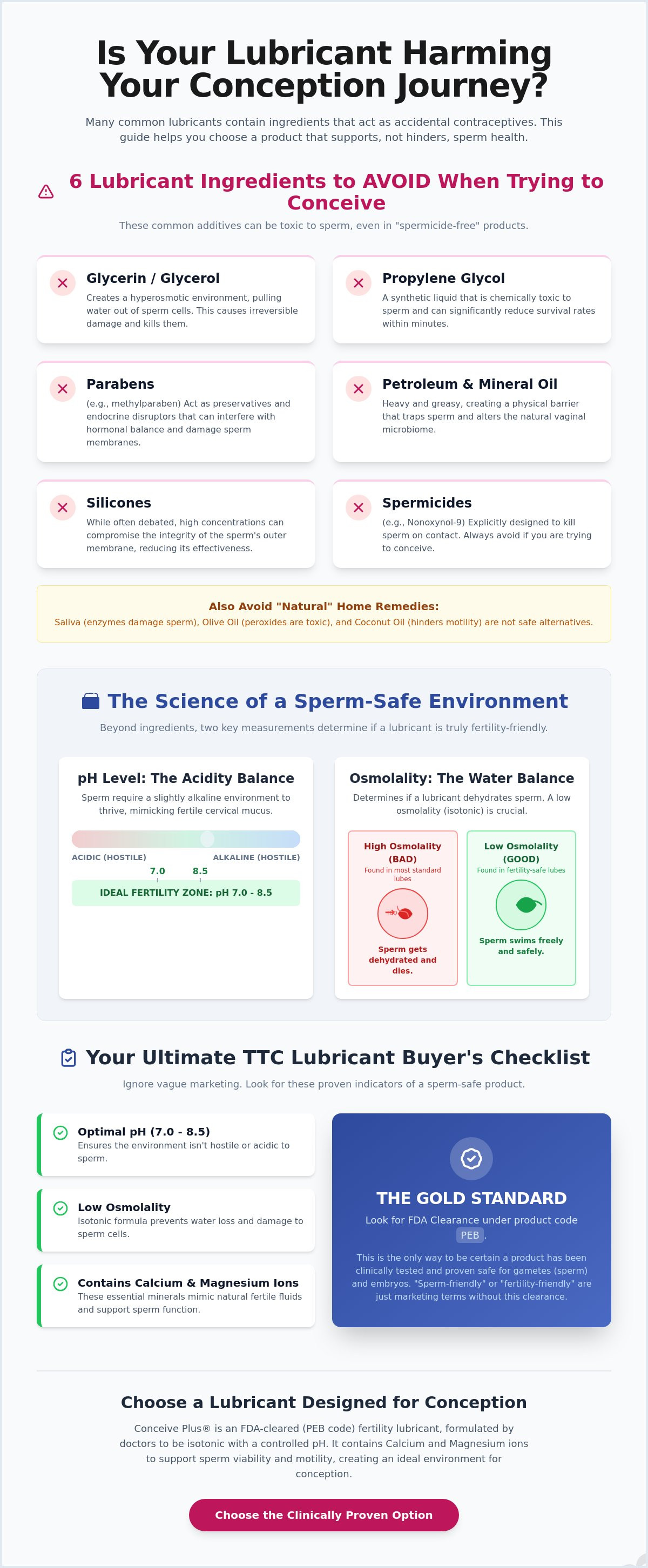
Glycerin is perhaps the most common offender. It acts as a humectant, which means it draws moisture toward itself. When it comes into contact with sperm, it pulls water out of the cell, causing osmotic shock and permanent damage to motility. Similarly, propylene glycol is used to maintain moisture but can be chemically toxic to delicate gametes. This synthetic liquid is often found in warming lubricants and can lead to significantly reduced sperm survival rates within minutes of exposure.
Parabens, such as methylparaben and propylparaben, are preservatives that act as endocrine disruptors and can disrupt cell membranes. These chemicals can mimic estrogen and interfere with the delicate hormonal balance needed for a successful pregnancy. Petroleum and mineral oils are also problematic. They are heavy and greasy, creating a physical coating that prevents sperm from swimming through cervical mucus. Beyond physical obstruction, petroleum-based products can alter the vaginal microbiome, potentially leading to infections. Silicone is often debated, but studies suggest high concentrations can compromise sperm membrane integrity. This makes it much harder for the sperm to successfully penetrate the egg during fertilization. Finally, Nonoxynol-9 is a harsh surfactant that destroys sperm cells entirely.
The Danger of Nonoxynol-9 and Other Harsh Surfactants
Nonoxynol-9 is a potent surfactant that physically destroys the sperm cell membrane on contact. While it is a known spermicide, trace amounts sometimes appear in specialty products like flavored or warming gels. These chemicals create an environment where sperm cannot survive even for a few minutes. Checking for a certified Fertility Lubricant is the best way to avoid these hidden toxins that derail your cycle.
Preservatives and pH Modifiers to Watch
Preservatives like phenoxyethanol have shown potential for reproductive toxicity in laboratory settings. Additionally, pH modifiers like citric acid are frequently added to maintain shelf-stability. Unfortunately, these can drop the vaginal pH below the 7.2 to 8.0 range that sperm require to stay alive. The top three lubricant ingredients to avoid when trying to conceive are glycerin, nonoxynol-9, and parabens. If you are concerned about safety, you can explore fertility-friendly options formulated for sperm health.
Beyond Ingredients: Understanding pH and Osmolality for Sperm Health
While it's vital to identify specific lubricant ingredients to avoid when trying to conceive, the chemical composition of the fluid is only half the battle. Even if a product is free of parabens and glycerin, it can still act as a barrier if its pH and osmolality don't match the body's natural fertile fluids. Sperm are incredibly sensitive to their environment. A slight imbalance can cause them to lose motility or stop swimming entirely. This is why understanding the physics of these fluids is just as important as reading the ingredient label.
pH Balance: Creating a Safe Haven
The vagina is naturally acidic, usually maintaining a pH of around 4.5 to protect against infections. However, sperm cannot survive in this acidic environment. They require a more alkaline setting, typically between 7.0 and 8.5. During your most fertile days, your body produces cervical mucus that shifts to this alkaline range to protect the sperm. Standard lubricants often maintain a low pH to match the vagina's normal state, which unfortunately makes them hostile during the conception window. A fertility-safe option must mimic this "golden ratio" to ensure a safe passage for the sperm cells.
Osmolality: The Silent Sperm Killer
Osmolality refers to the concentration of dissolved particles in a liquid. If a lubricant has high osmolality, it is "hypertonic." This means it will physically pull water out of the sperm cells through osmosis. This causes the sperm to shrivel and die, a process often described as osmotic shock. Most commercial lubricants have very high osmolality levels, sometimes exceeding 2,000 mOsm/kg. For optimal safety, you should look for an isotonic environment. The ideal range is below 400 mOsm/kg, which closely aligns with the natural 290 mOsm/kg found in human reproductive fluids.
The blueprint for a successful fertility lubricant is fertile cervical mucus. Beyond just being "safe," the ideal formula includes specific ions that support the fertilization process. These electrolytes provide the following benefits:
- Calcium and Magnesium: These ions are crucial for sperm "capacitation," the final stage of maturation that allows sperm to successfully penetrate and fertilize an egg.
- Sodium and Potassium: These are essential for maintaining the osmotic balance of the cells and supporting sperm energy.
- Isotonic formulation: This ensures that the lubricant ingredients to avoid when trying to conceive aren't simply replaced by high concentrations of salts that still cause cell dehydration.
By focusing on these physiological factors, you can ensure your lubricant supports sperm energy and motility rather than acting as a silent barrier to your pregnancy goals.
The Ultimate TTC Lubricant Buyer’s Checklist
Shopping for fertility products shouldn't feel like a chemistry exam. While you now know the specific lubricant ingredients to avoid when trying to conceive, you need a structured way to evaluate products at the store or online. Marketing terms like "natural" or "sperm-friendly" aren't regulated, so you must look for specific clinical markers. This checklist will help you filter out harmful products and find a solution that supports your reproductive health.
- Step 1: Verify FDA "PEB" Clearance. Check the packaging for the PEB product code. This confirms the lubricant is a Class II medical device cleared for use by couples trying to conceive.
- Step 2: Scan for the "Big 6" Ingredients. Ensure the label is free from glycerin, parabens, petroleum, propylene glycol, silicone, and Nonoxynol-9.
- Step 3: Identify Essential Ions. Look for Calcium and Magnesium on the ingredient list. These electrolytes are vital for sperm maturation and fertilization.
- Step 4: Confirm the pH Range. The ideal product should have a pH between 7.2 and 8.0 to mimic your body's natural fertile fluids.
- Step 5: Check Osmolality. Choose an isotonic formula with an osmolality below 400 mOsm/kg to prevent sperm dehydration.
How to Read a Lubricant Label Like a Pro
Ingredients are listed by concentration, so the first three items on the label tell you the most about the product's impact. Glycerin is frequently listed under synonyms like glycerol or even "plant-based humectants." Parabens often appear as methylparaben or propylparaben. If you see these near the top of the list, the concentration is likely high enough to cause osmotic shock to sperm. Reading Conceive Plus reviews can provide real-world insights into how other couples have successfully navigated these labels to find a product that works for them.
Clinical Validation: What to Look for in Studies
There's a significant difference between "doctor-recommended" and "clinically proven." The former is often a marketing claim based on surveys, while the latter refers to peer-reviewed data. The gold standard for safety is in vitro sperm motility studies. These tests ensure that the lubricant doesn't just "not kill" sperm, but actually allows them to swim freely. Additionally, verified fertility lubricants are tested for compatibility with embryos and oocytes to ensure safety at every stage of the fertilization process. If you want a product that meets all these clinical standards, you can choose a fertility-friendly lubricant designed specifically for your journey.
Choosing the Best Lubricant for Conception: Why Conceive Plus is Different
Knowing which lubricant ingredients to avoid when trying to conceive is only half the battle. Once you've cleared your nightstand of products containing glycerin and parabens, the next step is choosing a formula that doesn't just "do no harm" but actively supports your body's natural processes. Conceive Plus stands out because it's designed to mimic the exact physiological environment of fertile cervical mucus. While many brands simply remove the toxins, this formulation goes a step further by including essential electrolytes that are naturally present in your reproductive fluids.
The brand offers two primary ways to support your journey. Pre-filled applicators are designed for internal use, ensuring the lubricant is placed deep enough to coat the cervix and create a path for sperm. For external use and general intimacy, the multi-use tube provides the same sperm-friendly benefits. This dual approach ensures that whether you're focusing on comfort or maximizing your fertile window, you're using a product that supports both sperm motility and long-term viability.
The Role of Essential Ions in the Conception Process
Most lubricants fail because they treat the vaginal environment as a static space. In reality, fertilization is a complex chemical event that requires specific minerals. Conceive Plus is uniquely formulated with Calcium and Magnesium ions, which are the "secret sauce" for successful conception. Calcium ions are critical because they trigger the acrosome reaction. This is the process where the sperm releases enzymes to penetrate the egg's outer shell. Without enough Calcium, even the fastest sperm may fail to fertilize the egg.
Magnesium is equally vital. It supports sperm metabolism and provides the energy needed for the long swim through the reproductive tract. By including these minerals, Conceive Plus provides a bio-matched environment that standard lubricants simply can't replicate. When you eliminate the lubricant ingredients to avoid when trying to conceive and replace them with these essential ions, you're giving sperm the best possible chance to reach their destination.
Start Your Journey with Confidence
Success in conception often comes down to timing and preparation. You can easily integrate this fertility-friendly lubricant into your daily tracking and ovulation routine to ensure you're covered during your most fertile days. Using a clinically backed product removes the fear of accidentally using "spermicidal" products and replaces it with the confidence that you're supporting your body.
If you're ready to make the switch, you can explore the range of best-selling fertility products to find the right fit for your needs. Your lubricant should be a bridge to your future, not a barrier. By choosing a formula that respects the delicate balance of pH, osmolality, and essential minerals, you can focus on the emotional side of your journey while the science handles the rest.
Take Control of Your Fertility Journey Today
Your path to pregnancy should be supported by science, not hindered by the products you use during intimacy. By now, you know that identifying the specific lubricant ingredients to avoid when trying to conceive is essential for protecting sperm health. Beyond simply avoiding "the bad stuff" like glycerin and parabens, you also understand the critical need for a balanced pH and low osmolality that mimics your body’s natural fertile environment. Every detail matters when you are working toward a successful pregnancy.
Don't leave your conception goals to chance with standard lubricants that act as accidental barriers. Instead, choose a solution that has been trusted by millions of couples worldwide since 2008. Conceive Plus is FDA cleared for couples trying to conceive and features a patented formula enriched with Calcium and Magnesium ions to support the fertilization process. It's time to swap out the hurdles for a bridge that helps you reach your goal faster.
Shop the Best Lubricant for Conception: Conceive Plus Fertility Lube
You’ve done the research and now have the tools to make an informed choice. Take this next step with confidence, knowing you’re providing the best possible environment for your future family. Your journey is unique, and you deserve a product that works as hard as you do.
Frequently Asked Questions
Is it okay to use water-based lubricants while trying to conceive?
Most standard water-based lubricants are not safe for conception because they often contain glycerin or propylene glycol. These ingredients create a hyperosmotic environment that dehydrates sperm cells. While they're water-soluble, their chemical makeup can still act as a barrier to fertilization. You should only use water-based options that are specifically labeled and cleared by the FDA for fertility use. Standard gels aren't designed with sperm survival in mind.
Can I use coconut oil as a natural fertility-friendly lubricant?
It's best to avoid using coconut oil as a lubricant when you're trying to conceive. While it seems natural, coconut oil can contain peroxides and inflammatory chemicals that harm sperm integrity. Additionally, it can alter the vaginal microbiome, potentially leading to infections that further complicate your fertility journey. Stick to clinically tested products that mimic the natural pH of fertile cervical mucus rather than relying on household pantry items.
What is the difference between sperm-friendly and conception-friendly lube?
The term "sperm-friendly" is often a general marketing claim without a legal definition. In contrast, "fertility-friendly" or "conception-friendly" lubricants are usually those that have received FDA clearance under the PEB product code. This classification ensures the product has been batch-tested for compatibility with sperm, eggs, and embryos. Always look for the specific FDA clearance on the packaging rather than relying on vague marketing buzzwords that aren't backed by clinical data.
Does using the wrong lubricant cause permanent damage to sperm?
Using the wrong lubricant causes immediate damage to the sperm cells present during intimacy, but it doesn't affect long-term sperm production in the male body. The high osmolality or toxic chemicals in certain gels can kill or immobilize sperm within minutes. While this won't cause permanent infertility, it can significantly reduce your chances of pregnancy during that specific cycle. Identifying lubricant ingredients to avoid when trying to conceive helps you prevent these "accidental" contraceptive effects.
How much lubricant should I use to avoid hindering sperm movement?
You should use enough lubricant to ensure comfort, but avoid excessive amounts that could create a physical barrier. When using a fertility-safe product, a small amount is usually sufficient for most couples. If you're using pre-filled applicators, follow the manufacturer's instructions for internal placement. Proper placement is often more important than the total volume used, as it helps create a continuous path for sperm to swim toward the cervix without getting trapped.
Are there any ingredients that actually help sperm reach the egg?
Yes, specific electrolytes like Calcium and Magnesium ions are known to support the fertilization process. These minerals are essential for sperm capacitation, which is the final stage of maturation required to penetrate an egg. While most products focus on being "safe," high-quality fertility lubricants include these ions to mimic the natural energy-boosting properties of fertile cervical mucus. This provides sperm with the metabolic support they need for their journey through the reproductive tract.
How do I know if a lubricant is truly FDA cleared for fertility?
You can verify a product's status by looking for the "FDA Cleared" label specifically for fertility use on the packaging. These products are regulated as Class II medical devices under the product code "PEB." This code confirms the manufacturer has submitted clinical data proving the lubricant is compatible with gametes and fertilization. As of mid-2026, only eight brands in the United States have officially received this specific clearance, so check the label carefully before purchasing.
When is the best time in my cycle to use a fertility lubricant?
The best time to use a fertility lubricant is during your fertile window, which typically includes the days leading up to and including the day of ovulation. This is when your body's natural cervical mucus should be at its most alkaline. Using a specialized lubricant during this time ensures that the environment remains supportive of sperm survival. Knowing the lubricant ingredients to avoid when trying to conceive is most critical during these peak days of your cycle.