How Long Does It Take to Get Pregnant From Fertilization to Implantation


Figuring out how long does it take to get pregnant can feel a bit like trying to guess when it’s going to rain—sometimes it’s soon, sometimes it’s later, and sometimes it just keeps you waiting. The thing is, this process isn’t just a single event. It’s a chain of steps that have to line up in a certain way. If you’re new to all this, you might wonder how long it will take to get pregnant or maybe you’re curious how long does it take to get pregnant after sex. Let’s try to break it down, though don’t expect an exact stopwatch. Everyone’s body is a bit different.
You may ask how long after sex does implantation occur or how long does conception take. These questions come up a lot. One person’s answer might not fit another’s situation. Still, it can help to know the general steps: fertilization has to happen, then the fertilized egg divides and travels, and eventually implants in the uterus. You might also want to know the average time to get pregnant by age, since age can shift the odds around. And if you’re wondering how fast can you get pregnant, well, sometimes pretty fast—but sometimes not so much [1].

Fertilization: The Starting Point
Fertilization is that first key step. After you have intercourse, sperm head into your reproductive tract. How long does it take after intercourse to get pregnant depends on whether an egg is waiting or not. If you just ovulated, sperm might meet that egg pretty soon. If not, sperm can hang around for a few days, waiting patiently. So if you’re wondering how long does it take to conceive naturally after sex, it’s partly about timing [2].
How long does fertilization take? Once sperm find the egg, fertilization itself doesn’t take too long—maybe about a day. But the sperm can be waiting several days before that even starts. No exact schedule. Bodies can be mysterious.
What Affects Fertilization?
Many things. Timing is huge. If intercourse happens right before ovulation, chances go up. If it’s too early, sperm may die off before the egg shows up. If it’s too late, the egg might not be around long enough. Sperm health matters a lot. Good motility and morphology give sperm a better shot. Nutrition can help—eating well supports overall health, possibly aiding sperm and egg quality [3]. Still, even with perfect conditions, nature can be unpredictable.
People use ovulation predictor kits or track basal temperatures to try to hit that sweet spot. That might help answer how soon after sex can you get pregnant or how long after sex can you get pregnant. You’re basically playing matchmaker for sperm and egg.
How Long Does Conception Take Once Fertilization Occurs?
After fertilization, the newly formed zygote isn’t just sitting around. It starts dividing into more cells, forming a blastocyst over the next few days while traveling toward the uterus. Wondering how long does conception take after sex? It might be a handful of days before the embryo even reaches the uterus. And if you ask how long after sex to get pregnant, remember the embryo must implant before pregnancy is considered official [4].
This journey is why how long after sex do you get pregnant or after intercourse how long does it take to become pregnant might sound like simple questions, but they’re actually layered. Fertilization can be quick if all lines up, but implantation can add more waiting. Sometimes it’s about 7–14 days until you can say “yes, pregnant.”
Implantation: The Real Beginning of Pregnancy
Pregnancy technically begins at implantation. Before that, you’ve just got a fertilized egg trying to settle in. How long after sex does implantation occur? On average, maybe about 6–12 days after conception, which might translate to about a week or two after intercourse. If you’ve ever asked how many days after sex does implantation occur, keep in mind it varies.
Some people notice implantation signs—like light spotting or mild cramping—while others have zero clues. Either way, without implantation, no pregnancy. How long after sex does pregnancy start? Not until that blastocyst implants and your body starts producing hCG. That’s when the whole hormone cascade begins [5].
How Long Does It Take to Get Pregnant After Sex?
If you’re hoping to see a quick result, you could be disappointed. Fertilization might happen in hours if sperm and egg meet right away. But “getting pregnant” means waiting for implantation. So how fast can you get pregnant after sex? The earliest fertilization might occur is within a day, but implantation can push that timeline further. It might feel like a long few days—or over a week—before you even have a shot at confirming anything [6].
How Long Does It Take to Get Pregnant After Conceiving?
Conception is fertilization, but pregnancy is implantation. After the egg is fertilized, the embryo moves along the fallopian tube, growing and changing. By the time it implants, it might be around a week or two after sex. So asking how long after sex does pregnancy start or how long does conception take after sex highlights the difference between fertilization and implantation. You conceived when egg and sperm merged, but pregnancy starts at implantation.
Average Time to Get Pregnant by Age

✨ Think You Might Be Pregnant?
Get fast, accurate results up to 6 days before your missed period with our early detection pregnancy test.
Shop Now — $9.80✓ Free shipping on orders over $40 | ✓ Trusted by millions of couples worldwide
Let’s not ignore age. It’s a big factor. Younger couples sometimes get pregnant faster. In your 20s, each month might offer a solid 20-30% chance. By your late 30s or 40, it might drop significantly. This affects how long can you get pregnant after intercourse in a more general sense—older couples often need more cycles to see a positive result. It’s not universal, but it’s a trend. Fertility doctors often say that if you’re older and trying for a while without luck, you might need to seek help sooner [7].

How Soon After Sex Can You Get Pregnant?
Sometimes pretty quickly, if your timing is impeccable. If ovulation is imminent, sperm can meet the egg and start the process almost right away. But you might ask how soon after sex does implantation occur? Even if fertilization is swift, implantation still needs days. So “soon” isn’t always that soon. It’s a waiting game.
Considering Nutrition and Overall Health
While it’s impossible to promise that eating certain foods or popping certain vitamins will make you conceive instantly, good nutrition supports overall reproductive health. You might never get a direct answer to how long after having unprotected to get pregnant from just changing your diet, but a well-balanced intake of vitamins and minerals does help create a healthier environment for fertilization and implantation. Consuming enough zinc, selenium, and folic acid, for example, may help both men and women improve their chances over time. But don’t expect miracles overnight [8].
Recognizing Early Pregnancy Clues
Some people try to guess if they’re pregnant before they can test. Maybe they think about how long after sex are you pregnant because they feel a bit weird. Early signs like mild nausea, breast tenderness, or fatigue might appear a couple of weeks after fertilization. But these signs are not a sure thing and can be caused by other factors, too [9]. If you’re looking at how fast can you get pregnant or how soon after sex can you get pregnant, remember symptoms aren’t always reliable. Wait until you can take a test.
How Long Does Implantation Take After Sex?
How long does implantation take after sex depends on when fertilization happened. If sperm found the egg right away, you start counting from fertilization. The embryo still needs several days to reach and attach to the uterus. After how long after intercourse can you get pregnant? Given that sperm live up to five days, fertilization might happen late. In that case, implantation shifts too. All these tiny details add up and explain why the timeline can be all over the place [10].

The Bottom Line
If you’re expecting a neat formula for how long does it take to get pregnant, you’re probably going to be frustrated. It’s not as simple as flipping a switch. Intercourse timing, egg availability, sperm quality, and your body’s readiness all have roles to play. Sometimes fertilization is fast and easy. Other times, it feels like an uphill climb. Asking how long after sex does pregnancy start or how soon after sex can you get pregnant can leave you with a range of answers rather than one solid number.
Trying to figure out how long it will take to get pregnant is a bit like playing detective. You might track your cycles, observe your ovulation signs, tweak your lifestyle, and still not nail it down perfectly. You may try to guess how long does conception take or how long does fertilization take, but at best you get a general timeframe. Worrying can drive you nuts. Sometimes, giving yourself patience is the best approach.
FAQs
How long after having sex can you get pregnant?
Potentially anywhere from a few days to over a week. It depends on sperm survival and ovulation timing.
After intercourse how long does it take to conceive?
It could be about a week or two before implantation cements the deal. Fertilization might be quick or slow, and implantation adds extra days.
How long after sex do you get pregnant?
This might be around one to two weeks once you consider implantation time.
How long after having sex can you get pregnant?
Basically, if you had sex and then ovulate within the next five days, you can still get pregnant. But you’ll only know for sure after waiting for implantation and then testing later on.
After how long after intercourse can you get pregnant?
Possibly up to five days later (due to sperm longevity), followed by implantation days later.
How long after sex can you be pregnant?
If everything lines up, you might technically be pregnant (after implantation) around a week or two later, but you won’t feel or know it right away.
How long does it take to get pregnant after conceiving?
Conceiving is fertilization, but pregnancy is from implantation. That can add several more days. If you’re wondering how long does it take conceive after intercourse, keep in mind that this often depends on the timing of ovulation and how quickly sperm and egg manage to connect.
Citations
- Stanford, J. B., White, G. L., & Hatasaka, H. (2002). Timing intercourse to achieve pregnancy: current evidence. Obstetrics and gynecology. Available at: https://pubmed.ncbi.nlm.nih.gov/12468181/
- Zegers-Hochschild, F., Adamson, G. D., de Mouzon, J., Ishihara, O., Mansour, R., Nygren, K., Sullivan, E., Vanderpoel, S., International Committee for Monitoring Assisted Reproductive Technology, & World Health Organization (2009). International Committee for Monitoring Assisted Reproductive Technology (ICMART) and the World Health Organization (WHO) revised glossary of ART terminology, 2009. Fertility and sterility. Available at: https://pubmed.ncbi.nlm.nih.gov/19828144/
- Agarwal, A., Gupta, S., & Sharma, R. (2005). Oxidative stress and its implications in female infertility - a clinician's perspective. Reproductive biomedicine online. Available at: https://pubmed.ncbi.nlm.nih.gov/16409717/
- Penzias A. S. (2012). Recurrent IVF failure: other factors. Fertility and sterility. Available at: https://pubmed.ncbi.nlm.nih.gov/22464759/
- Bajpai, K., Acharya, N., Prasad, R., & Wanjari, M. B. (2023). Endometrial Receptivity During the Preimplantation Period: A Narrative Review. Cureus. Available at: https://pmc.ncbi.nlm.nih.gov/articles/PMC10198587/
- Barton, B. E., Herrera, G. G., Anamthathmakula, P., Rock, J. K., Willie, A., Harris, E. A., Takemaru, K. I., & Winuthayanon, W. (2020). Roles of steroid hormones in oviductal function. Reproduction (Cambridge, England). Available at: https://pmc.ncbi.nlm.nih.gov/articles/PMC7083054/
- Jain M, Singh M. Assisted Reproductive Technology (ART) Techniques. [Updated 2023 Jun 7]. In: StatPearls [Internet]. Treasure Island (FL): StatPearls Publishing. Available at: https://www.ncbi.nlm.nih.gov/books/NBK576409/
- Gaskins, A. J., & Chavarro, J. E. (2018). Diet and fertility: a review. American journal of obstetrics and gynecology. Available at: https://pubmed.ncbi.nlm.nih.gov/28844822/
- Evers J. L. (2002). Female subfertility. Lancet (London, England). Available at: https://pubmed.ncbi.nlm.nih.gov/12126838/
- Bergh, P. A., & Navot, D. (1992). The impact of embryonic development and endometrial maturity on the timing of implantation. Fertility and sterility. Available at: https://pubmed.ncbi.nlm.nih.gov/1521649/
🌱 Get Answers Early
Millions of women trust Conceive Plus for their fertility journey. Clinically validated pregnancy tests delivered to your door.
Shop Pregnancy Tests →Frequently Asked Questions
Recommended by Fertility Experts
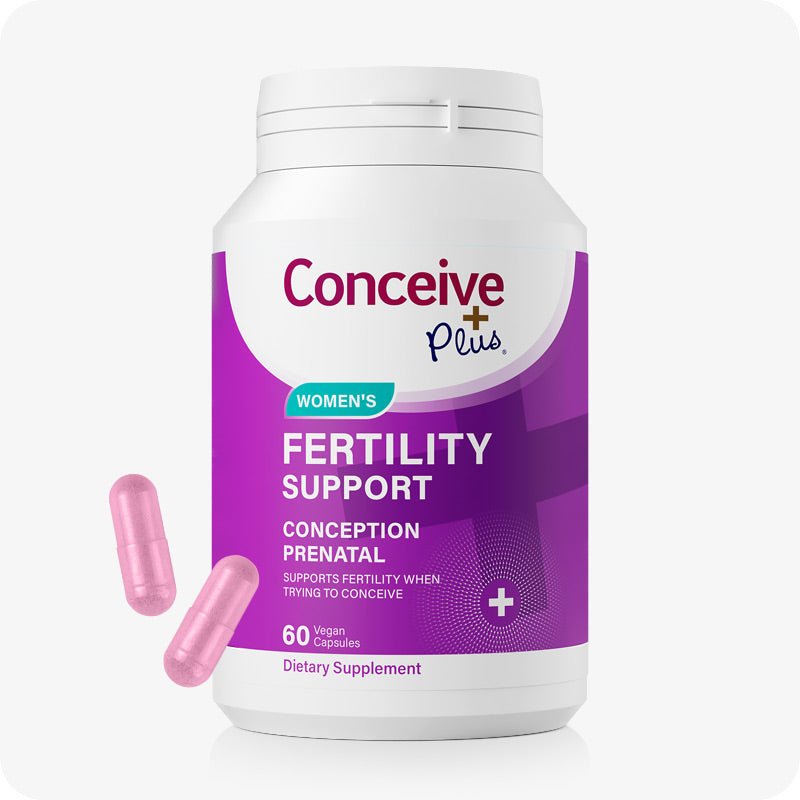
Conceive Plus Men's Fertility Support
Designed to support healthy sperm production, motility, and overall male reproductive health with clinically studied nutrients.
Shop Now →Q: How long after sex does it take to get pregnant?
A: Pregnancy doesn't occur immediately after sex. Sperm can survive in the female reproductive tract for up to 5 days, while an egg is viable for about 12-24 hours after ovulation. Fertilization typically occurs within 12-24 hours if sperm meets the egg, but implantation—when the fertilized embryo attaches to the uterine lining—takes an additional 6-12 days. This means the earliest you could detect a pregnancy with a blood test is about 8-10 days after ovulation, though home pregnancy tests are most reliable after a missed period.
Q: Can you get pregnant 2 days after ovulation?
A: Pregnancy is unlikely 2 days after ovulation because the egg window closes quickly. According to the American Society of Reproductive Medicine (ASRM), an egg survives only 12-24 hours after ovulation, so conception must occur within this narrow timeframe. This is why the fertile window is actually the 5 days before ovulation and the day of ovulation itself, not after. If you're trying to conceive, tracking ovulation through methods like ovulation predictor kits or basal body temperature can help you time intercourse during your most fertile days.
Q: How many days after fertilization does implantation occur?
A: Implantation typically occurs 6-12 days after fertilization, with most pregnancies implanting around 8-9 days post-fertilization. During this time, the fertilized egg (now called a blastocyst) travels through the fallopian tube and into the uterus, where it burrows into the uterine lining. Once implantation is complete, the embryo begins producing human chorionic gonadotropin (hCG), the hormone detected by pregnancy tests. Proper uterine health and hormone levels—areas where supplements like Conceive Plus Fertility Support can play a supportive role—are important for successful implantation.
Q: When can I take a pregnancy test after sex?
A: Most home pregnancy tests won't detect pregnancy until at least 12-14 days after ovulation, which is typically a few days before or after your missed period. Blood tests ordered by your healthcare provider can detect hCG as early as 8-10 days after ovulation, making them more sensitive than urine tests. Testing too early can result in false negatives because hCG levels may not yet be high enough to detect. For the most accurate results, the FDA recommends waiting until after your missed period to use a home pregnancy test, or consulting with your doctor for a blood test if you want earlier detection.
Q: How long does it take to get pregnant if you have irregular periods?
A: With irregular periods, predicting ovulation becomes more challenging, which can make conception take longer on average. According to recent fertility statistics, women with irregular cycles may take 2-3 times longer to conceive compared to those with regular 28-day cycles. Tracking basal body temperature, cervical mucus changes, or using ovulation predictor kits can help identify your fertile window regardless of cycle length. Working with a fertility specialist can also help—they may recommend lifestyle modifications, supplements to support cycle regularity, or further evaluation if you haven't conceived after 12 months of trying (or 6 months if you're over 35).
Trusted by Couples in Over 70 Countries
Support Male Fertility From the Inside Out
Male fertility is just as important as female fertility in the conception journey. Conceive Plus Men's range delivers targeted nutritional support to promote healthy sperm and overall reproductive wellbeing.
Shop Men's Range →