Best Vegan Prenatal Vitamins: Nurturing a Plant-Based Pregnancy


Expectant parents everywhere face a swirl of questions and concerns about nutrition and overall well-being, but those embracing a plant-based diet often encounter a unique set of uncertainties. Pregnancy represents a time of significant physiological changes, and the dietary needs of an expectant individual shift accordingly. These changes can be even more pronounced when one is committed to a regimen free of animal-derived products. The good news is that modern research, along with thoughtful product development, has made it entirely feasible to meet prenatal nutritional requirements while honoring ethical principles and personal health choices. In this extensive discussion, readers will find key information on essential nutrients, how to assess dietary gaps, and strategies for selecting reliable supplements, including the best vegan prenatal vitamins. By drawing on the latest data, we will illustrate how a tailored approach to nutrient intake can help ensure a smooth, plant-focused pregnancy journey.

The Shift in Nutritional Requirements During Pregnancy
Pregnancy is marked by the body’s amplified need for nutrients. As a baby grows, vitamins, minerals, proteins, and fats all play critical roles in fetal development and in supporting maternal health. Blood volume expands significantly, the immune system adapts, and various hormones fluctuate, impacting metabolism and nutrient utilization. Meeting these intensifying needs through balanced meals is ideal, yet this goal can become challenging when morning sickness, food aversions, or dietary limitations arise. A well-crafted plan is especially important for those following vegan or vegetarian eating patterns, as certain nutrients may be difficult to obtain in adequate quantities from plant-based sources alone. This gap can be bridged through mindful dietary choices and the inclusion of reliable prenatal supplements [1].
How Plant-Based Diets Can Fulfill Maternal Needs
Although some people fear that a purely plant-based lifestyle may not supply enough essential nutrients, multiple studies indicate that a thoughtfully managed diet rich in whole grains, legumes, vegetables, fruits, nuts, and seeds can provide significant benefits. For many expectant mothers, these foods contain fiber, antioxidants, and phytonutrients that bolster digestive health and cardiovascular function. Moreover, diets centered on plants are generally lower in saturated fats, potentially helping to maintain better metabolic markers. However, every eating pattern carries unique challenges. For instance, vitamin B12 is primarily found in animal-based products, and certain minerals like iron or zinc can be harder to absorb when isolated to plant sources. This is where carefully chosen supplements become invaluable, acting as an insurance policy against deficiencies [2].
Evaluating Supplement Options for Plant-Based Diets
Given these nuances, many expectant mothers turn to specially formulated products. While standard prenatal pills may contain animal-derived gelatin capsules or added substances unsuitable for those adhering to a strict ethical code, specialized alternatives exist. These preparations often come encapsulated in cellulose or other vegan-friendly materials, ensuring that no animal components sneak into the final product. Some highlight that they are indeed vegan prenatal vitamins, signifying their alignment with plant-based principles. Others offer certifications from recognized bodies attesting to their cruelty-free and animal-derivative-free status, which instills confidence in consumers who prioritize transparency.
In assessing supplement labels, it is helpful to examine not only which nutrients are included but also their specific forms. For instance, a chelated iron source can often be gentler on the digestive system than certain inorganic variants. The type of vitamin D matters, too: while D2 can be sourced from fungi, some formulations rely on D3 derived from lichen rather than lanolin from sheep’s wool. The careful scrutiny of labels ensures that a person’s values remain consistent with the supplements they ingest [3].
If you’ve been wondering about the possible side effects of taking prenatal vitamins, including concerns like weight gain, this article on do prenatals make you gain weight can offer some clarity on the topic.

Why Omega-3s Matter—and How to Find Them in Non-Animal Sources

✨ Start Your Prenatal Care Today
Our Prenatal Vitamins with DHA, Choline & Folate provide the essential nutrients you and your baby need for a healthy start.
Shop Now — $34.95✓ Free shipping on orders over $40 | ✓ Trusted by millions of couples worldwide
Omega-3 fatty acids—particularly DHA—contribute to fetal brain and eye development. Traditional prenatal products often incorporate fish oil to obtain this essential nutrient, but that route conflicts with strictly plant-based living. The solution is to seek out marine algae-based sources of DHA. In lieu of fish-based capsules, a prenatal vitamins without fish oil alternative harnesses microalgae cultivated to yield the same vital fatty acids, minus the direct impact on marine life. Moreover, these algae-derived products may contain fewer contaminants, such as mercury or other ocean pollutants, making them appealing from both an ethical and a health standpoint. Those who prefer products free of all seafood derivatives may also look specifically for prenatal without fish oil, ensuring full alignment with a vegan philosophy [4].
If you're curious about how prenatal vitamins might play a role in fertility, check out this article on do prenatal vitamins make you fertile, where we explore how they can potentially support your chances of conception.
Principles for Selecting a Quality Supplement
Though price and brand familiarity might be factors, product quality ultimately hinges on more concrete elements. Here are some considerations for identifying a trustworthy item:
- Third-Party Testing: Reputable producers often submit their offerings to unbiased laboratories, verifying that the listed amounts of nutrients are indeed accurate. These analyses also check for heavy metals or other contaminants.
- Formulation Synergy: An effective supplement strikes a balance among nutrients that complement or enhance each other’s absorption. For example, pairing iron with vitamin C can optimize uptake, minimizing gastrointestinal discomfort [5].
- Transparency in Ingredients: Companies that offer detailed explanations of their sourcing, processing methods, and certifications foster greater consumer confidence. People dedicated to plant-based ethics may also value knowledge of the supply chain behind each ingredient.
- Tailored Dosages: Some items might feature higher levels of certain vitamins needed only by individuals with known deficiencies. Over-supplementing specific nutrients can be risky, so items created specifically for pregnant vegans often offer more appropriate proportions.
Decoding the Difference: Vegan vs. Vegetarian Formulations
Some pregnant individuals might search for vegetarian prenatal vitamins, content with a supplement that eliminates certain animal-derived products but still allows for dairy or egg components in the supply chain. Others require a stricter standard, often labeled as vegan prenatal, which excludes all animal derivatives, including those that might appear in binders or capsule coatings. Understanding this distinction can guide a more precise choice and prevent inadvertently ingesting hidden animal-based ingredients. Many companies are careful to spell out which category their formulations fall into, but it pays to read labels thoroughly. If in doubt, contacting the manufacturer can clarify points around ingredient sourcing.

Testimonials and Expert Opinions
Numerous healthcare providers and registered dietitians support an animal-free diet during pregnancy, provided that nutrient gaps are addressed. Scientific bodies agree that well-planned vegan patterns can meet the needs of all life stages, including gestation, lactation, and childhood. These professionals emphasize, however, that informed choices make all the difference. From choosing iron-rich lentils combined with citrus fruit to enhance absorption, to turning to algae-based DHA as opposed to fish oil capsules, each microdecision adds up to a more consistent nutritional profile.
Expectant parents often report that targeted supplementation alleviates the fatigue and stress that can accompany pregnancy. Having the reassurance of a well-rounded nutrient intake can also lower anxiety around potential deficiencies. Moreover, those who experience gastrointestinal discomfort may find relief with gentler formulations tailored for sensitive stomachs. Accounts of successful, plant-based pregnancies underscore how feasible it is to maintain an animal-free or low-animal product approach without compromising health.
The Role of Personal Monitoring
Taking a supplement should be part of a broader strategy that includes attentive self-monitoring. Checking in on energy levels, hair and skin condition, digestive comfort, and mood can offer cues about whether the current program is sufficient. If certain physical indicators arise—like unusual hair shedding, persistent cracks in the corners of the mouth, or lingering exhaustion—further lab work might be necessary. Each body is unique, and pregnancy intensifies that individuality. Practitioners often encourage journaling about daily meals, fluid intake, and emotional well-being, especially during the demanding phases of gestation. This practice not only helps identify patterns but can also highlight progress toward health goals.
Strategies for Success in a Plant-Focused Pregnancy
Like any major life event, pregnancy demands adaptability. Keeping an open mind about one’s evolving dietary needs ensures that adjustments, whether they involve iron dosage or vitamin D supplementation, happen as soon as warning signs appear. Networking with fellow plant-based expectant parents can yield tips on everything from simple protein-rich meal ideas to recommended nutritional apps. Building a rapport with a dietitian or other qualified health professionals supports a consistent, evidence-based approach to meeting nutrient benchmarks. Even postpartum, these habits can carry forward, supporting nursing, postpartum recovery, and establishing healthy family meal routines.
The Bottom Line
In embracing all these resources, expectant parents can look forward to a healthy future while relying on the best vegan prenatal vitamins for peace of mind. While pregnancy introduces countless shifts and complexities, maintaining a committed plant-based lifestyle is entirely feasible with the help of carefully chosen supplements. By seeking out products formulated as prenatal vitamins without fish oil, incorporating algae-derived fatty acids, and understanding the nuances of nutrients like iron, iodine, and vitamin D, individuals can confidently embrace a pathway aligned with their values. Whether labeled as vegan prenatal vitamins, vegetarian prenatal vitamins, or another category, these specialized formulations fill the gaps that meals alone may leave unaddressed. Indeed, families worldwide have successfully nourished themselves through plant-focused pregnancies. Remaining informed, flexible, and attentive to personal needs proves invaluable at every step. Ultimately, in this evolving landscape, careful research, expert guidance, and mindful daily choices converge to offer robust support for a thriving plant-based journey.
References
- Jouanne M, Oddoux S, Noël A, Voisin-Chiret AS. Nutrient Requirements during Pregnancy and Lactation. Nutrients. 2021 Feb 21;13(2):692. doi: 10.3390/nu13020692. PMID: 33670026; PMCID: PMC7926714.
- Przybysz P, Kruszewski A, Kacperczyk-Bartnik J, Romejko-Wolniewicz E. The Impact of Maternal Plant-Based Diet on Obstetric and Neonatal Outcomes-A Cross-Sectional Study. Nutrients. 2023 Nov 8;15(22):4717. doi: 10.3390/nu15224717. PMID: 38004112; PMCID: PMC10675710.
- Meulenbroeks D, Otten E, Smeets S, Groeneveld L, Jonkers D, Eussen S, Scheepers H, Gubbels J. The Association of a Vegan Diet during Pregnancy with Maternal and Child Outcomes: A Systematic Review. Nutrients. 2024 Sep 30;16(19):3329. doi: 10.3390/nu16193329. PMID: 39408296; PMCID: PMC11478456.
- Coletta JM, Bell SJ, Roman AS. Omega-3 Fatty acids and pregnancy. Rev Obstet Gynecol. 2010 Fall;3(4):163-71. PMID: 21364848; PMCID: PMC3046737.
- Rumbold A, Ota E, Nagata C, Shahrook S, Crowther CA. Vitamin C supplementation in pregnancy. Cochrane Database Syst Rev. 2015 Sep 29;2015(9):CD004072. doi: 10.1002/14651858.CD004072.pub3. PMID: 26415762; PMCID: PMC9039972.
🌱 Everything You and Baby Need
Conceive Plus Prenatal Vitamins are formulated with DHA for brain development and Folate for neural tube protection.
Shop Prenatal Vitamins →Frequently Asked Questions
Recommended by Fertility Experts
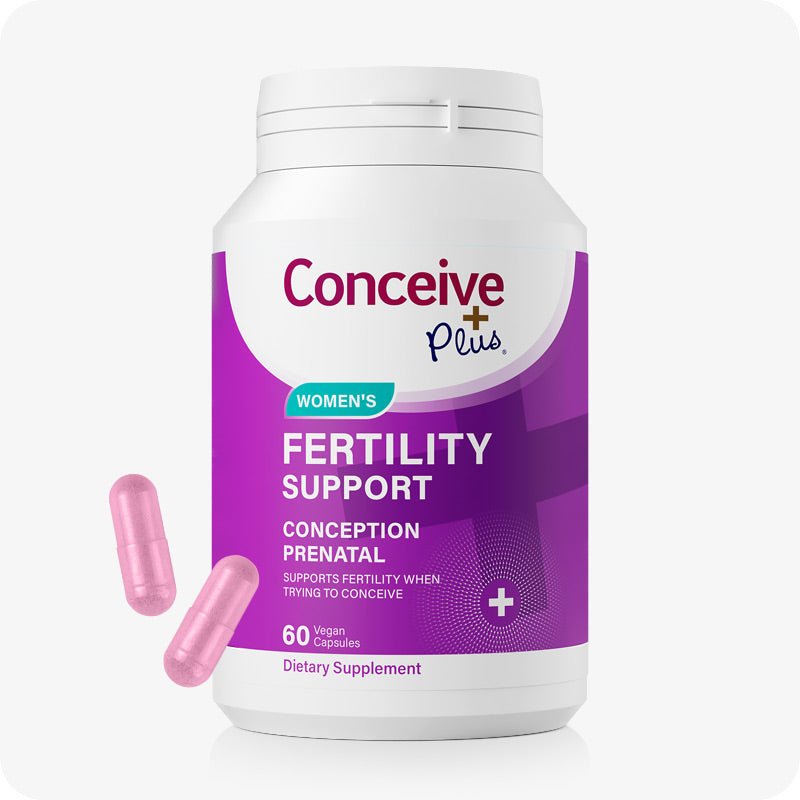
Conceive Plus Fertility Supplements
Science-backed vitamins and supplements expertly formulated to nourish your body and support reproductive health at every stage.
Shop Now →Q: Do vegans need different prenatal vitamins than meat-eaters?
A: Yes, vegan prenatal vitamins require different formulations because certain essential nutrients are primarily found in animal products. Key nutrients of concern for plant-based pregnancies include vitamin B12, iron, calcium, omega-3 fatty acids (EPA/DHA), and iodine. According to the American College of Obstetricians and Gynecologists (ACOG), vegans should seek prenatal formulas with algae-derived omega-3s, fortified B12 sources, and chelated iron for optimal absorption. A quality vegan prenatal will address these gaps to support both maternal health and fetal development throughout pregnancy.
Q: What is the most important nutrient for vegan pregnancy?
A: Vitamin B12 is arguably the most critical nutrient for vegan pregnancies, as this vitamin is naturally found almost exclusively in animal products and is essential for fetal neurological development. A B12 deficiency during pregnancy has been linked to increased risks of neural tube defects and developmental delays, making supplementation non-negotiable for plant-based expectant parents. The recommended dietary allowance for pregnant individuals is 2.6 micrograms daily, and most quality vegan prenatal vitamins provide this amount through cyanocobalamin or methylcobalamin. Alongside comprehensive prenatal support like that provided by Conceive Plus vegan formulations, B12 supplementation helps ensure optimal pregnancy outcomes.
Q: Can you get enough iron from a vegan prenatal vitamin?
A: Yes, you can obtain adequate iron from vegan prenatal vitamins, though plant-based (non-heme) iron has lower bioavailability than animal-derived sources, requiring approximately 1.8 times more for equivalent absorption. The National Institutes of Health recommends 27 mg of iron daily during pregnancy, and most vegan prenatal supplements provide this amount in chelated or highly absorbable forms to maximize uptake. Pairing iron supplementation with vitamin C sources enhances absorption, which is why many formulations include both nutrients together. Choosing a prenatal specifically formulated for plant-based diets ensures the iron is in an optimal form for vegan nutritional needs.
Q: Are algae-based omega-3s in prenatal vitamins as effective as fish oil?
A: Algae-based omega-3s (EPA and DHA) are scientifically equivalent to fish oil in terms of molecular structure and effectiveness, as fish themselves accumulate these nutrients from algae. Research published in the American Journal of Clinical Nutrition confirms that algae-derived omega-3s support fetal brain and eye development comparably to marine sources, with the added benefit of being sustainably sourced and free from potential ocean contaminants. The recommended intake of combined EPA and DHA during pregnancy is 200-300 mg daily, which quality vegan prenatal supplements provide from algae sources. For plant-based expectant parents seeking comprehensive nutritional support, algae-based omega-3s offer a scientifically-backed, ethical alternative.
Q: What should vegans look for when choosing a prenatal vitamin?
A: When selecting a vegan prenatal vitamin, prioritize products that are certified vegan, third-party tested (USP or NSF certification), and specifically formulated to address plant-based nutritional gaps including B12, iron, calcium, iodine, and omega-3s. Check that the formula uses chelated minerals for superior absorption and contains bioavailable forms of nutrients like methylfolate rather than standard folic acid. According to the American Fertility Society, these specialized formulations help ensure adequate nutrient bioavailability when derived entirely from plant sources. Look for brands like Conceive Plus that combine comprehensive prenatal nutrition with vegan-specific formulations, providing peace of mind that both you and your developing baby receive optimal support throughout pregnancy.
Trusted by Couples in Over 70 Countries
Nourish Your Fertility With Science-Backed Supplements
The right nutrients at the right time can make a meaningful difference. Conceive Plus fertility supplements are expertly formulated with vitamins, minerals, and botanicals to support reproductive health for both men and women.
Shop Fertility Supplements →