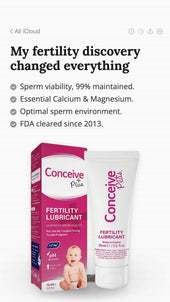
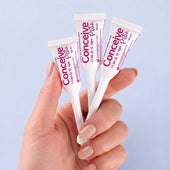
"Worked for us. We didn't use very much though. Took us 6 months to fall pregnant."
PREGNANCY TIPS TO HELP YOU CONCEIVE
The time to start working toward a healthy pregnancy is before you conceive. Read more here
Frequently Asked Questions
Recommended by Fertility Experts
Conceive Plus Men's Fertility Support
Designed to support healthy sperm production, motility, and overall male reproductive health with clinically studied nutrients.
Shop Now →Can prenatal lubricants actually help you get pregnant?
While lubricants themselves don't directly increase fertility, certain fertility-friendly lubricants are designed to be sperm-safe and won't impair sperm motility, unlike many conventional lubricants. The American Society for Reproductive Medicine (ASRM) recommends using products specifically formulated for conception rather than standard personal lubricants. However, lubricants should be considered a supportive tool rather than a primary fertility treatment.
Should I get my iron levels checked when trying to conceive?
Yes, iron levels are an important part of preconception health, as low iron can affect ovulation and fertility in women. The CDC recommends that women of childbearing age maintain adequate iron intake through diet or supplementation if levels are low. If you're trying to conceive, discuss iron testing with your OB-GYN or primary care provider as part of your preconception evaluation.
How long does it typically take to get pregnant?
For couples under 35 without known fertility issues, conception typically occurs within 6-12 months of regular unprotected intercourse. However, fertility varies widely based on age, health status, and other factors. If you're under 35 and haven't conceived after 12 months of trying, or if you're 35 or older and haven't conceived after 6 months, the American College of Obstetricians and Gynecologists recommends consulting a fertility specialist.
What preconception health steps should I take before trying to get pregnant?
The CDC recommends several key steps before conception, including taking folic acid supplements (400-800 mcg daily), managing chronic health conditions, achieving a healthy weight, quitting smoking, limiting alcohol, and scheduling a preconception checkup with your healthcare provider. This appointment should include screening for infections, medication review, and assessment of any risk factors that could affect pregnancy. Starting these healthy habits 3-6 months before you plan to conceive gives your body time to optimize conditions for pregnancy.
Is it worth seeing a fertility specialist if I haven't conceived after 6 months?
The timing depends on your age: women under 35 should see a specialist af
Does using fertility lubricants make a difference if other factors are involved?
Fertility lubricants are most effective as part of a comprehensive approach that addresses underlying health factors like iron levels, hormonal balance, and overall wellness. As the testimonial suggests, treating deficiencies like low iron may be the primary factor in conception, with lubricants serving as a supportive role. It's important to identify and address any underlying health issues through testing and consultation with your healthcare provider rather than relying solely on conception products.
Trusted by Couples in Over 70 Countries
Support Male Fertility From the Inside Out
Male fertility is just as important as female fertility in the conception journey. Conceive Plus Men's range delivers targeted nutritional support to promote healthy sperm and overall reproductive wellbeing.
Shop Men's Range →