What is a Pre Natal and Why is it Important for Pregnancy


If you’re planning for a baby or already expecting, there’s one thing you shouldn’t skip: pre natal care. It’s one of the most important things for keeping both you and your baby healthy. From doctor visits to eating right and taking the right vitamins, pregnancy prenatal care covers it all. But first, let’s talk about what is a prenatal and why it matters so much. This journey isn’t just about having a baby; it’s about giving them the best start in life while keeping you safe too.
What is Prenatal Care and Why Does It Matter?
To put it simply, prenatal care is the care you get before and during pregnancy. It includes regular checkups with your doctor or midwife to ensure your baby’s development is on track and that you’re staying healthy too. It also gives you the chance to ask questions, share concerns, and learn what’s happening with your body.

Why does it matter? Well, without proper care, some issues might go unnoticed and could lead to complications for you or your baby. For example, things like high blood pressure or diabetes can be caught early and managed. Plus, these visits are not just about tests and scans. They also help you prepare emotionally and mentally for the big changes ahead.
The sooner you start prenatal care, the better. Even better, see a doctor before you conceive if you can. This helps you get your health in order so your body is ready to carry a baby [1].
Why You Should Prepare Before Getting Pregnant
Planning ahead before you get pregnant can make a big difference. This step is often called preconception planning, and it’s about getting your body and mind ready. One of the first things to do? Start taking best multivitamin with folic acid. This little nutrient is powerful. It helps your baby’s brain and spine develop properly and lowers the risk of serious birth defects [2].
Doctors recommend taking 400 to 800 micrograms of folic acid daily for at least three months before trying to conceive. You might think you can get all the nutrients you need from food, but that’s not always the case. Supplements can fill the gaps and make sure your body has everything it needs to support a pregnancy.
It’s also a good idea to check in with your doctor about any medical conditions you have. Diabetes, high blood pressure, thyroid issues, or even stress can affect your ability to conceive or carry a pregnancy. The earlier these are managed, the better.
And don’t forget about lifestyle changes. Smoking and drinking? It’s time to quit. These can harm both your fertility and your future baby. Eating well, staying active, and managing stress can all help get your body in the best shape for pregnancy [3].
What Nutrients Can Boost Fertility and Support Pregnancy
Nutrients play a big role in fertility and pregnancy health. If you’ve been trying to conceive, adding the right vitamins and minerals to your diet can make a difference. Take folic acid, for example. It’s one of the most important nutrients for pregnancy. It helps prevent neural tube defects and supports your baby’s early development.
Then there’s myo-inositol and d-chiro inositol. These are especially helpful for women dealing with PCOS because they improve ovulation and hormonal balance. L-arginine is another great nutrient. It helps boost blood flow to the reproductive organs, which can improve the chances of conception.
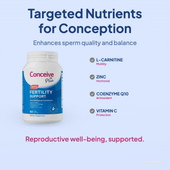
CoQ10 is another must-have, especially if you’re older or have been trying for a while. It’s an antioxidant that protects your eggs and sperm from damage and improves their quality. Other helpful nutrients include zinc, magnesium, and vitamin C. Each plays a unique role, from supporting hormonal health to boosting the immune system [4].
Incorporating these into your daily routine, whether through food or supplements, can be a game-changer for your fertility.
How Prenatal Care Tracks Your Pregnancy
Prenatal care isn’t just about taking vitamins. It’s about making sure everything is going well at every stage of pregnancy. In the first trimester, doctors focus on confirming your pregnancy, setting a due date, and checking for any early complications. You might have blood tests and an ultrasound during this time.
As you move into the second trimester, the focus shifts to monitoring the baby’s growth and development. Ultrasounds can show details about the baby’s anatomy, and glucose screenings help detect gestational diabetes.
By the third trimester, it’s all about preparing for delivery. Your doctor will check the baby’s position, monitor your health, and look for signs of labor. They may also test for group B strep to ensure you and your baby are safe during delivery [5].
These checkups aren’t just medical—they’re a chance for you to ask questions and feel more connected to your pregnancy. Keeping a journal of your visits can help you track everything and stay organized.


✨ Start Your Prenatal Care Today
Our Prenatal Vitamins with DHA, Choline & Folate provide the essential nutrients you and your baby need for a healthy start.
Shop Now — $34.95✓ Free shipping on orders over $40 | ✓ Trusted by millions of couples worldwide
The Power of Vitamins and Minerals for a Healthy Pregnancy
Vitamins and minerals are like building blocks for a healthy pregnancy. For example, vitamin D helps with hormonal balance and supports the baby’s bone development. Iron is another big one—it prevents anemia and ensures your baby gets enough oxygen.
Zinc is crucial for cell division and immune function, and omega-3 fatty acids like DHA help with brain and eye development in your baby. Calcium not only builds strong bones and teeth for the baby but also keeps your bones healthy as your body goes through changes.
If you’re worried you’re not getting enough of these nutrients from your diet, supplements can help. But always check with your doctor first to make sure you’re taking the right amount [6].
Lifestyle Tweaks to Make Pregnancy Easier
Pregnancy comes with its fair share of challenges, but small lifestyle changes can make a big difference. For instance, staying active with light exercises like walking or yoga can help improve circulation and reduce stress. It can even prepare your body for labor.
Getting enough sleep is also super important. Aim for 7-9 hours a night and find ways to relax before bed. Stress management is another key factor. High stress levels can affect your pregnancy, so try things like meditation or deep breathing exercises.
Diet changes can also help with common pregnancy symptoms. Eating smaller, more frequent meals can ease nausea, while drinking plenty of water can prevent constipation. And of course, avoid harmful habits like smoking or drinking alcohol [7].
How Fertility Lubricants Can Help When Trying to Conceive
When you’re trying to conceive, every little thing can make a difference—including the type of lubricant you use. Fertility-friendly lubricants are designed to support sperm health and movement, unlike regular lubricants, which can sometimes hinder sperm.
Some lubricants contain calcium and magnesium ions, which create a sperm-friendly environment and even support the fertilization process [8]. They also mimic the natural cervical mucus your body produces, which helps sperm reach the egg.
Using the right lubricant can make intimacy more comfortable and improve your chances of conception. It’s a simple change that can have a big impact.

Common Myths About Prenatal Care
There are a lot of misconceptions about prenatal care that can leave people confused. One myth is that prenatal vitamins are only necessary during pregnancy. The truth is, starting them before you get pregnant can make a big difference. They prepare your body and reduce the risk of complications.
For those who have difficulty swallowing pills or experience morning sickness, liquid prenatal vitamins can be a beneficial alternative. They offer faster absorption and are gentler on the stomach compared to traditional pill forms.
Another myth is that you can eat any kind of fish during pregnancy. While fish is a great source of nutrients, some types—like swordfish and shark—are high in mercury and should be avoided [9]. Always check with your doctor about what’s safe.
Understanding the facts about prenatal care can help you make better decisions for yourself and your baby.
The Bottom Line
If you’re planning to have a baby or are already expecting, pre natal care is non-negotiable. It’s about much more than just taking vitamins or going to the doctor. It’s about preparing your body, staying healthy, and giving your baby the best start in life.
By understanding what is prenatal care and why it’s important, you can take charge of your health and make informed decisions. From proper nutrition to regular checkups, every step matters. Subtle changes in your routine, like choosing fertility-friendly products or adding essential nutrients to your diet, can make a big difference in your journey.
Trust the process, and don’t hesitate to seek guidance from trusted sources like Conceive Plus to support you along the way.
FAQs
What is a prenatal vitamin?
It’s a supplement packed with nutrients like folic acid, iron, and DHA, essential for a healthy pregnancy.
When should I start prenatal care?
Start as soon as you know you’re pregnant, or even before if possible, during the preconception phase.
Is exercise safe during pregnancy?
Yes, light to moderate exercise like walking or yoga is safe unless your doctor advises otherwise.
What foods should I avoid while pregnant?
Avoid fish high in mercury, raw or undercooked meat, and unpasteurized dairy products.
How often should I see my doctor during pregnancy?
Typically, monthly in the first trimester, biweekly in the second, and weekly in the final trimester.
Citations
- Lan, L., Harrison, C. L., Misso, M., Hill, B., Teede, H. J., Mol, B. W., & Moran, L. J. (2017). Systematic review and meta-analysis of the impact of preconception lifestyle interventions on fertility, obstetric, fetal, anthropometric and metabolic outcomes in men and women. Human reproduction (Oxford, England). Available at: https://pubmed.ncbi.nlm.nih.gov/28854715/
- Goh, Y. I., & Koren, G. (2008). Folic acid in pregnancy and fetal outcomes. Journal of obstetrics and gynaecology : the journal of the Institute of Obstetrics and Gynaecology. Available at: https://pubmed.ncbi.nlm.nih.gov/18259891/
- Rogozińska, E., Marlin, N., Jackson, L., Rayanagoudar, G., Ruifrok, A. E., Dodds, J., Molyneaux, E., van Poppel, M. N., Poston, L., Vinter, C. A., McAuliffe, F., Dodd, J. M., Owens, J., Barakat, R., Perales, M., Cecatti, J. G., Surita, F., Yeo, S., Bogaerts, A., Devlieger, R., … Thangaratinam, S. (2017). Effects of antenatal diet and physical activity on maternal and fetal outcomes: individual patient data meta-analysis and health economic evaluation. Health technology assessment (Winchester, England). Available at: https://pubmed.ncbi.nlm.nih.gov/28795682/
- Ben-Meir, A., Burstein, E., Borrego-Alvarez, A., Chong, J., Wong, E., Yavorska, T., Naranian, T., Chi, M., Wang, Y., Bentov, Y., Alexis, J., Meriano, J., Sung, H. K., Gasser, D. L., Moley, K. H., Hekimi, S., Casper, R. F., & Jurisicova, A. (2015). Coenzyme Q10 restores oocyte mitochondrial function and fertility during reproductive aging. Aging cell. Available at: https://pmc.ncbi.nlm.nih.gov/articles/PMC4568976/
- Verani, J. R., McGee, L., Schrag, S. J., & Division of Bacterial Diseases, National Center for Immunization and Respiratory Diseases, Centers for Disease Control and Prevention (CDC) (2010). Prevention of perinatal group B streptococcal disease--revised guidelines from CDC, 2010. MMWR. Recommendations and reports : Morbidity and mortality weekly report. Recommendations and reports. Available at: https://pubmed.ncbi.nlm.nih.gov/21088663/
- Gernand, A. D., Schulze, K. J., Stewart, C. P., West, K. P., Jr, & Christian, P. (2016). Micronutrient deficiencies in pregnancy worldwide: health effects and prevention. Nature reviews. Endocrinology. Available at: https://pmc.ncbi.nlm.nih.gov/articles/PMC4927329/
- Villamor, E., & Cnattingius, S. (2006). Interpregnancy weight change and risk of adverse pregnancy outcomes: a population-based study. Lancet (London, England). Available at: https://pubmed.ncbi.nlm.nih.gov/17011943/
- Leslie SW, Soon-Sutton TL, Khan MAB. Male Infertility. [Updated 2024 Feb 25]. In: StatPearls [Internet]. Treasure Island (FL): StatPearls Publishing. Available at: https://www.ncbi.nlm.nih.gov/books/NBK562258/
- Grandjean, P., & Landrigan, P. J. (2014). Neurobehavioural effects of developmental toxicity. The Lancet. Neurology. Available at: https://pubmed.ncbi.nlm.nih.gov/24556010/
🌱 Everything You and Baby Need
Conceive Plus Prenatal Vitamins are formulated with DHA for brain development and Folate for neural tube protection.
Shop Prenatal Vitamins →Frequently Asked Questions
Recommended by Fertility Experts
Conceive Plus Men's Fertility Support
Designed to support healthy sperm production, motility, and overall male reproductive health with clinically studied nutrients.
Shop Now →Q: What should I take for prenatal vitamins?
A: The American College of Obstetricians and Gynecologists (ACOG) recommends prenatal vitamins containing folic acid (400-800 mcg), iron (27 mg), and calcium (1,000 mg) daily, ideally starting before conception. A quality prenatal vitamin supports fetal neural development, reduces the risk of birth defects by up to 50%, and helps prevent anemia during pregnancy. Beyond standard vitamins, many fertility-conscious women add targeted supplements like CoQ10 and inositol to optimize egg quality before conception. When selecting prenatal supplements, look for third-party tested products that meet FDA quality standards and contain bioavailable forms of essential nutrients. Conceive Plus Prenatal is formulated with these key nutrients plus additional ingredients specifically designed to support both preconception health and pregnancy wellness.
Q: When should I start taking prenatal vitamins?
A: Medical experts recommend starting prenatal vitamins at least one month before trying to conceive, and ideally three months prior, allowing your body to build up nutrient reserves crucial for early fetal development. The first trimester is when critical organ systems develop, making adequate folic acid levels especially important during this period—in fact, 50% of pregnancies are unplanned, which is why women of childbearing age should maintain consistent prenatal supplementation. Starting early ensures your body has sufficient micronutrient stores to support the rapid cellular division and growth that occurs in early pregnancy. If you're already pregnant and haven't started prenatal vitamins, begin immediately and discuss with your healthcare provider about the best options for your specific needs. Many women find that beginning preconception supplementation with products like Conceive Plus helps establish healthy habits before pregnancy begins.
Q: Do prenatal vitamins help with fertility?
A: Yes, prenatal vitamins can support fertility by ensuring optimal nutrient levels needed for healthy egg production and reproductive function, with studies showing that women taking folic acid supplements have improved conception rates. Research published in reproductive health journals indicates that micronutrients like CoQ10, vitamin D, and inositol are associated with better egg quality and ovarian function, particularly for women over 35. While prenatal vitamins alone don't treat infertility, they create an optimal nutritional foundation for conception by supporting hormone balance and cellular health in reproductive tissues. The ASRM (American Society for Reproductive Medicine) emphasizes that preconception nutrition directly impacts fertility outcomes and pregnancy success rates. Specialized preconception supplements like Conceive Plus are formulated with fertility-specific nutrients proven to support reproductive health alongside standard prenatal vitamins.
Q: What are the most important ingredients in prenatal vitamins?
A: The most critical prenatal ingredients include folic acid (prevents neural tube defects), iron (prevents anemia), calcium (supports fetal bone development), and vitamin D (crucial for immune and bone health), according to ACOG guidelines. Additional beneficial ingredients for preconception and pregnancy health include vitamin B12, zinc (supports immune function and DNA synthesis), and iodine (essential for fetal brain development). Emerging research supports the inclusion of CoQ10 for egg quality, inositol for hormonal balance, and omega-3 fatty acids for fetal neurological development. When choosing prenatal vitamins, verify that all ingredients are in bioavailable forms and that the product is tested for purity and potency by third-party laboratories. Comprehensive formulas like Conceive Plus include both foundational prenatal nutrients and targeted fertility-supporting ingredients in scientifically-studied doses.
Q: How long should I take prenatal vitamins?
A: ACOG recommends beginning prenatal vitamins at least one month before conception and continuing through pregnancy and breastfeeding, typically for 12-18 months total when factoring in preconception, pregnancy, and postpartum periods. Studies show that continued supplementation during breastfeeding supports both maternal recovery and breast milk nutrient content, which is essential for infant development. Women planning pregnancy should maintain consistent prenatal supplementation throughout their trying-to-conceive phase, even if it takes several months or longer, to ensure optimal nutrient stores are available. If you become pregnant unexpectedly, continue taking your prenatal vitamin throughout all nine months and discuss postpartum supplementation with your healthcare provider. Starting preconception supplementation with Conceive Plus establishes a sustainable nutrition habit that supports your reproductive health journey from planning through postpartum recovery.
Trusted by Couples in Over 70 Countries
Support Male Fertility From the Inside Out
Male fertility is just as important as female fertility in the conception journey. Conceive Plus Men's range delivers targeted nutritional support to promote healthy sperm and overall reproductive wellbeing.
Shop Men's Range →