Ovulation Induction Drugs in Conception: Fertility Breakthroughs


For individuals facing difficulty with ovulation-related infertility, modern medicine offers several options to stimulate the release of eggs. Among these, ovulation induction drugs have become a cornerstone in assisted reproductive technology. These medications are designed to trigger or regulate ovulation, particularly in women who do not ovulate regularly or at all. By encouraging the development and release of eggs from the ovaries, these treatments can significantly improve the chances of conception, both naturally and through assisted reproductive techniques such as intrauterine insemination (IUI) or in vitro fertilization (IVF).

Oral Medications: First-Line Treatment Options
Two of the most widely used oral ovulation induction medications are clomiphene citrate (Clomid) and letrozole (Femara). Clomiphene works by blocking estrogen receptors in the brain, prompting the pituitary gland to produce more follicle-stimulating hormone (FSH) and luteinizing hormone (LH), which then stimulate the ovaries. Letrozole, originally a breast cancer treatment, reduces estrogen levels and indirectly boosts FSH levels. It has recently gained preference over clomiphene due to higher pregnancy rates and a lower risk of multiple births [1].
Injectable Hormones for Advanced Cases
When oral options are ineffective, injectable gonadotropins offer a more aggressive approach. These medications are synthetic forms of FSH and LH and directly stimulate the ovaries to develop multiple follicles. Injectable hormones are typically used in IVF cycles or for patients who do not respond to oral treatments. However, they require close monitoring through ultrasounds and blood work to prevent complications like ovarian hyperstimulation syndrome (OHSS) or multiple pregnancies [2].
Tailoring Treatment to the Underlying Cause
Selecting the right drug depends largely on the cause of infertility. For example, women with polycystic ovary syndrome (PCOS) often respond well to letrozole, while those with unexplained infertility might be prescribed clomiphene. Physicians evaluate hormonal profiles, age, medical history, and previous treatment responses to tailor the most effective ovulation induction plan [3].
For those wondering if timing intimacy after ovulation could impact the likelihood of pregnancy, this article on does having sex after ovulation affect implantation dives into the science behind this common question.

✨ Trying to Conceive?
Our Ovulation & Fertility Bundle combines Myo-Inositol with essential vitamins to support healthy hormone balance and regular ovulation.
Shop Now — $55.00✓ Free shipping on orders over $40 | ✓ Trusted by millions of couples worldwide

Lifestyle and Risk Factors to Consider
A healthy lifestyle supports the effectiveness of fertility medications. Maintaining a balanced diet, healthy body weight, and managing stress can improve hormonal balance and response to treatment. While generally safe, ovulation drugs can cause side effects such as mood swings, headaches, hot flashes, or abdominal discomfort. With careful dosing and medical supervision, these risks are typically manageable.
Fertility treatment continues to evolve. Newer formulations, better monitoring tools, and personalized dosing protocols have improved safety and outcomes. Understanding fertility at the cellular level is paving the way for more customized and efficient therapies [4].
For those looking for a convenient and accurate way to track ovulation, a tool like an ovulation calculator free app can help you identify your most fertile days, enhancing your chances of conception.
The Bottom Line
Ovulation induction drugs are a valuable option for individuals with ovulatory dysfunction, offering a medically supported solution to one of the most common causes of infertility. These medications help regulate hormonal cycles and encourage the development and release of mature eggs, laying the groundwork for successful conception—whether through natural intercourse or assisted reproductive methods like IUI or IVF.
Moreover, these therapies often serve as the first line of treatment before more complex interventions are considered, making them accessible and cost-effective for many patients. As reproductive science continues to evolve, ongoing innovations in drug formulation, dosing strategies, and monitoring techniques will further enhance the safety and success of ovulation induction protocols.

Ultimately, ovulation induction drugs provide more than a biological function—they restore a sense of hope and agency for individuals or couples on their fertility journey. With expert guidance and a tailored approach, these medications can turn the possibility of parenthood into a tangible and life-changing reality.
References
- Mbi Feh MK, Patel P, Wadhwa R. Clomiphene. [Updated 2024 Jan 11]. In: StatPearls [Internet]. Treasure Island (FL): StatPearls Publishing; 2025 Jan-. Available from: https://www.ncbi.nlm.nih.gov/books/NBK559292/
- Ma H, Quan X, Chen X, Dong Y. [Flying needling therapy combined with clomiphene for ovulation failure in polycystic ovary syndrome:a randomized controlled trial]. Zhongguo Zhen Jiu. 2016 Nov 12;36(11):1161-1165. Chinese. doi: 10.13703/j.0255-2930.2016.11.015. PMID: 29231300.
- Deshpande PS, Gupta AS. Causes and Prevalence of Factors Causing Infertility in a Public Health Facility. J Hum Reprod Sci. 2019 Oct-Dec;12(4):287-293. doi: 10.4103/jhrs.JHRS_140_18. Epub 2019 Dec 17. PMID: 32038077; PMCID: PMC6937760.
- Marshall NE, Abrams B, Barbour LA, Catalano P, Christian P, Friedman JE, Hay WW Jr, Hernandez TL, Krebs NF, Oken E, Purnell JQ, Roberts JM, Soltani H, Wallace J, Thornburg KL. The importance of nutrition in pregnancy and lactation: lifelong consequences. Am J Obstet Gynecol. 2022 May;226(5):607-632. doi: 10.1016/j.ajog.2021.12.035. Epub 2021 Dec 27. PMID: 34968458; PMCID: PMC9182711.
🌱 Support Your Fertility Journey
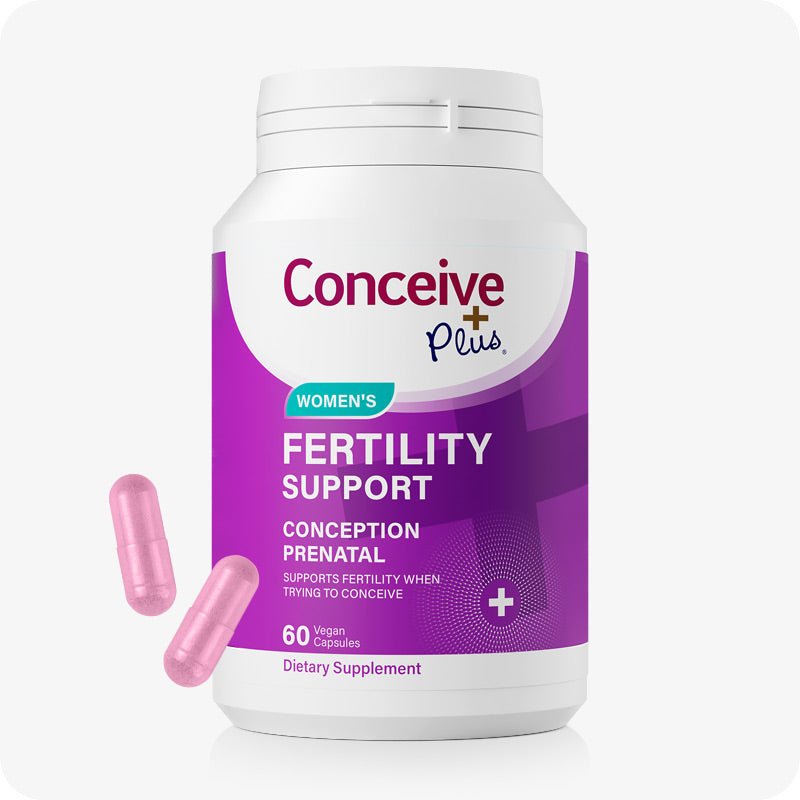
Conceive Plus fertility supplements are clinically formulated to help regulate your cycle and support egg quality.
Shop Fertility Support →Frequently Asked Questions
Recommended by Fertility Experts
Conceive Plus Men's Fertility Support
Designed to support healthy sperm production, motility, and overall male reproductive health with clinically studied nutrients.
Shop Now →Q: What are the most common drugs to induce ovulation?
A: The most commonly prescribed ovulation induction medications in the United States include clomiphene citrate (Clomid), letrozole (Femara), and gonadotropins such as FSH (follicle-stimulating hormone) injections. According to the American Society for Reproductive Medicine (ASRM), clomiphene citrate remains the first-line oral medication for ovulation induction, with success rates ranging from 70-80% in women with ovulatory dysfunction. These medications work by stimulating the pituitary gland or directly acting on the ovaries to promote egg development and release. Your fertility specialist will recommend the most appropriate medication based on your specific diagnosis, age, and medical history.
Q: How do ovulation booster pills work to help you conceive?
A: Ovulation booster pills function by either blocking estrogen receptors to increase natural hormone production (like clomiphene citrate) or by directly inhibiting aromatase to boost FSH levels (like letrozole). These medications stimulate the ovaries to develop multiple follicles containing eggs, increasing the likelihood of ovulation and conception. For women with irregular cycles or anovulation (absence of ovulation), these pills can restore normal ovulatory function in approximately 60-75% of cases. While taking ovulation induction medications, combining them with evidence-based supplements like those in Conceive Plus's formulation—which includes vitamins and minerals that support reproductive health—may provide complementary nutritional support during your fertility journey.
Q: What is the success rate of ovulation induction medications?
A: Ovulation induction success rates vary depending on the medication used and individual factors, with ovulation occurring in 70-85% of women taking clomiphene citrate and conception rates reaching 40-50% within three to six treatment cycles. According to fertility data from the CDC, approximately 12% of US women of reproductive age use fertility services, and ovulation induction represents one of the most accessible and cost-effective interventions. Success rates are higher in women under 35 with no other fertility factors and lower in cases involving male factor infertility or advanced maternal age. Your fertility doctor will monitor your response to medication through ultrasound and hormone testing to optimize your treatment plan.
Q: Are there natural ways to induce ovulation besides medication?
A: While ovulation induction medications are the most clinically proven methods for triggering egg release, lifestyle modifications and nutritional support can help optimize natural ovulation in some cases. Maintaining a healthy BMI, managing stress, getting adequate sleep, and following a balanced diet rich in antioxidants and micronutrients have been shown to support reproductive health. Many women exploring fertility options use fertility supplements like Conceive Plus—which contains zinc, folate, and other evidence-based nutrients—alongside lifestyle modifications to provide comprehensive nutritional support. However, if you have diagnosed ovulatory dysfunction, hormonal imbalances, or have been trying to conceive for over a year without success, prescription ovulation induction medications remain the most effective medical intervention recommended by ASRM.
Q: What should I expect during ovulation induction treatment?
A: Ovulation induction treatment typically involves taking medication (oral pills or injections) for 5-14 days during your menstrual cycle, with regular monitoring appointments including ultrasounds and blood tests to track follicle development. Once your fertility specialist determines that your follicles have reached optimal maturity, you'll receive a "trigger shot" (usually hCG injection) to finalize egg development and trigger ovulation within 24-40 hours. Common side effects include mild headaches, mood changes, and mild pelvic discomfort, though serious complications like ovarian hyperstimulation syndrome (OHSS) occur in only 1-2% of cases with oral medications. During this process, maintaining overall wellness through proper nutrition, hydration, and stress management—supported by fertility-specific supplements like Conceive Plus—can help optimize your body's response to treatment and support your conception goals.
Trusted by Couples in Over 70 Countries
Support Male Fertility From the Inside Out
Male fertility is just as important as female fertility in the conception journey. Conceive Plus Men's range delivers targeted nutritional support to promote healthy sperm and overall reproductive wellbeing.
Shop Men's Range →