Old Tricks to Getting Pregnant That Continue to Work


Many individuals keep looking for old tricks to getting pregnant, because old-fashioned approaches often carry a sense of familiarity and trust. Some prefer at home tricks to get pregnant that do not involve huge medical interventions. Others might say in frustration, “get me pregnant please,” while seeking answers. Below sections exploring time-tested habits, plus ways they connect with diet, stress, and daily routine. These ideas might show how can you become more fertile and potentially pave a path to simpler conception.
1. Observing the Cycle Consistently
People in the past paid close attention to monthly patterns, which can highlight how do I become more fertile. They recognized signs like subtle changes in cervical fluids or mild twinges mid-cycle. Some realized that these cues might reveal how to be more fertile by timing intimacy around the most fertile window [1]. Short written notes, or mental checks, helped track days or body signals. Some cycles are longer, some shorter, and variations often give insight on how to become more fertile with fewer complications. Monitoring consistently fosters awareness, which can help partners better schedule intimate moments.
Others in older generations used small calendars or even made marks on paper. They found that pinpointing when ovulation probably occurs boosted the likelihood of how to become pregnant quickly naturally. Occasionally, this practice also involves noticing slight temperature shifts first thing in the morning. Being patient with this method, though, stands out as a critical step.

2. Boosting Fertility Through Traditional Diet
Meals loaded with nutritious items have long been known to boost fertility. Generations back, fresh vegetables, legumes, and whole grains anchored daily meals. Certain vitamins might help with how to boost fertility by balancing hormones. Foods rich in antioxidants, such as dark leafy greens or berries, can protect reproductive cells from oxidative harm. Following a Fertility Diet Meal Plan can further enhance reproductive health by ensuring a well-balanced intake of essential nutrients [2].
Some find that quality proteins like eggs, lean poultry, or fish add nutrients necessary for hormone regulation. Others rely on seeds or nuts that contain beneficial fatty acids or minerals. People also realized that consistent hydration, plain water mostly, improved bodily functions and supported how to improve fertility in a very gentle manner.
3. Gentle Movement for Conception
Active lifestyles were common in the past. People walked more or did moderate physical tasks, which gave them a steady routine beneficial for anyone searching for how to improve fertility in women or men. Such moderate activity helps maintain healthy body weight, a factor sometimes linked to how to increase female fertility. Very intense exercise might sometimes disturb ovulation, so a balanced approach can do wonders.
Inconsistent sentence length is helpful. Some older communities valued light stretches or easy chores that keep the body flexible, encouraging blood circulation. That might further explain how to increase fertility by ensuring that hormones stay in a more harmonious range [3].
4. Stress Management as an Ancient Tradition
Many older cultures recognized that emotional strain affects well-being, possibly affecting how to increase fertility in women [4]. They practiced simple relaxation rituals, like spending quiet time in nature. Some communities used soft music, communal gatherings, or herbal teas to ease the mind. That sense of calm can reduce cortisol spikes that can interfere with how to increase ovulation.
Modern guidelines say chronic stress sometimes hinders fertility. So adopting old-fashioned mindfulness—like prayer, journaling, or silent reflection—could help increase fertility. A short walk amid trees might bring mental clarity. Others find relief in talking with friends about daily ups and downs.
5. Herbs and Natural Extracts
Past generations often turned to herbal solutions or natural extracts for increasing fertility. They might use ginger in tea for its anti-inflammatory traits or sip mild root infusions that were believed to strengthen the reproductive system. Some of those choices reflect modern interest in natural ways to get pregnant.
Another example includes Maca root, which is recognized by certain groups as beneficial to the endocrine system [5]. Ginseng also has a history in various cultures for energy support. Such items, though not magical, can form part of natural ways to increase fertility when combined with a stable lifestyle.
6. Embracing Folic Acid and B Vitamins
Older advice often recommended nutrient-dense produce to prevent deficiencies. Today, many link folic acid to fewer birth defects and possible support for how to improve fertility in women. Vitamins B6 and B12 can also help regulate hormone levels or boost red blood cell formation. In some cases, adding a hormone supplement can provide additional support for balancing reproductive health and optimizing fertility.
In places that lacked modern prenatal vitamins, individuals consumed more legumes, dark vegetables, and organ meats. These foods provided a broad range of B vitamins, which might become relevant for remedies to get pregnant immediately in a mild sense, though no guarantee [6]. But consistent consumption of these vitamins can maintain a healthier foundation.

7. Myo-Inositol and D-Chiro Inositol

✨ Trying to Conceive?
Our Ovulation & Fertility Bundle combines Myo-Inositol with essential vitamins to support healthy hormone balance and regular ovulation.
Shop Now — $55.00✓ Free shipping on orders over $40 | ✓ Trusted by millions of couples worldwide
Among things to increase fertility, people sometimes consider these inositols. While the older generations possibly got them naturally from unrefined carbs and fresh produce, present-day research highlights how they could manage insulin levels or hormone imbalances [7]. Some users see improvements in cycle regularity, which ties back to ways to boost fertility.
Myo-Inositol and D-Chiro Inositol are especially discussed for individuals with polycystic ovary syndrome (PCOS). Balanced hormone function can lead to more predictable ovulation, linking them to ways to help fertility. They’re no cure-all, though some have found them beneficial as part of a multi-faceted plan.
8. Checking Lubricants for Sperm-Friendliness
Certain older practices simply avoided chemical-based lubes. Tradition suggested that if dryness was an issue, mild oils or minimal lubrication were best. These days, couples might prefer formulas that do not harm sperm, supporting ways to improve fertility. Some mention that water-based options with gentle ingredients let sperm move freely.
In older times, they lacked modern brand solutions, but the concept stands: an environment that fosters sperm survival is key to ways to increase fertility [8]. Reading labels or choosing specialized products can matter. This step might seem small, though it is one of the lesser-known details under what helps fertility.
9. Observing Traditional Thyroid-Support Tactics
The thyroid is essential to metabolic function and, by extension, reproductive health. Historical diets included iodine-rich foods like seaweed or fish, which possibly impacted ways to maximize fertility [9]. Balanced thyroid hormones keep cycles regular, supporting ovulation in people. If thyroid function drifts off balance, it might hamper efforts for what helps with fertility.
In older routines, folks consumed fewer processed items, so they naturally took in key nutrients that stabilized hormone activity. Ironically, many old customs align with modern suggestions on controlling thyroid issues. These help maintain normal cycles, vital for successful conception.
10. Embracing Iron, Calcium, and Magnesium
For families wanting to pass knowledge on how to boost fertility, ensuring enough iron intake was standard advice. Women in particular often face iron depletion. Some cultures promoted red meat or beans to keep energy levels up. Meanwhile, calcium from dairy or leafy greens supports bone strength and possibly fosters healthy signals in the body.
Magnesium can calm nerves and muscles, so it might indirectly help fertility by reducing tension [10]. All these tie into what increases fertility, since stable mineral levels help the body handle daily stress and maintain hormonal equilibrium. Some older communities gleaned magnesium from mineral-rich water or unprocessed grains.
11. Old-Fashioned Sleep Hygiene and Relaxation
People used to follow the sun’s schedule more strictly. This practice can benefit fertility. Modern science sees disrupted sleep as a factor in hormone imbalance, which is something that can hinder how to increase fertility in women or men. Engaging in calm bedtime rituals, like minimal artificial lighting or a warm foot soak, can be surprisingly powerful.
In older times, families turned down lamps early. This is reminiscent of ways to help fertility that revolve around circadian alignment [11]. Good rest fosters better hormone production, which influences egg or sperm health. Some might argue that among what helps with fertility, restful nights are the cheapest, simplest approach.
12. Simple Lifestyle Tweaks for Modern Life
Though older communities had different norms, their habits can inform present day how to increase ovulation strategies. Eating home-cooked meals using seasonal produce can keep chemicals out of the body. Getting sunlight, at least 10-15 minutes daily, helps with vitamin D. Maintaining moderate weight also helps with how to become pregnant quickly naturally.
Staying away from toxins like heavy smoking or harsh chemicals was a silent tradition—people recognized detrimental effects early on [12]. A mindful approach to personal care, cleaning supplies, or environment can promote increasing fertility in simpler ways. Such small actions, repeated daily, become ways to maximize fertility over time.

The Bottom Line
Some rely on brand-new solutions. But the power of old tricks to getting pregnant has not vanished. They offer a timeless framework for planning a family. Many of these suggestions—watching the cycle, focusing on nutritious foods, limiting stress—could collectively shape outcomes for those thinking, “get me pregnant please.” By integrating mild herbal aids, essential vitamins, correct lubricants, and consistent rest, individuals see a path that merges tradition with modern insight. While no single tip can absolutely guarantee success, the synergy often helps couples who want clarity on how can you become more fertile. Applying these ideas calmly and consistently can build confidence and possibly spark favorable results.
FAQs
Are these approaches also suitable for men?
Yes. Men can benefit from stable nutrition, moderate exercise, and stress control, which all might align with what helps fertility from a male perspective as well.
Do older ideas contradict modern medical treatments?
Not usually. They often form a healthy foundation for daily life. However, serious underlying issues need professional guidance along with these age-old insights.
Should all herbal products be used at once?
Excess is never wise. Testing one or two at a time with a doctor’s input is better, ensuring safe synergy with daily routines.
Is it essential to track every single day?
Some find it too stressful. But consistent checks of bodily signs can help identify the most fertile window. Moderation is helpful to avoid excessive pressure.
Citations
- Stanford, J. B., White, G. L., & Hatasaka, H. (2002). Timing intercourse to achieve pregnancy: current evidence. Obstetrics and gynecology. Available at: https://pubmed.ncbi.nlm.nih.gov/12468181/
- Ruder, E. H., Hartman, T. J., & Goldman, M. B. (2009). Impact of oxidative stress on female fertility. Current opinion in obstetrics & gynecology. Available at: https://pmc.ncbi.nlm.nih.gov/articles/PMC2749720/
- Hakimi, O., & Cameron, L. C. (2017). Effect of Exercise on Ovulation: A Systematic Review. Sports medicine (Auckland, N.Z.). Available at: https://pubmed.ncbi.nlm.nih.gov/28035585/
- Lynch, C. D., Sundaram, R., Maisog, J. M., Sweeney, A. M., & Buck Louis, G. M. (2014). Preconception stress increases the risk of infertility: results from a couple-based prospective cohort study--the LIFE study. Human reproduction (Oxford, England). Available at: https://pubmed.ncbi.nlm.nih.gov/24664130/
- Gonzales G. F. (2012). Ethnobiology and Ethnopharmacology of Lepidium meyenii (Maca), a Plant from the Peruvian Highlands. Evidence-based complementary and alternative medicine. Available at: https://pubmed.ncbi.nlm.nih.gov/21977053/
- Tamura, T., & Picciano, M. F. (2006). Folate and human reproduction. The American journal of clinical nutrition. Available at: https://pubmed.ncbi.nlm.nih.gov/16685040/
- Unfer, V., Carlomagno, G., Dante, G., & Facchinetti, F. (2012). Effects of myo-inositol in women with PCOS: a systematic review of randomized controlled trials. Gynecological endocrinology : the official journal of the International Society of Gynecological Endocrinology. Available at: https://pubmed.ncbi.nlm.nih.gov/22296306/
- Agarwal, A., & Said, T. M. (2003). Role of sperm chromatin abnormalities and DNA damage in male infertility. Human reproduction update. Available at: https://pubmed.ncbi.nlm.nih.gov/12926527/
- Zimmermann M. B. (2009). Iodine deficiency. Endocrine reviews. Available at: https://pubmed.ncbi.nlm.nih.gov/19460960/
- Cinar, V., Nizamlioğlu, M., & Moğulkoc, R. (2006). The effect of magnesium supplementation on lactate levels of sportsmen and sedanter. Acta physiologica Hungarica. Available at: https://pubmed.ncbi.nlm.nih.gov/17063625/
- Kloss, J. D., Perlis, M. L., Zamzow, J. A., Culnan, E. J., & Gracia, C. R. (2015). Sleep, sleep disturbance, and fertility in women. Sleep medicine reviews. Available at: https://pmc.ncbi.nlm.nih.gov/articles/PMC4402098/
- Augood, C., Duckitt, K., & Templeton, A. A. (1998). Smoking and female infertility: a systematic review and meta-analysis. Human reproduction (Oxford, England). Available at: https://pubmed.ncbi.nlm.nih.gov/9688387/
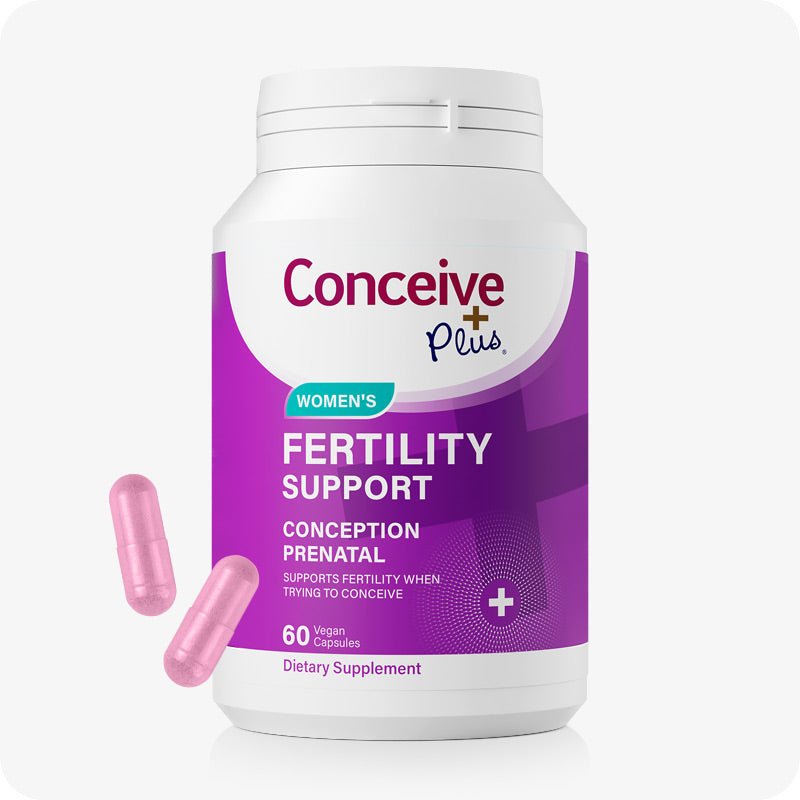
🌱 Support Your Fertility Journey
Conceive Plus fertility supplements are clinically formulated to help regulate your cycle and support egg quality.
Shop Fertility Support →Frequently Asked Questions
Recommended by Fertility Experts
Conceive Plus Men's Fertility Support
Designed to support healthy sperm production, motility, and overall male reproductive health with clinically studied nutrients.
Shop Now →Q: Do old wives tales about getting pregnant actually work?
A: While many old wives tales lack scientific evidence, some traditional fertility practices align with modern reproductive health principles. For example, the historical emphasis on tracking menstrual cycles is now supported by the American Society for Reproductive Medicine (ASRM), which recommends cycle awareness for timing intercourse during the fertile window. Other traditional approaches—like reducing stress, maintaining a healthy diet, and regular exercise—are backed by contemporary fertility research. However, not all folklore has merit; claims about specific positions or foods without scientific support should be approached with skepticism. The most effective approach combines time-tested wisdom with evidence-based fertility strategies and, when needed, professional medical guidance.
Q: What are the best at-home tricks to get pregnant faster?
A: The most evidence-supported at-home strategies include tracking your ovulation cycle, maintaining a healthy body mass index (BMI), and timing intercourse during your fertile window—typically the five days before and day of ovulation. According to fertility research, approximately 85% of couples conceive within one year of unprotected intercourse when having regular sexual relations. Reducing stress, limiting alcohol, avoiding smoking, and maintaining adequate nutrition are also critical factors under your control. Supporting your body's natural fertility with supplements containing key nutrients like folate, CoQ10, and inositol—such as Conceive Plus for women—can help optimize reproductive health. If you've been trying for over a year (or six months if over age 35), consulting a fertility specialist is recommended.
Q: How can I become more fertile naturally at home?
A: Improving natural fertility involves lifestyle modifications that support reproductive health: maintain a nutrient-rich diet with adequate folate and antioxidants, exercise regularly (150 minutes weekly), achieve a healthy weight, manage stress through meditation or yoga, and ensure quality sleep. The National Institutes of Health emphasizes that women with healthy BMIs have significantly better fertility outcomes than those with obesity or underweight conditions. Eliminating toxins like smoking and limiting caffeine (under 200mg daily) are also important factors supported by ASRM guidelines. Consider incorporating fertility-supporting supplements with proven ingredients—Conceive Plus for women includes vitamins and minerals specifically formulated to support reproductive wellness. Additionally, track your menstrual cycle to identify your fertile window for optimal timing of intercourse.
Q: What is the old fashioned way to get pregnant?
A: The traditional approach to conception centered on understanding a woman's cycle through careful observation of menstrual patterns and physical signs like cervical mucus changes—a practice that remains clinically relevant today. Historical fertility practices emphasized natural timing, healthy living, reduced stress, and maintaining physical closeness with partners, many of which align with current fertility recommendations. Before modern fertility treatments became available, couples relied on cycle tracking, which is still one of the most effective free methods for identifying the fertile window (the five days before ovulation plus ovulation day itself). The "old-fashioned way" fundamentally means working with the body's natural reproductive rhythm rather than against it. Modern fertility science has validated many traditional approaches, though pairing them with proper nutrition, stress management, and when appropriate, fertility supplements like Conceive Plus can enhance natural conception efforts.
Q: How accurate are old fertility hacks for getting pregnant?
A: The accuracy of traditional fertility methods varies significantly—some have strong scientific support while others are purely anecdotal. Cycle tracking and monitoring cervical mucus changes are evidence-based methods endorsed by the ASRM, with effectiveness rates comparable to basic fertility awareness methods. However, fertility folklore such as specific sexual positions, timing intercourse at particular times of day, or consuming certain foods without nutritional basis lack scientific validation. Research shows that approximately 12% of women ages 15-44 have difficulty conceiving or carrying pregnancy to term, according to CDC data, making professional assessment important for persistent challenges. The most reliable approach combines validated traditional wisdom—like cycle awareness and lifestyle optimization—with medical guidance and science-backed supplements containing ingredients proven to support fertility.
Trusted by Couples in Over 70 Countries
Support Male Fertility From the Inside Out
Male fertility is just as important as female fertility in the conception journey. Conceive Plus Men's range delivers targeted nutritional support to promote healthy sperm and overall reproductive wellbeing.
Shop Men's Range →