Can Prenatal Pills Help You Get Pregnant? Myths vs. Science in 2026


What if your prenatal vitamin isn't actually a "fertility pill" but a biological architect for your future pregnancy? Many women wonder, can prenatal pills help you get pregnant, or are they simply a safety net for a baby that hasn't arrived yet? It's easy to feel overwhelmed by the ticking clock and the endless supplement options on the shelf. You're likely feeling the pressure to get everything perfect, from your folate levels to your egg quality, while worrying that a single deficiency might be holding you back.
We understand that the "trying to conceive" window is often filled with more questions than answers. You deserve to know exactly how these supplements influence your body and which ingredients actually move the needle. In this article, you'll learn the truth about how prenatal vitamins prepare your internal environment for conception and how to distinguish marketing myths from 2026 clinical science. We'll provide a clear supplement checklist, explain why 40% to 60% of women should look for methylfolate over folic acid, and show you how to build the strongest possible foundation for your journey.
Key Takeaways
- Understand how prenatal vitamins act as "biological soil" to prepare your body for successful implantation and early pregnancy support.
- Learn the scientific reality of how can prenatal pills help you get pregnant by optimizing hormone production and protecting egg quality.
- Debunk common fertility myths and discover why a prenatal regimen is vital even for those without a diagnosed nutritional deficiency.
- Access a 2026 checklist for choosing the right formula and find out why your partner also needs a specialized nutrient routine for sperm health.
- Discover how targeted fertility support differs from standard vitamins to specifically bridge the gap between general health and successful conception.
The Direct Answer: Can Prenatal Pills Actually Increase Your Odds?
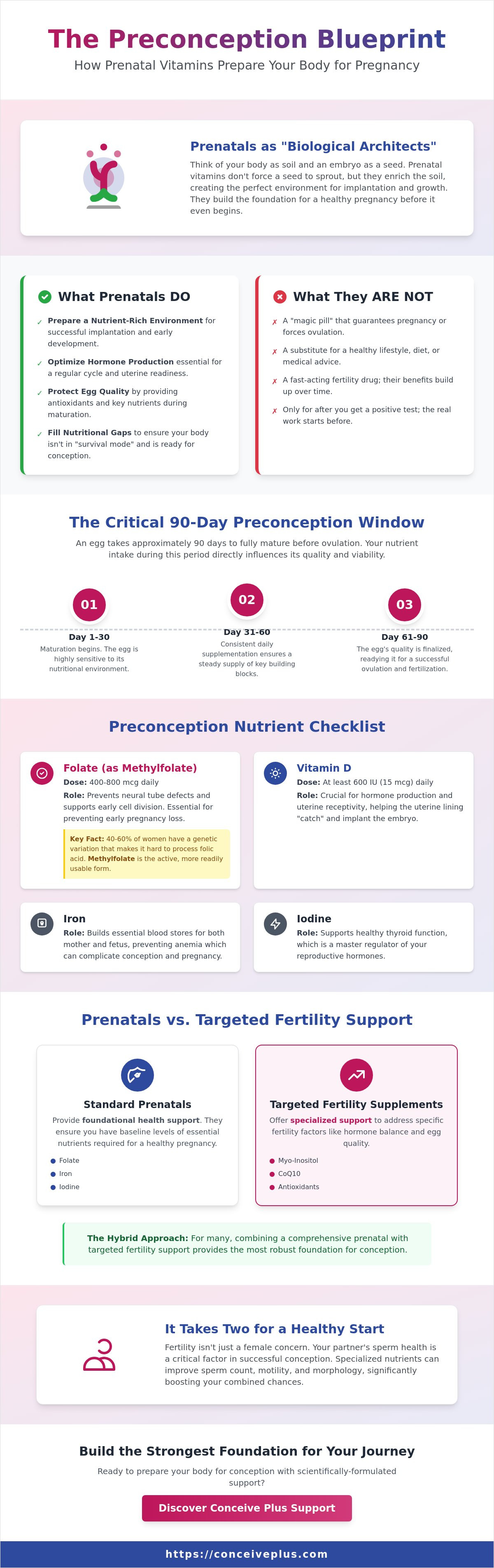
The short answer is a nuanced yes. While they aren't magic pills that force ovulation or guarantee a positive test, asking can prenatal pills help you get pregnant reveals a deeper truth about biological readiness. These supplements don't work like fertility drugs that trigger a specific physical response. Instead, they function as "biological architects." They build the infrastructure your body needs to support a successful pregnancy before it even begins. If your body lacks the basic building blocks, it may prioritize your own survival over the energy-intensive process of conception.
Think of your body as the soil and the embryo as a seed. You wouldn't plant a prize-winning flower in depleted, dry earth and expect it to bloom. Prenatal vitamins act as the fertilizer and irrigation system, ensuring the "biological soil" is rich enough to support life from the very first cell division. Most general information on prenatal vitamins focuses on preventing birth defects, but their influence starts much earlier by making successful implantation more likely. Waiting until you see two pink lines on a test is often too late to reap these preconception benefits.
To help visualize how these nutrients function during the preconception phase, watch this breakdown by Doctor P:
Prenatal Vitamins vs. Fertility Supplements: What's the Difference?
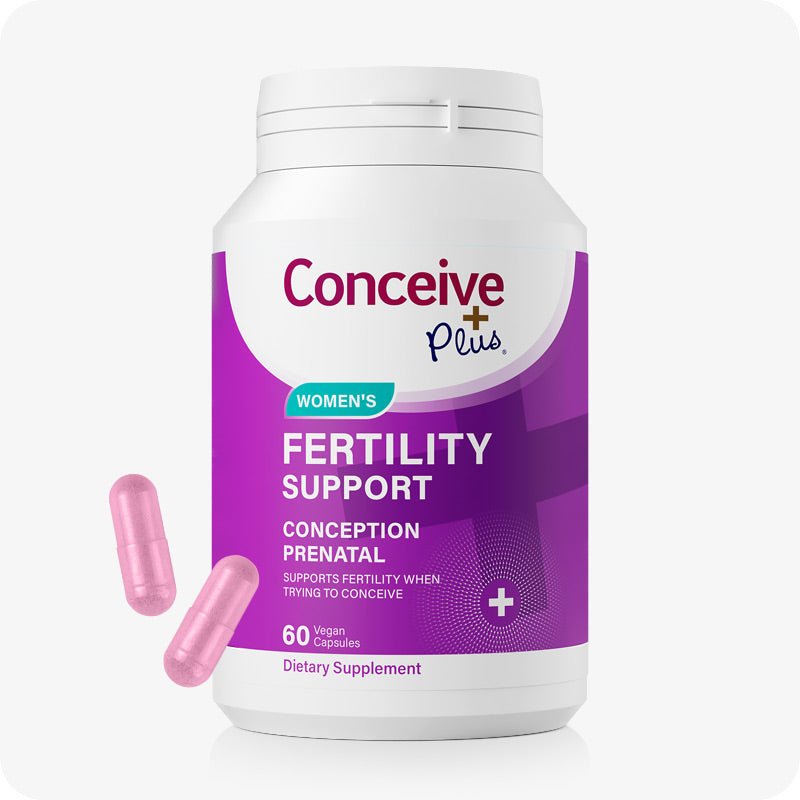
It's easy to confuse these two categories, but they serve different roles in your journey. Standard prenatal vitamins provide foundational health support, ensuring you have the baseline levels of folate, iron, and iodine required for a healthy fetus. Fertility supplements are more targeted. They often include ingredients like Myo-Inositol or CoQ10 to support hormone balance and egg quality. For many women, a hybrid approach works best. You want the broad coverage of a prenatal combined with the specific support of specialized fertility products to cover all your bases.
The 90-Day Preconception Window Explained
Patience is difficult when you're ready to start a family, but biology has its own timeline. An egg takes approximately 90 days to mature before it's released during ovulation. During this three-month window, the egg is highly sensitive to its environment, including the nutrients available in your system. This 90-day maturation process is the critical window where your nutrient intake directly influences the quality of the egg being prepared. Consistency matters more than high-dose "bursts" of vitamins. Taking your supplements daily ensures a steady supply of nutrients is available exactly when that maturing egg needs them most.
How Prenatal Nutrients Impact Your Fertility Science
Understanding the molecular mechanisms of conception changes the way you look at your daily vitamin. While many people view these supplements as a safety net for the future, the clinical reality is that they actively participate in the biological processes required to conceive. When people ask, can prenatal pills help you get pregnant, they are often looking for a way to shorten the time to a positive test. The answer lies in how specific vitamins regulate your cycle, improve the environment for fertilization, and ensure the embryo has the energy to survive its first few days.
Clinical research provides scientific evidence on prenatal nutrients and their direct impact on reproductive success. For example, the American College of Obstetricians and Gynecologists (ACOG) recommends 400 to 800 mcg of folic acid daily to prevent early-stage pregnancy loss and neural tube defects. Similarly, Vitamin D plays a vital role in hormone production and uterine receptivity. A daily intake of at least 600 IU (15 mcg) of Vitamin D helps ensure the lining of the uterus is prepared to "catch" and hold a fertilized egg. Without these baseline levels, the body may struggle to maintain the early stages of a pregnancy before you even realize you've conceived.
Iron is another heavy hitter in the fertility world. Research suggests that maintaining a daily intake of 27 mg of iron can help prevent ovulatory infertility, a condition where irregular or absent ovulation makes conception difficult. For those dealing with irregular cycles or PCOS, the inclusion of Myo-Inositol is a game-changer. It helps balance insulin levels and restores cycle regularity, providing a predictable window for timing intercourse. You can find these targeted ingredients in specialized fertility bundles designed to support these specific biological needs.
Egg Quality and Antioxidant Protection
The health of your eggs is non-negotiable for successful fertilization. Every egg needs a massive amount of cellular energy, known as ATP, to divide and grow after meeting sperm. Nutrients like CoQ10 and Vitamin E act as powerful antioxidants, protecting the delicate DNA within the egg from oxidative stress. This protection is vital as it preserves egg quality during that critical 90-day maturation window. For a deeper look at these specific ingredients, read The Essential Guide to Fertility Prenatal Vitamins to see how they prepare your body for conception.
Supporting the Uterine Lining for Implantation
A healthy embryo needs a thick, nutrient-rich "home" to thrive. Zinc and various B-vitamins are essential for building a robust uterine lining and maintaining healthy blood flow to the reproductive organs. When the lining is thin or lacks proper vascularization, the risk of early chemical pregnancies increases because the embryo cannot properly attach. By prioritizing these nutrients, you aren't just taking a vitamin; you're actively constructing the infrastructure required for a healthy, nine-month journey.
Common Myths: What Prenatal Vitamins Can and Cannot Do
Separating fact from fiction is essential when you're asking can prenatal pills help you get pregnant. Social media often paints these vitamins as a magic solution, but the science is more grounded. While they're indispensable for creating a healthy environment, believing they solve every reproductive challenge leads to unnecessary frustration. Prenatals are a support system, not a replacement for medical intervention or a cure for underlying structural issues. They optimize your existing biology, but they don't perform miracles if there are severe medical barriers to conception.
- Myth 1: Prenatals make you "super fertile" regardless of other factors. Vitamins can't override blocked fallopian tubes, severe endometriosis, or significant male factor infertility. They provide the building blocks for a healthy pregnancy, but they aren't a substitute for a fertility specialist if you've been trying for over a year without success.
- Myth 2: You only need prenatals if you have a known deficiency. This is a dangerous misconception. The American College of Obstetricians and Gynecologists (ACOG) recommends that all women capable of becoming pregnant take a daily prenatal. This is because critical neural tube development occurs in the first few weeks, often before you even realize you've conceived.
- Myth 3: Any drugstore multivitamin is the same as a fertility-focused prenatal. Generic multivitamins often lack the specific ratios of iodine (220 mcg to 290 mcg) or the inclusion of choline and DHA required for optimal preconception health. Fertility-specific formulas are designed to bridge these specific gaps.
Debunking the 'Instant Pregnancy' Pill
Vitamins support your biology, but they don't work overnight. Since eggs take about 90 days to mature, you won't see the full benefits of a new supplement regimen for at least three months. Supplements work best when you combine them with consistent cycle tracking and a healthy lifestyle. If you're looking for a way to time your efforts more accurately, using an ovulation calculator alongside your vitamins is the most effective strategy for shortening your TTC journey. Consistency is your greatest ally during this window.
Why 'Natural' Labels Aren't Always Enough
Marketing terms like "natural" don't always translate to "effective." Bioavailability is what matters most for your body. For example, approximately 40% to 60% of women have an MTHFR gene variant that impairs the conversion of folic acid into its active form. These women need L-methylfolate, the bioactive version, to ensure their bodies can actually use the nutrient. When reading labels, look for these specific forms rather than generic ingredients. For those managing hormone-related cycle issues, reading a Myo-Inositol for Fertility: A Complete Guide can help you understand how specific nutrient ratios support cycle regularity better than a standard "one-size-fits-all" vitamin.
Choosing the Right Formula for the Preconception Phase
Selecting a supplement is about more than just grabbing the first bottle you see. When you're investigating can prenatal pills help you get pregnant, the quality of the formula determines your results. In 2026, the market offers everything from budget options under $20 to premium formulas costing up to $60 per month. While price doesn't always equal quality, extremely cheap supplements often hide red flags like low-quality fillers, synthetic dyes, or difficult-to-absorb nutrient forms. A high-quality formula acts as a bridge between your current nutritional status and the high demands of early fetal development. You want a product that undergoes third-party testing, such as USP or NSF certification, to ensure you're actually getting what the label promises.
Your 2026 preconception checklist should include these essential benchmarks:
- Folate: 400 to 800 mcg of folic acid or methylfolate.
- Iodine: At least 150 mcg within the vitamin to help reach the daily 220-290 mcg requirement.
- Iron: 27 mg to support blood volume and prevent ovulatory issues.
- Calcium and Vitamin D: 1,000 mg of calcium and at least 600 IU of Vitamin D for bone health and hormone regulation.
Key Ingredients to Look For
Beyond the basics, look for "co-factors" that aid absorption. Magnesium and calcium work together to support muscle function and nerve signaling. Many modern formulas also include Myo-Inositol. While often discussed for specific conditions, Myo-Inositol supports overall cycle regularity and egg quality for anyone in the TTC phase. If you're curious about how these ingredients stack up against specific health needs, check out this Myo-Inositol for PCOS Fertility Comparison to understand the nuances of hormone-balancing nutrients.
The Role of Male Prenatals in Conception
Fertility is a team effort. Since 50% of the genetic material comes from the father, sperm quality is just as critical as egg quality. Men should follow their own "prenatal" regimen starting at least 90 days before trying to conceive. Nutrients like Selenium, Zinc, and L-Carnitine are essential for sperm motility and protecting DNA from oxidative damage. When both partners optimize their nutrient intake, you significantly increase the total "conception score" for your household. This dual-supplementation strategy creates the best possible environment for a healthy start.
To ensure you and your partner are both covered with science-backed formulas, explore our complete range of fertility-focused supplements designed for the preconception window.
Optimizing Your TTC Journey with Conceive Plus Support
Taking the right vitamins is a major step, but it's only one piece of the puzzle. While we've explored how can prenatal pills help you get pregnant by building a nutritional foundation, true optimization involves a multi-pronged strategy. The Conceive Plus philosophy is built on science-backed fertility support that looks at the whole picture. We don't just focus on the nutrients in your bloodstream; we look at the entire environment the sperm and egg must navigate to meet successfully. Fertility isn't a single event. It's a sequence of perfectly timed biological hurdles that require specific support at every stage.
One often-overlooked factor is the vaginal environment. Many standard lubricants actually hinder conception by creating a pH barrier that is toxic to sperm. By combining your supplement regimen with fertility-friendly lubricants, you ensure that the path is clear and supportive for sperm motility. This dual approach addresses both internal readiness and external conditions, giving you the best possible chance of success each cycle. Once you've optimized your environment, the next logical step is to pinpoint your peak window using an ovulation calculator to ensure your efforts are perfectly timed.
The Power of the TTC Bundle
A holistic approach outperforms single-product use because it creates a synergistic effect. When you use a bundle that includes both vitamins and fertility-friendly lubricants, you're balancing your body's pH while simultaneously flooding your system with the nutrients needed for implantation. Conceive Plus products are formulated to work together, ensuring that the calcium and magnesium ions in the lubricant mirror the natural fluids found in your body. This consistency reduces stress on the sperm and allows them to reach the egg more efficiently. You can find these comprehensive solutions in our collection of best-selling fertility products.
Real Stories, Real Success
Thousands of couples have trusted the Conceive Plus regimen to help them navigate the often-anxious journey of trying to conceive. These aren't just statistics; they're real experiences from people who felt the same confusion and fear you might be feeling today. By shifting from generic supplements to a targeted fertility system, many have found the missing piece in their TTC puzzle. Validation is a powerful tool during this process. If you're looking for inspiration or want to see how others have utilized these tools, read our Conceive Plus reviews to see real results from couples who successfully reached their goal.
Empower Your Path to Parenthood
You now have a clear roadmap for navigating the 90-day preconception window with confidence. We've explored how vitamins act as the essential biological soil for a healthy pregnancy, providing the infrastructure your body needs to support a new life. By choosing bioactive ingredients like methylfolate and supporting your cycle with Myo-Inositol, you're proactively preparing your body for the journey ahead. The answer to can prenatal pills help you get pregnant lies in this daily commitment to optimizing your internal environment for successful fertilization and implantation.
Conceive Plus is recommended by fertility clinics worldwide because our formulas are designed specifically for the unique needs of the TTC phase. Our system goes beyond basic nutrition, offering pH-balanced products to support sperm survival and Myo-Inositol to promote hormone balance. You don't have to navigate this process alone or guess which supplements are right for you. Shop the Conceive Plus TTC Fertility Bundles for Complete Support and start building your foundation today. Your journey is unique, and you're already taking the most important steps by staying informed and prepared. We're here to support you every step of the way.
Frequently Asked Questions
When is the best time to start taking prenatal vitamins if I want to get pregnant?
You should start taking prenatal vitamins at least three months before you begin trying to conceive. This timeline matches the 90-day maturation cycle of an egg. Starting early ensures your folate levels are optimal before the neural tube closes, which happens within the first 28 days of pregnancy. It also allows time to correct common deficiencies in Vitamin D or iron before conception occurs.
Can prenatal vitamins cause side effects like nausea or constipation?
Yes, digestive issues like nausea or constipation are common side effects, often caused by high iron content. Iron can lead to slower digestion, while large tablets might trigger a sensitive gag reflex. To minimize these effects, try taking your supplement with a meal or right before bed. You can also look for "gentle" iron forms like ferrous bisglycinate, which are typically easier on the stomach.
Do I need a prescription for fertility-focused prenatal pills?
Most fertility-focused prenatal vitamins are available over-the-counter and don't require a prescription. While doctors may prescribe high-dose folic acid for specific medical needs, premium retail options often meet the 400 to 800 mcg standard recommended by ACOG. Prescription versions can range from $50 to $120 without insurance coverage. Many couples find that high-quality non-prescription brands provide a more accessible and cost-effective way to get comprehensive nutrient support.
Will taking prenatals help if I have irregular cycles or PCOS?
Standard prenatals support general health, but formulas containing Myo-Inositol are specifically designed to help regulate cycles. When you ask, can prenatal pills help you get pregnant with PCOS, the answer depends on whether the supplement addresses insulin sensitivity. Myo-Inositol helps restore regular ovulation and improves egg quality. This makes it much easier to track your fertile window and time intercourse accurately for a faster TTC journey.
Can men take prenatal vitamins to help with conception?
Men should take specialized male fertility supplements rather than vitamins formulated for women. While a woman's prenatal focuses on iron and folate for fetal development, a man's formula prioritizes Zinc, Selenium, and L-Carnitine to improve sperm count and motility. Because sperm production takes about 74 days, men should start their regimen at least three months before trying to conceive to ensure the best possible sperm health for fertilization.
Is it possible to take too many vitamins while trying to conceive?
Yes, taking excessive amounts of certain vitamins can be harmful to your health and a future pregnancy. For example, very high levels of Vitamin A can be toxic to a developing fetus, and too much iron can cause digestive distress. Always follow the dosage instructions on the label. If you use multiple supplements, check the combined totals to ensure you aren't exceeding the daily upper limits for fat-soluble vitamins.
How do I know if my prenatal vitamin is actually working?
You won't usually feel an immediate difference, but you may notice subtle signs like improved hair and nail strength after several weeks. More importantly, those using cycle-tracking tools might see more consistent ovulation patterns if the supplement includes hormone-balancing ingredients like Myo-Inositol. The most reliable way to know if your levels are optimal is through a blood test. Your healthcare provider can confirm if your Vitamin D, iron, and folate levels have reached the target range.
What happens if I stop taking prenatals before I get pregnant?
Stopping your supplements causes your nutrient levels to gradually return to their baseline. This is risky because can prenatal pills help you get pregnant most effectively when your body has a steady supply of folate and minerals. If you conceive shortly after stopping, you might lack the protection needed for the baby's early neural tube development. It's best to stay consistent with your daily dose until you achieve pregnancy or decide to stop trying.